

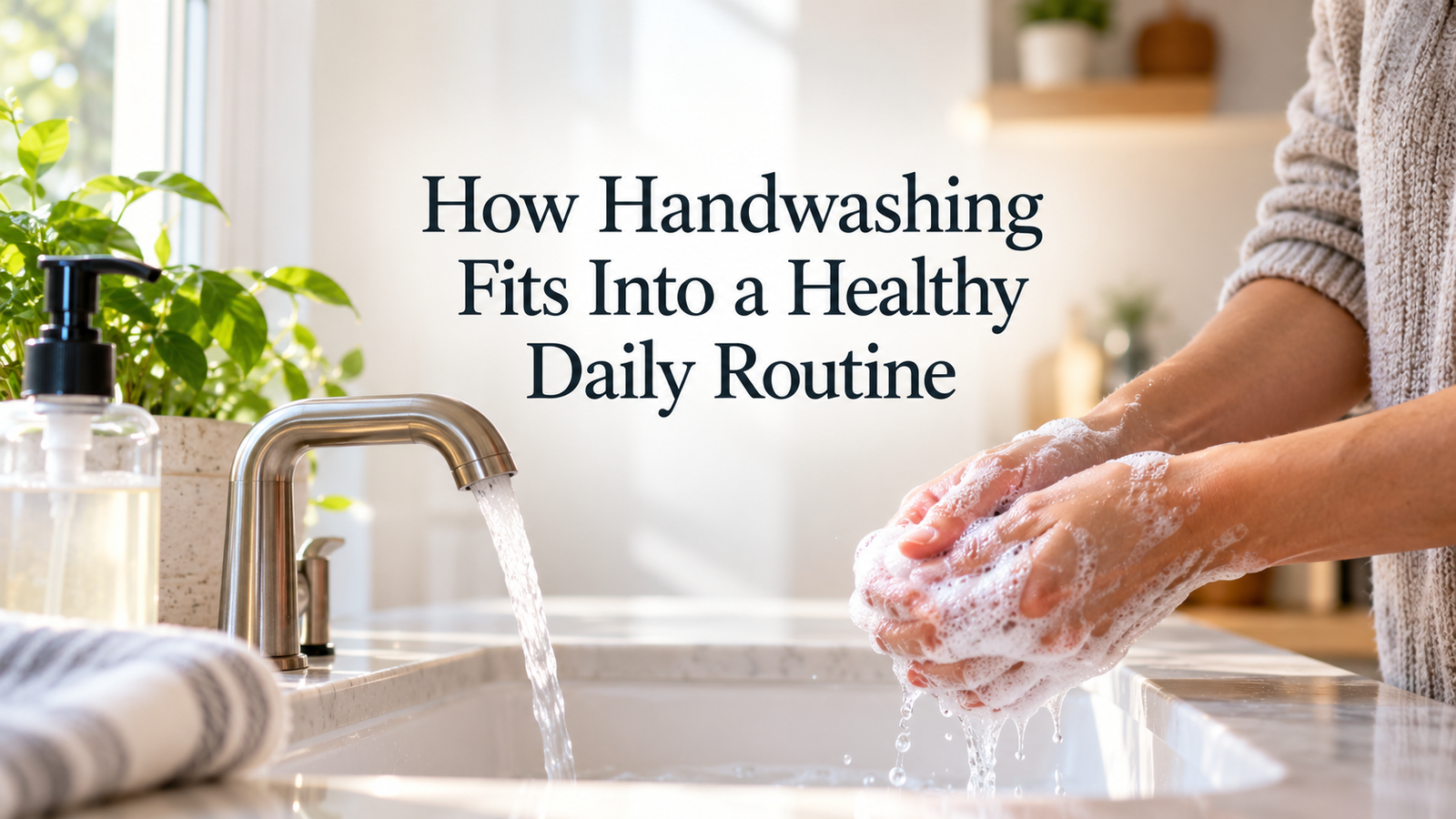
Handwashing is one of the simplest habits we practice every day, yet it plays an important role in keeping our daily routine clean and healthy. It does not require expensive products, complicated equipment, or a large amount of time. A little soap, clean water, and a few careful moments are usually enough.
When I started reading more about everyday hygiene, I realized that handwashing is not only something we should do when our hands look dirty. Our hands constantly touch doors, phones, keyboards, kitchen surfaces, money, public spaces, and many other objects throughout the day. Because of this, regular handwashing naturally fits into a healthy daily routine.
A good handwashing routine is really about consistency. Instead of thinking about it as a special activity, it is more useful to make it part of the normal rhythm of the day.
Why Handwashing Is an Important Daily Habit
Our hands are involved in almost everything we do. We use them to prepare food, eat meals, touch our faces, use electronic devices, shake hands, open doors, carry shopping bags, and clean different areas of the home.
This constant contact with different surfaces means that dirt and microorganisms can easily collect on the hands. We may not always be able to see them, but they can still be present.
Regular handwashing helps remove many of these unwanted substances before they are transferred to the mouth, nose, eyes, food, or other surfaces.
This is why handwashing is often considered one of the foundations of everyday personal hygiene.
A healthy daily routine does not need to be complicated. In fact, simple habits are often easier to maintain. Handwashing is a good example because it can be connected with activities that already happen naturally during the day.
Start the Day With Clean Hands
A healthy routine often begins with small actions in the morning.
After waking up, many people wash their face, brush their teeth, get dressed, and prepare breakfast. Washing the hands can easily become part of this morning routine.
It is especially useful before preparing or eating breakfast.
Even though a person has been sleeping, the hands may have touched bedding, the face, a phone, or other surfaces during the night and early morning.
Washing the hands before handling food creates a clean start to the day.
Once handwashing becomes connected with breakfast or morning preparation, it becomes much easier to remember.
Wash Your Hands Before Preparing Food
Food preparation is one of the most important times to think about hand hygiene.
Before cutting vegetables, handling bread, preparing fruit, or cooking a meal, clean hands help keep the kitchen environment more hygienic.
During cooking, it may also be necessary to wash the hands again after touching certain ingredients or surfaces.
For example, if someone handles raw food and then wants to touch salad ingredients, kitchen utensils, or ready to eat food, washing the hands first is a sensible habit.
The kitchen is a place where many different ingredients and surfaces come together. Clean hands help reduce unnecessary transfer between them.
This does not mean washing the hands every few seconds. It simply means recognizing the moments when handwashing makes practical sense.
Handwashing Before Eating
Many of us were taught as children to wash our hands before meals, and it remains a useful habit throughout life.
Before breakfast, lunch, dinner, or even certain snacks, washing the hands can help remove dirt picked up from everyday activities.
Think about everything the hands may touch before lunch.
A person may have used a computer, handled a phone, opened several doors, touched a desk, used public transport, or worked with different objects.
Going directly from these activities to eating means the hands may come close to the mouth and food.
A quick handwashing routine before meals is simple, practical, and easy to maintain.
Handwashing After Using the Toilet
Washing the hands after using the toilet is one of the most basic parts of good personal hygiene.
This habit should be consistent at home, at work, at school, while traveling, and in public places.
Soap and water should be used properly, and the hands should be dried afterward.
This is one situation where handwashing should never feel optional. Making it automatic removes the need to think about it every time.
Just as we naturally switch off a light when leaving a room, handwashing after using the toilet can become a normal part of completing the activity.
After Coming Home From Outside
One of the easiest places to build handwashing into a healthy daily routine is when returning home.
During a normal trip outside, we may touch door handles, shopping carts, railings, payment machines, public counters, elevator buttons, transport surfaces, and many other shared objects.
Washing the hands soon after coming home provides a natural transition from the outside environment to the home.
I find this approach easier than trying to remember every individual surface touched outside.
The routine becomes simple.
Come home, put away your belongings, and wash your hands.
It is easy to remember because it is connected to arriving home.
After Coughing, Sneezing, or Blowing Your Nose
Another useful time to wash the hands is after coughing, sneezing, or blowing the nose, especially if the hands have come into contact with the mouth or nose.
Whenever possible, coughing or sneezing into a tissue or the inside of the elbow can help keep the hands cleaner. However, situations are not always perfect.
If the hands are involved, washing them afterward is a practical hygiene step.
This becomes especially useful when living or working around other people because hands frequently touch shared objects.
After Handling Waste or Cleaning
Cleaning the home can make surfaces cleaner, but the hands themselves may become dirty during the process.
After handling rubbish, cleaning bathrooms, wiping dirty surfaces, emptying bins, or working with dusty items, washing the hands is a sensible final step.
It gives a clear ending to the cleaning task.
The same idea applies to outdoor chores, gardening, pet care, or handling items that are visibly dirty.
A healthy daily routine is not about being afraid of dirt. It is simply about cleaning the hands at suitable times.
How to Wash Hands Properly
Good handwashing is not only about quickly placing the hands under running water.
A more complete routine usually involves wetting the hands, applying soap, rubbing all areas carefully, rinsing well, and drying them.
While rubbing the hands, attention should be given to the palms, backs of the hands, between the fingers, fingertips, thumbs, and areas around the nails.
These areas are easy to miss when handwashing becomes too rushed.
The entire process does not need to feel complicated. With practice, proper handwashing becomes automatic.
Taking enough time to clean all areas is more useful than simply rinsing quickly.
Soap Makes a Difference
Water alone can remove some visible dirt, but soap makes handwashing more effective.
Soap helps loosen substances from the surface of the skin so they can be rinsed away more easily.
For ordinary daily use, there is usually no need to turn handwashing into a complicated product routine. A normal hand soap that is comfortable for your skin can fit well into everyday hygiene.
The most important thing is actually using it consistently.
Having soap available near the sinks used most often also makes the habit easier.
Do Not Forget Hand Drying
Hand drying is another part of the routine that is easy to overlook.
After washing, the hands should be dried properly using a clean towel, paper towel, or another suitable method.
Walking away with dripping wet hands may feel quicker, but complete drying makes the routine more comfortable and practical.
At home, hand towels should also be changed and washed regularly.
Small details like these support the overall hygiene of the household.
Avoid Excessive Handwashing
Although handwashing is important, more is not always better.
Washing the hands unnecessarily throughout the entire day may leave the skin feeling dry or irritated, especially when strong soaps or very hot water are used.
A healthy handwashing routine should focus on meaningful situations.
Before eating, after using the toilet, after returning home, after handling waste, and after obvious contamination are good examples.
There is usually no reason to wash the hands repeatedly when nothing has happened to make it necessary.
Balance makes healthy routines easier to continue.
Take Care of Your Skin
People who wash their hands frequently may sometimes notice dryness.
Using comfortable water temperatures and a mild soap may help. A simple hand moisturizer can also be useful when the skin feels dry.
Healthy hygiene should not make the skin constantly uncomfortable.
If a particular soap causes persistent irritation, changing the product may be worth considering.
Comfort matters because habits are easier to maintain when they do not create unnecessary problems.
Make Handwashing Easy at Home
One reason good habits fail is inconvenience.
If soap is missing, towels are unavailable, or the sink area is difficult to use, people are more likely to skip handwashing.
Keeping the basic supplies ready makes the routine easier.
Soap should be easy to reach. Towels should be clean. The sink area should not be unnecessarily cluttered.
For families with children, making the sink comfortable and accessible can also help children develop good hygiene habits naturally.
The goal is to reduce barriers.
When the environment supports the habit, less effort is required to remember it.
Connect Handwashing With Existing Habits
One of the easiest ways to build a healthy daily routine is to connect a new habit with something already established.
For handwashing, the connection may look like this:
Wash hands after entering the house.
Wash hands before sitting down for meals.
Wash hands after using the toilet.
Wash hands before cooking.
Wash hands after cleaning.
These situations act like reminders.
There is no need for alarms or complicated schedules because the activities themselves tell you when it is time to wash.
This habit linking approach can make handwashing feel natural rather than forced.
Teaching Children Through Everyday Example
Children often learn hygiene habits by watching adults.
Repeated reminders can help, but visible examples may be even more powerful.
When children regularly see parents or caregivers washing their hands before food, after outdoor activities, and after using the toilet, handwashing begins to look like a normal part of life.
Simple explanations can also help.
Instead of creating fear around germs, adults can explain that washing hands keeps dirt away from food and helps everyone stay clean.
Making the process calm and routine may help children develop habits that continue as they grow older.
Handwashing Outside the Home
Maintaining hand hygiene while outside can require a little more awareness.
Public washrooms, workplaces, schools, restaurants, shopping areas, and travel locations usually provide opportunities for handwashing, although facilities can vary.
Whenever soap and clean water are available, they are a practical choice.
In situations where proper handwashing is not immediately available, an appropriate hand sanitizer may sometimes be useful until soap and water can be accessed.
However, hand sanitizer does not completely replace normal handwashing in every situation, particularly when the hands are visibly dirty.
This is why it is still helpful to wash properly when facilities become available.
Handwashing and Workplace Routines
The workplace is another environment where the hands constantly touch shared surfaces.
Computer equipment, meeting tables, door handles, printers, phones, tools, and shared kitchen areas may all be used by several people.
It would be unrealistic to wash the hands after touching every object.
A better approach is to wash at practical moments, such as before eating, after using the toilet, after certain dirty tasks, or when arriving home at the end of the day.
This keeps the routine realistic.
Healthy habits are more useful when they can be maintained without disrupting normal life.
Handwashing Is Part of a Bigger Hygiene Routine
Handwashing works best when it is viewed as one part of general daily hygiene.
Other habits also matter, such as bathing regularly, wearing clean clothes, keeping food preparation areas clean, maintaining oral hygiene, cleaning frequently used household surfaces, and storing food properly.
No single habit needs to carry the entire responsibility for health.
Instead, several small habits work together.
This is one reason handwashing fits so naturally into a healthy daily routine. It supports many activities without requiring major lifestyle changes.
Keep the Habit Simple
The best daily routines are often the ones that feel ordinary.
Handwashing should not become a stressful activity or something that requires constant attention.
Simply learn the important moments, wash properly, dry the hands, and continue with the day.
There is no need to aim for perfect cleanliness.
Daily life will always involve contact with people, objects, food, outdoor environments, and shared spaces. The purpose of hygiene is not to avoid normal life. It is to manage cleanliness sensibly.
Final Thoughts
Learning how handwashing fits into a healthy daily routine is mostly about recognizing the right moments.
Washing the hands before preparing or eating food, after using the toilet, after returning home, after coughing or blowing the nose when necessary, and after handling dirty items can become part of everyday life with very little effort.
The habit works best when it is simple and consistent.
Keep soap easily available, wash all areas of the hands properly, dry them well, and avoid unnecessary over washing.
What makes handwashing valuable is not that it is complicated. Its strength comes from being practical, affordable, and easy to repeat every day.
When handwashing becomes connected with activities we already perform, it stops feeling like an extra task. It simply becomes part of living in a cleaner, more organized, and healthier way.