

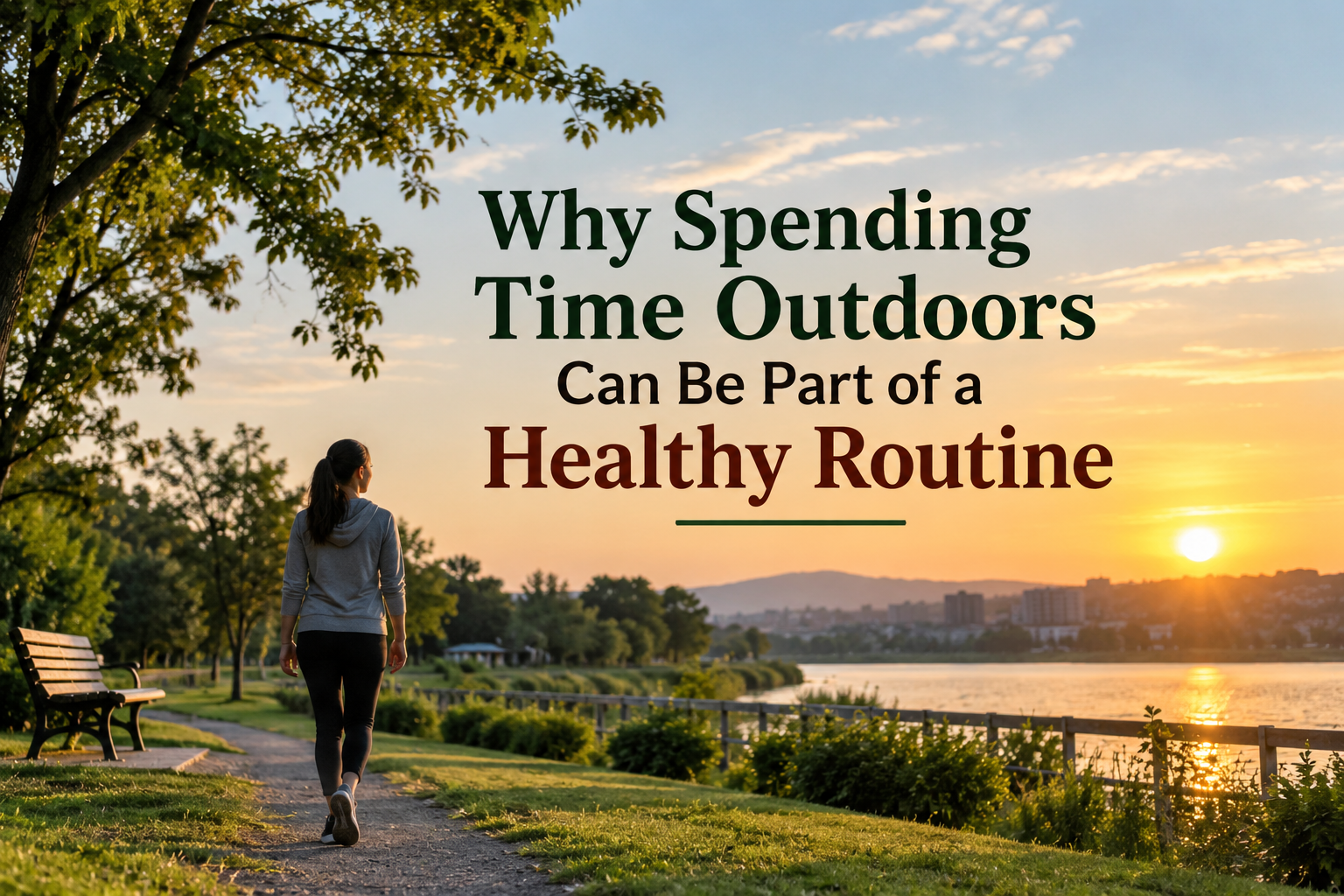
Modern life has made it very easy to spend most of the day indoors. Many people wake up, get ready, travel to work or school, spend hours inside a building, return home, and then relax in front of a screen. This routine may feel normal, but the human body and mind can also benefit from regular time in natural surroundings. Spending time outdoors does not always mean going on a long hike or visiting a distant park. Even a short walk outside, sitting in a garden, enjoying fresh air, or spending a little time in sunlight can become a useful part of a healthy daily routine.
A healthy routine is usually built from simple habits that can be repeated regularly. Eating balanced meals, staying active, resting properly, drinking enough water, and maintaining personal hygiene are all common examples. Spending time outdoors can also fit naturally into this type of lifestyle because it can support physical activity, mental relaxation, social connection, and a better awareness of the natural environment.
Fresh Air Can Make Daily Life Feel More Refreshing
One of the simplest reasons people enjoy being outside is the feeling of fresh air. Indoor spaces can sometimes feel closed, especially after sitting in the same room for several hours. Going outside for a few minutes can create a change in surroundings and help break the feeling of a long or repetitive day.
Fresh air may also encourage deeper and more relaxed breathing. When people step away from busy indoor spaces, they often become more aware of their surroundings. They may notice trees moving in the wind, birds, clouds, or the temperature of the air. These small observations can make an ordinary break feel more refreshing.
Spending time outdoors can be especially useful during work or study breaks. Instead of spending every break looking at a phone, a person can walk outside for five or ten minutes. This creates both physical movement and a mental change of environment.
Outdoor Time Naturally Encourages Movement
Regular movement is an important part of a healthy lifestyle, and being outdoors often makes movement easier. A person may walk around a neighborhood, visit a local park, play with children, ride a bicycle, garden, or simply walk to a nearby shop.
These activities may not feel like formal exercise, but they still increase daily movement.
This is one reason spending time outdoors can be part of a healthy routine. It gives people opportunities to move without always thinking about exercise.
For someone who spends many hours sitting at a desk, even a short outdoor walk can help add more activity to the day. Over time, these small periods of movement can become a regular habit.
The key is consistency. A person does not need to complete a difficult workout every time they go outside. Walking slowly, stretching in a garden, or taking the stairs in an outdoor area can all contribute to a more active lifestyle.
Sunlight Helps Support the Body’s Natural Daily Rhythm
Natural light plays an important role in helping the body understand the difference between day and night. Exposure to daylight, especially earlier in the day, helps support the body’s natural sleep and wake cycle.
Many people spend large parts of the day under artificial lighting. While indoor lighting is useful, it does not provide the same experience as natural daylight.
Going outside in the morning or during the daytime can help the body recognize that it is time to be awake and active. In the evening, lower light levels help signal that the day is coming to an end.
This does not mean someone needs to spend hours in direct sunlight. A short period outdoors during daylight can be enough to make outdoor time part of a balanced routine.
It is also important to protect the skin during long periods in strong sunlight by using suitable clothing, shade, and sun protection when necessary.
Nature Can Provide a Calm Change of Environment
Daily responsibilities can make the mind feel busy. Work, school, household duties, messages, emails, news, and social media can all compete for attention.
Outdoor environments often provide a simpler setting.
A quiet street, garden, park, field, beach, or tree lined path may offer fewer digital distractions. This can give the mind a chance to slow down.
Many people find that spending time outdoors helps them feel calmer because nature provides gentle sights and sounds. Leaves moving, birds calling, flowing water, clouds, and open spaces can create a peaceful atmosphere.
This does not mean outdoor time removes every source of stress. However, it can provide a healthy break from constant mental stimulation.
Even ten quiet minutes outside without checking a phone can feel different from ten minutes spent scrolling through social media.
Outdoor Time Can Reduce Excessive Screen Use
Phones, laptops, televisions, and tablets are useful parts of modern life. They help people work, study, communicate, and relax. However, spending every free moment on a screen can make the day feel mentally crowded.
Going outside creates a natural reason to step away from digital devices.
A short evening walk, a visit to a park, watering plants, or sitting outdoors with a cup of tea can provide a simple screen free activity.
This is especially useful for people who already spend many hours using computers for work or study.
Reducing unnecessary screen use does not require giving up technology. It simply means creating balance.
Outdoor time can be one easy way to build that balance into the day.
Spending Time Outdoors Can Support Better Rest
The habits we follow during the day can influence how we feel at night. Daylight exposure, physical movement, and reduced screen time can all support a more balanced daily schedule.
Someone who spends the entire day sitting indoors may sometimes feel mentally tired but physically restless. Adding outdoor movement can help create a clearer difference between active time and rest time.
For example, a gentle evening walk may help a person move after sitting for most of the day. It can also provide a calm transition between work and bedtime.
A healthy sleep routine depends on many factors, but outdoor activity can fit well alongside other helpful habits such as keeping a regular bedtime, reducing late night screen use, and creating a comfortable sleeping environment.
Outdoor Activities Can Support Social Connection
Spending time outside does not always have to be a solo activity. Outdoor spaces can also create opportunities to connect with family, friends, neighbors, and community members.
Families can walk together after dinner. Friends can meet in a park. Children can play outdoors while adults talk nearby. People can join walking groups, sports activities, gardening groups, or community events.
Social connection is an important part of everyday wellbeing.
Outdoor activities can make social time feel more active and relaxed at the same time. Instead of always meeting indoors, people can choose a simple outdoor activity that encourages conversation and movement.
Even a short walk with a friend can combine several healthy habits in one activity.
Gardening Can Make Outdoor Time More Meaningful
Gardening is another simple way to spend more time outside.
A person does not need a large garden to enjoy this activity. Small balconies, pots, containers, and indoor outdoor spaces can also be used for growing flowers, herbs, or vegetables.
Gardening encourages light physical activity and gives people a reason to spend regular time outdoors.
It can also create a sense of routine. Plants need watering, sunlight, cleaning, pruning, and observation. These small responsibilities encourage people to step outside and pay attention to their surroundings.
Watching a plant grow over time can also make outdoor space feel more personal and enjoyable.
Children Can Benefit From Regular Outdoor Play
Outdoor time is especially valuable in family routines.
Children often spend many hours sitting in classrooms, doing homework, watching television, or using digital devices. Outdoor play gives them opportunities to move, explore, and use their imagination.
Simple activities such as running, cycling, playing ball, walking, or exploring a safe outdoor space can add variety to the day.
Parents can also use outdoor time as an opportunity to spend time together without constant digital distractions.
A family walk in the evening may become a regular habit that supports movement and conversation at the same time.
The goal does not need to be complicated. The most useful outdoor routine is often the one that is easy enough to continue.
Outdoor Time Can Improve Awareness of the Natural World
Modern life can sometimes make people feel disconnected from nature.
Many people spend most of their time surrounded by buildings, vehicles, screens, and artificial lighting. Regular outdoor time can help rebuild awareness of natural changes.
People begin to notice weather patterns, seasons, sunrise times, plants, birds, and changes in temperature.
This awareness can make daily life feel more connected to the environment.
Nature does not always need to be dramatic. A tree outside the house, a small garden, clouds in the sky, or a quiet street can provide simple opportunities to observe the world beyond indoor spaces.
Small Outdoor Habits Are Easier to Maintain
One common mistake people make when building a healthy routine is trying to change too much at once.
Someone may decide to walk for an hour every day, exercise intensely, change their diet, sleep earlier, and stop using screens all at the same time.
Large changes can be difficult to maintain.
A better approach is often to begin with small habits.
For example, a person could spend ten minutes outside after breakfast. Another person might take a short walk after lunch. Someone else may sit outside in the evening instead of immediately turning on the television.
These small habits can gradually become part of daily life.
Once an outdoor routine feels normal, it can be increased naturally.
Different Seasons Require Different Approaches
Outdoor routines may change throughout the year.
During hot weather, early morning or evening may be more comfortable. During colder months, warm clothing may make outdoor walks easier. During rainy seasons, covered outdoor areas or short walks between showers may be more practical.
The important thing is flexibility.
A healthy routine should fit a person’s environment, schedule, age, and daily responsibilities.
Someone living in a busy city may use a nearby park or quiet street. Someone living in a rural area may have easier access to fields or open spaces. Others may use a balcony, courtyard, or rooftop area.
Outdoor time does not need to look the same for everyone.
Safety Should Always Be Part of the Routine
Spending time outdoors is generally simple, but basic safety is still important.
People should consider weather conditions, traffic, air quality, personal security, and sun exposure before choosing an outdoor activity.
During very hot weather, hydration and shade become more important. During poor air quality, longer outdoor exercise may not be suitable. Walking routes should also be chosen with safety in mind.
Children may require supervision depending on their age and surroundings.
These simple precautions help make outdoor activities more comfortable and sustainable.
How to Add More Outdoor Time to Your Day
Adding outdoor time does not require a major lifestyle change.
Start with activities that already fit your schedule.
You might drink morning tea outside, walk for ten minutes after lunch, take phone calls while walking, spend time gardening, walk to a nearby shop, play outdoors with children, or sit outside during an evening break.
Another useful idea is to connect outdoor time with an existing habit.
For example, after finishing breakfast, take a short walk. After work, spend fifteen minutes outside before relaxing indoors. After dinner, walk with family members.
Connecting a new habit with something you already do every day makes it easier to remember.
Consistency Matters More Than Duration
Some people believe outdoor time is only useful if they spend several hours in nature.
That is not necessary.
Short, regular periods outdoors can be easier to maintain than occasional long trips.
Ten or fifteen minutes every day may fit into a routine better than waiting for the weekend to spend several hours outside.
Of course, longer outdoor activities can also be enjoyable. Hiking, picnics, sports, camping, and day trips provide opportunities to spend more time in nature.
However, everyday outdoor habits are often more practical for building a consistent healthy routine.
Final Thoughts
Spending time outdoors can be a simple and enjoyable part of a healthy routine. It encourages movement, provides a break from screens, increases exposure to natural light, supports social connection, and gives people a chance to enjoy a different environment.
The most important thing is not to make outdoor time complicated.
A healthy outdoor routine can begin with something as simple as a short walk, sitting in a garden, watering plants, playing with children, or enjoying fresh air after a busy day.
Small habits are often easier to maintain because they fit naturally into everyday life.
When outdoor time becomes part of a regular routine, it can create more balance between indoor responsibilities and the natural world. Instead of treating time outside as something that only happens during holidays or weekends, it can become a normal part of daily life.
A few minutes outside each day may seem simple, but simple habits are often the foundation of a healthier and more balanced routine.