

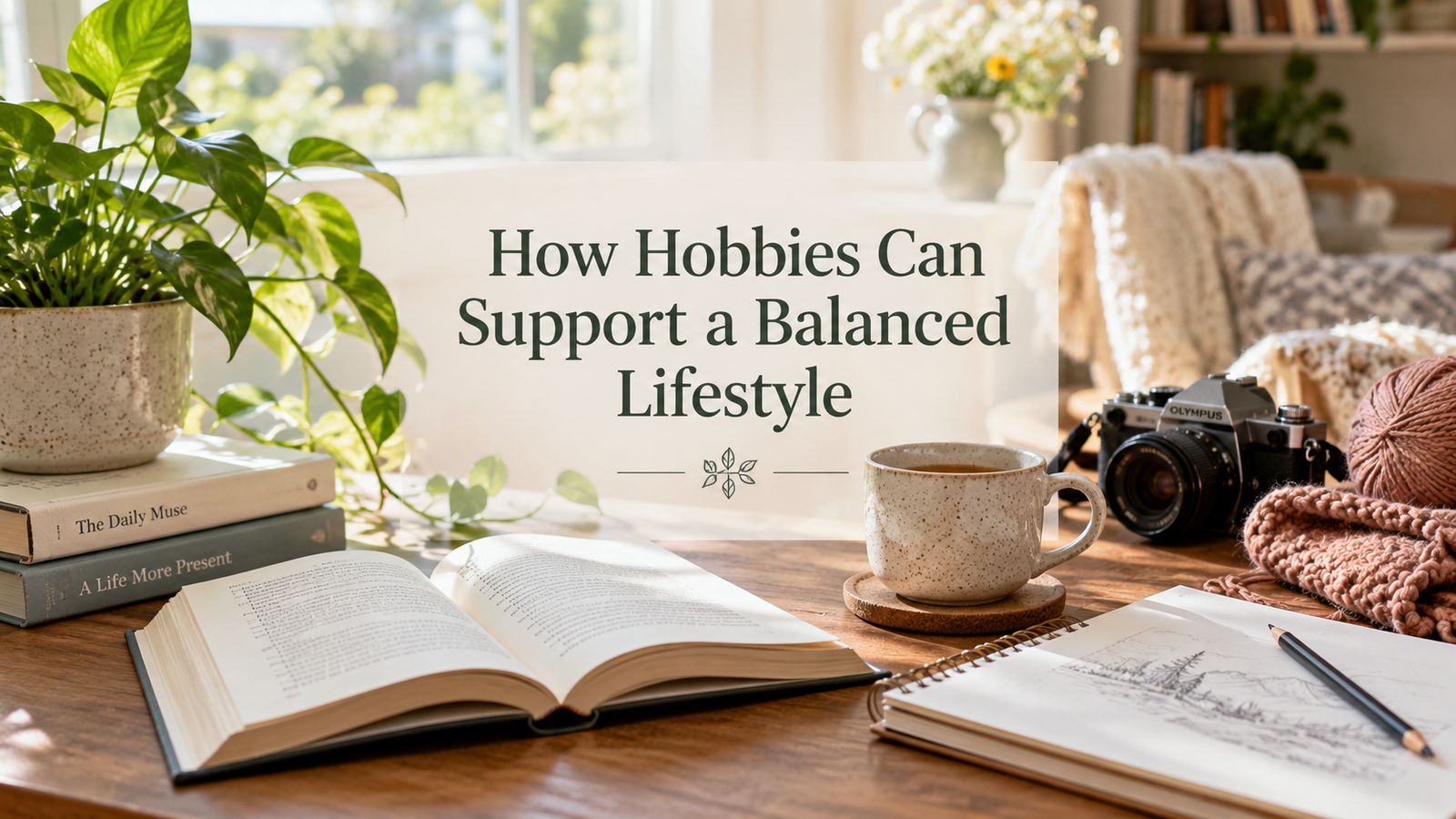
Modern life can become busy very quickly. Work, family responsibilities, household tasks, study, and daily commitments can fill almost every hour of the day. When life becomes too focused on responsibilities, people may feel that they are simply moving from one task to another. This is where hobbies can play an important role. Hobbies are not only enjoyable activities. They can also support a balanced lifestyle by creating space for relaxation, creativity, learning, movement, and personal satisfaction.
A balanced lifestyle does not mean that every part of life receives exactly the same amount of time. It means creating a routine in which work, rest, relationships, responsibilities, and personal interests can exist together in a healthy way. Hobbies can help make this balance easier because they give people something meaningful to enjoy outside their regular duties.
After reading about lifestyle habits and observing how people use their free time, I have noticed that hobbies often become small but valuable parts of everyday life. Whether someone enjoys gardening, reading, cooking, painting, walking, photography, music, or collecting things, a hobby can provide a refreshing change from routine.
Hobbies Create Time for Personal Enjoyment
One of the most obvious benefits of hobbies is simple enjoyment. Many daily activities are connected to responsibility. We work because we need to earn, clean because the house needs attention, and complete tasks because they cannot be ignored.
A hobby is different. It is usually something we choose because we enjoy doing it.
That personal choice can make free time feel more meaningful. Instead of spending every free moment scrolling through a phone or watching random content, a person can use part of that time for an activity that feels satisfying.
For example, someone who enjoys gardening may spend thirty minutes caring for plants in the evening. Another person may enjoy reading a few pages of a book before bedtime. These activities may seem simple, but they create moments that belong to the individual.
Having some personal enjoyment in the day can help life feel less mechanical and more balanced.
Hobbies Can Help You Relax After a Busy Day
A busy schedule can leave the mind occupied even after work or study has finished. Sometimes people continue thinking about unfinished tasks long after they have returned home.
Hobbies can help create a natural transition between responsibility and relaxation.
Activities such as drawing, gardening, reading, knitting, listening to music, or cooking can encourage attention to move toward something enjoyable. The mind becomes focused on the activity instead of constantly thinking about work.
This does not mean hobbies remove every source of stress. Life will always contain responsibilities and difficult days. However, having a relaxing activity available can make it easier to use free time in a positive way.
Even a short hobby session can sometimes feel refreshing. Twenty minutes spent reading or caring for plants may be enough to change the feeling of an evening.
Hobbies Encourage Better Use of Free Time
Free time is valuable, but it can disappear easily.
Many people finish their daily responsibilities and then spend an hour or two moving between social media apps, videos, and television without realizing how much time has passed. Entertainment is not necessarily a problem, but passive screen time can sometimes become a habit rather than a choice.
A hobby gives free time a little more structure.
If you know that you enjoy photography, you may decide to take pictures during an evening walk. If you enjoy cooking, you may experiment with a new recipe on the weekend. If you enjoy reading, you may keep a book beside your bed.
These small choices can turn ordinary free time into something more memorable and satisfying.
The goal is not to make every minute productive. Hobbies should still feel enjoyable. The idea is simply to spend some free time doing something that gives you genuine interest or pleasure.
Creative Hobbies Can Support Self Expression
Creative hobbies are especially useful for people who enjoy expressing ideas.
Painting, writing, photography, crafts, music, design, and woodworking are all examples of activities that allow creativity to develop naturally.
A person does not need to be a professional artist to enjoy creative hobbies. The value often comes from the process rather than the final result.
Someone may write short stories that nobody else reads. Another person may sketch buildings, decorate a room, take photographs of nature, or learn simple songs on a musical instrument.
Creative activities allow people to explore their imagination without the pressure that often exists in professional work.
This kind of personal expression can add another dimension to a balanced lifestyle because life becomes about more than completing practical tasks.
Hobbies Can Keep the Mind Active
Some hobbies are enjoyable because they involve learning.
Reading, puzzles, chess, language learning, photography, cooking, gardening, and playing musical instruments all require attention and curiosity.
When people continue learning outside work or school, they often discover interests they may not have explored before.
For example, someone who begins gardening may gradually learn about soil, sunlight, watering schedules, seasons, and different plant varieties. Someone interested in photography may start learning about lighting, composition, cameras, and editing.
This type of learning feels different from formal education because there is usually no exam or deadline.
People can learn at their own pace and focus on the parts they find interesting.
A hobby that encourages learning can therefore support both enjoyment and personal development.
Active Hobbies Add Movement to Daily Life
Not every hobby involves sitting quietly.
Walking, cycling, hiking, swimming, dancing, gardening, badminton, and recreational sports are examples of hobbies that involve physical activity.
For people who spend much of the day sitting at a desk, active hobbies can be a practical way to add more movement to their routine.
The activity does not always need to be intense. Even a relaxed evening walk can become an enjoyable hobby when it is done regularly.
Some people enjoy walking because it gives them time to explore their neighborhood, listen to nature, or simply spend time away from screens.
Gardening is another good example. It combines movement with creativity and outdoor time.
Choosing an active hobby that you genuinely enjoy can make regular movement feel less like a task.
Hobbies Can Strengthen Social Connections
Hobbies do not always have to be done alone.
Many hobbies create opportunities to meet people with similar interests. Sports clubs, reading groups, photography communities, cooking classes, gardening groups, and craft workshops can bring people together naturally.
Shared interests often make conversation easier because people already have something in common.
Even hobbies that are mainly individual can create social connections. A person who enjoys photography may share photos with other photographers. Someone who enjoys books may discuss them with friends. A gardener may exchange plants or advice with neighbors.
Strong social connections are an important part of a balanced lifestyle.
Hobbies can support these connections without making social activity feel forced.
Hobbies Can Provide a Sense of Progress
One enjoyable part of having a hobby is seeing yourself improve.
At the beginning, you may know very little about the activity. Over time, small improvements become visible.
A beginner guitarist may slowly learn complete songs. A new gardener may successfully grow the first healthy plant. Someone learning photography may begin taking better pictures. A person who enjoys cooking may become more confident with different recipes.
This sense of progress can be satisfying because it reminds us that improvement often comes through patience and regular practice.
There is no need to become an expert.
A hobby can remain casual while still giving a sense of achievement.
Sometimes the simple feeling of learning something new is enough to make free time more rewarding.
Hobbies Can Help Create Healthy Boundaries Around Work
Modern technology has made it easy for work to follow people home.
Emails, messages, online meetings, and work related notifications can make it difficult to completely disconnect at the end of the day.
Having a hobby can create a reason to step away.
For example, someone may decide that after dinner they will spend forty minutes reading, exercising, painting, or gardening instead of checking work messages repeatedly.
This routine creates a psychological boundary between working hours and personal time.
Maintaining reasonable boundaries can support a more balanced lifestyle because rest and personal interests also deserve space in the schedule.
A person who never disconnects from work may eventually feel that every part of the day belongs to professional responsibilities.
A hobby reminds us that identity and daily life can include more than work.
Simple Hobbies Are Often the Easiest to Maintain
Some people avoid hobbies because they believe they require expensive equipment or large amounts of time.
In reality, many useful hobbies are extremely simple.
Reading only requires a book. Walking requires comfortable shoes. Drawing can begin with paper and a pencil. Gardening can start with one or two small plants. Writing can begin with a notebook.
The simpler a hobby is to start, the easier it may be to include in everyday life.
It is often better to begin with something small rather than purchasing equipment for a complicated hobby that may become difficult to maintain.
Start by asking yourself what activities naturally interest you.
Do you enjoy working with your hands?
Do you enjoy being outdoors?
Do you like learning?
Do you prefer quiet activities or social activities?
The answers can help you choose a hobby that fits your personality and routine.
You Do Not Need to Turn Every Hobby Into a Business
One important idea to remember is that hobbies do not always need to become productive projects.
Today, people are often encouraged to turn skills into income. While this can be useful for some people, it can also change the feeling of a hobby.
An activity that once felt relaxing may begin to feel like another job when deadlines, customers, targets, and financial expectations become involved.
There is nothing wrong with earning money from a hobby if you genuinely enjoy doing so. However, it is also perfectly reasonable to keep some activities simply for personal enjoyment.
Not everything in life needs to produce income or measurable results.
Sometimes reading a book, growing flowers, playing music, or taking photographs is valuable simply because it makes your day more enjoyable.
Finding Time for Hobbies in a Busy Routine
The biggest challenge for many people is finding time.
Fortunately, hobbies do not require several hours every day.
Even fifteen or twenty minutes can be useful.
You might read during a lunch break, walk after dinner, practice a musical instrument before bedtime, or spend some time gardening on weekends.
Consistency is usually more important than duration.
Instead of waiting for a completely free day, look for small spaces in your existing routine.
You can also reduce activities that do not add much value. For example, cutting thirty minutes of unnecessary scrolling may create enough time for reading, stretching, drawing, or another hobby.
The goal should be realistic.
A hobby should fit into your life rather than create additional pressure.
Allow Your Interests to Change
People sometimes believe they must continue a hobby forever once they begin.
That is not necessary.
Interests naturally change over time.
You may enjoy photography for several years and later become interested in gardening. You may stop reading fiction and start reading history. You may move from indoor hobbies to outdoor activities.
Trying new hobbies can keep life interesting.
There is also no rule saying that you can have only one hobby. Some people enjoy several activities depending on their mood, season, or available time.
The important thing is to choose activities that continue adding enjoyment rather than feeling like obligations.
Hobbies Can Make Everyday Life Feel More Complete
A balanced lifestyle is created through many small choices.
Work is important. Family responsibilities are important. Rest, movement, social relationships, and personal interests are also important.
Hobbies create space for the parts of life that may otherwise be forgotten during busy routines.
They encourage us to slow down, explore interests, learn skills, create things, move our bodies, meet people, and enjoy personal time.
The hobby itself does not need to be impressive.
It simply needs to be something you enjoy.
A few minutes spent reading, gardening, walking, painting, cooking, writing, or playing music can become a meaningful part of the day.
Final Thoughts
Understanding how hobbies can support a balanced lifestyle begins with recognizing that personal time is valuable. Life should not consist only of work and responsibilities. Enjoyable activities can give daily routines more variety, creativity, relaxation, and personal meaning.
The best hobby is not necessarily the most productive or popular one. It is the activity that fits naturally into your lifestyle and gives you a reason to look forward to your free time.
Start small. Choose something that genuinely interests you and make a little space for it during the week. You do not need expensive equipment, professional skills, or several free hours.
A simple hobby practiced regularly can become a positive part of everyday life. Over time, these small moments of enjoyment can help create a routine that feels more balanced, interesting, and personally satisfying.