

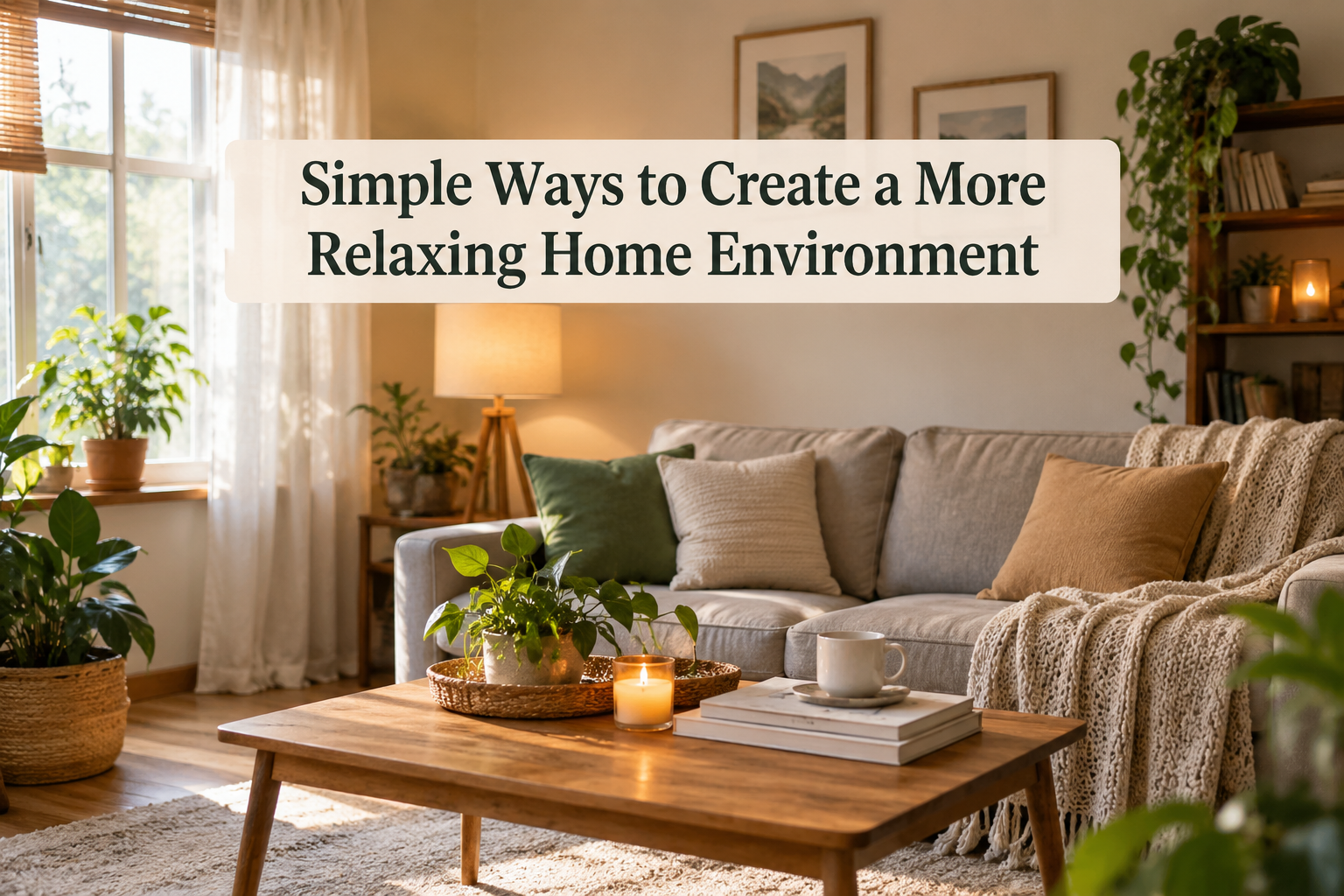
A relaxing home environment can make everyday life feel more comfortable, peaceful, and manageable. Home is the place where most people return after work, study, travel, shopping, or other daily responsibilities. For this reason, the atmosphere inside the home can have a strong influence on how a person feels during the day.
Creating a relaxing home does not require expensive furniture, luxury decoration, or a complete renovation. Small changes in lighting, organization, cleanliness, sound, color, and daily habits can make a noticeable difference. A peaceful home is usually created through simple choices that reduce unnecessary stress and make everyday spaces easier to enjoy.
After reading about home organization, interior comfort, and healthy lifestyle habits, one idea becomes very clear. A relaxing home is not only about appearance. It is also about how a space feels, functions, and supports everyday routines.
Keep Your Home Free From Unnecessary Clutter
One of the simplest ways to create a more relaxing home environment is to reduce clutter. Too many objects in one space can make a room feel crowded and visually tiring.
Clutter often builds slowly. A few papers are left on a table. Clothes are placed on a chair. Shopping bags remain in a corner. Small household items begin to collect on shelves. Over time, the room can start to feel less comfortable.
Removing unnecessary items can immediately make a space feel calmer.
You do not need to organize the entire house in one day. Start with one small area. Clear a table, organize a drawer, or remove objects that are no longer useful.
When surfaces are cleaner and rooms contain fewer unnecessary objects, the home often feels more open and easier to manage.
Use Soft and Comfortable Lighting
Lighting has a major effect on the atmosphere of a room.
Bright lighting can be useful when cooking, cleaning, reading, or completing detailed tasks. However, softer lighting can create a more relaxing feeling during the evening.
Table lamps, floor lamps, and warm indoor lighting can make living rooms and bedrooms feel comfortable and welcoming.
Natural light is also important. Opening curtains during the day can make a room feel fresh and bright. Sunlight can also make smaller spaces appear more open.
A good approach is to use stronger lighting when necessary and softer lighting during periods of rest.
Bring Natural Elements Into Your Home
Nature can make indoor spaces feel calmer and more pleasant.
Adding a few indoor plants is one simple way to bring natural elements into a home. Plants can add color, texture, and freshness to rooms that might otherwise feel plain.
You do not need a large collection of plants. One small plant near a window, on a desk, or on a shelf can change the appearance of a space.
Natural materials such as wood, cotton, stone, and woven baskets can also create a softer atmosphere.
Even simple things like fresh flowers or a bowl of fruit can add a natural feeling to a room.
Choose Calm and Comfortable Colors
Color can influence the overall mood of a space.
Soft and neutral colors are often used when creating relaxing home environments. Shades such as cream, beige, light gray, soft green, pale blue, and warm white can create a calm background.
This does not mean every room must use neutral colors.
Personal taste is important. Some people feel more comfortable around warm colors, while others prefer cooler tones.
The main idea is to avoid creating a space that feels visually overwhelming.
You can also add small amounts of stronger color through cushions, artwork, rugs, or decorative items.
Create Comfortable Seating Areas
Comfortable seating can make a home feel more inviting.
A relaxing home should have at least one place where you can sit without feeling uncomfortable or distracted.
This might be a sofa in the living room, a comfortable chair near a window, or a small reading corner in the bedroom.
Adding a soft cushion, lightweight blanket, or small side table can make the area even more useful.
A dedicated place for rest can encourage you to slow down for a few minutes during a busy day.
Keep Frequently Used Areas Clean
Cleanliness plays an important role in creating a relaxing home environment.
A home does not need to look perfect all the time. However, keeping frequently used areas reasonably clean can make daily life more comfortable.
Focus on areas such as the kitchen counter, dining table, bathroom sink, bedroom floor, and living room.
Simple cleaning habits are often easier than large cleaning sessions.
For example, washing dishes after meals, wiping surfaces regularly, and putting objects back in their proper place can prevent mess from building up.
Small daily efforts can make the home easier to maintain.
Let Fresh Air Enter the Home
Indoor air can sometimes feel stale, especially when windows remain closed for long periods.
When weather and outdoor conditions allow, opening windows for a short time can help fresh air move through the home.
Fresh air can make rooms feel more comfortable and reduce the feeling of stuffiness.
Ventilation is especially helpful in kitchens, bathrooms, and bedrooms.
You can also improve comfort by keeping air vents clean and avoiding excessive indoor smoke or strong artificial fragrances.
Reduce Unnecessary Noise
Noise can influence how relaxing a home feels.
Television, phones, appliances, traffic, and household activity can create constant background sound.
Some noise is unavoidable, but unnecessary noise can often be reduced.
Turning off the television when nobody is watching, lowering device volume, and creating quiet periods during the day can make the home feel calmer.
Soft curtains, rugs, cushions, and upholstered furniture may also help reduce echoes in certain rooms.
Some people also enjoy quiet natural sounds, soft music, or gentle background audio when relaxing.
Create a Peaceful Bedroom
The bedroom is one of the most important rooms for relaxation.
A peaceful bedroom should feel comfortable, clean, and simple.
Try to keep the bed area free from unnecessary objects. Use comfortable bedding and keep the room at a temperature that feels suitable.
Soft lighting in the evening can also make the bedroom feel more restful.
If possible, reduce work related items in the bedroom. Laptops, paperwork, and office equipment can make the room feel connected to responsibilities instead of rest.
A bedroom does not need expensive decoration. Comfort and simplicity are usually more important.
Organize Everyday Items
Searching for keys, chargers, documents, or household items can create unnecessary stress.
Giving everyday objects a regular place can make daily routines smoother.
Keys can be kept near the entrance. Chargers can stay in one drawer. Important papers can be stored in a folder. Shoes can have a specific area near the door.
Simple organization reduces the number of small decisions you need to make throughout the day.
When things are easy to find, the home often feels more manageable.
Use Pleasant but Gentle Scents
Smell can influence how a room feels.
Some people enjoy light natural scents from flowers, clean bedding, fresh air, or mild home fragrances.
The important word is mild.
Strong fragrances can become uncomfortable, especially in small spaces.
Clean air is usually more important than artificial fragrance.
You can create a fresh atmosphere by regularly washing fabrics, emptying waste bins, ventilating rooms, and keeping kitchens and bathrooms clean.
Make Your Living Room Comfortable
The living room is often one of the busiest areas of the home.
It may be used for relaxing, watching television, talking with family, receiving guests, or reading.
Because it serves many purposes, it can easily become cluttered.
Try to keep the main seating area open and comfortable. Remove items that do not need to remain there.
Arrange furniture in a way that allows easy movement.
A small rug, soft cushions, comfortable lighting, and simple decoration can make the living room feel warmer without making it crowded.
Create a Small Reading or Quiet Corner
You do not need a separate room to create a quiet space.
A small corner can be enough.
Choose a comfortable chair, add a small table, and place a lamp nearby. You can also keep a few books or magazines there.
This area can be used for reading, thinking, drinking tea, or simply sitting quietly for a few minutes.
Having a specific place for calm activities can make relaxation feel more natural.
Keep Technology Under Control
Technology is useful, but too many screens can make a home feel busy.
Phones, televisions, tablets, computers, and notifications can create constant stimulation.
Consider creating certain areas or times where technology use is reduced.
For example, you might avoid using your phone at the dining table or reduce screen use during the last part of the evening.
You do not need to remove technology from your home. The goal is simply to prevent it from controlling every quiet moment.
Use Storage That Is Easy to Maintain
Storage can help create a calmer home, but complicated organization systems are often difficult to maintain.
Simple storage usually works better.
Use baskets for frequently used items, drawers for smaller objects, and shelves for books or decorative pieces.
Avoid filling every storage area completely. Leaving some empty space can make organization easier.
The best storage system is one that you can follow without much effort.
Make the Kitchen Feel Orderly
A clean and organized kitchen can improve the atmosphere of the whole home.
Kitchen mess can build quickly because cooking creates dishes, packaging, food waste, and spills.
Try cleaning small messes while preparing meals.
Keep frequently used utensils in easy to reach places and remove items that are rarely used from the main counter.
An open counter makes the kitchen feel more spacious and can also make cooking easier.
Add Personal Items That Make You Feel Comfortable
A relaxing home should still feel personal.
Photographs, books, artwork, handmade items, travel memories, or meaningful objects can make a home feel familiar and welcoming.
The goal is not to remove every decorative object.
Instead, choose items that have value or make you feel comfortable.
A few meaningful objects often create more warmth than a large amount of random decoration.
Avoid Overdecorating Every Space
It can be tempting to fill empty walls, shelves, and corners.
However, empty space can also be part of good design.
Leaving some areas simple gives the eyes a place to rest.
A room that contains fewer carefully selected objects often feels calmer than one filled with decoration.
This is especially useful in small homes where too many items can quickly make the space feel crowded.
Build Simple Cleaning Habits
A relaxing home is easier to maintain when cleaning becomes part of the daily routine.
You do not need to spend hours cleaning every day.
A few simple habits can make a big difference.
Make the bed in the morning. Put clothes away instead of leaving them on furniture. Clean kitchen surfaces after cooking. Return objects to their regular places.
These small actions prevent larger messes from developing.
Create a Calm Evening Atmosphere
The atmosphere of your home can change throughout the day.
During the evening, you can make the environment feel calmer by lowering lights, reducing noise, putting away work materials, and preparing the home for rest.
Some people enjoy reading, listening to quiet music, talking with family, or having a warm drink.
Creating a simple evening routine can help separate the busy part of the day from the relaxing part.
Pay Attention to Temperature
Temperature can affect comfort more than many people realize.
A room that feels too hot or too cold can make it difficult to relax.
Use fans, ventilation, curtains, heating, or cooling when available to create a comfortable indoor temperature.
Lightweight bedding can be useful during warm weather, while extra blankets can make colder evenings more comfortable.
Small adjustments in temperature can improve the overall feeling of a room.
Keep Your Entry Area Simple
The entrance of the home creates the first impression when you return.
If the entrance is crowded with shoes, bags, boxes, and other items, the home may immediately feel busy.
Try keeping the area simple.
Use a shoe rack, small basket, wall hooks, or storage bench if needed.
An organized entrance can make coming home feel more pleasant.
Focus on Comfort Instead of Perfection
One of the most important ideas when creating a relaxing home environment is to avoid chasing perfection.
A home is meant to be lived in.
There will sometimes be dishes in the kitchen, toys on the floor, books on tables, or clothes waiting to be folded.
That is normal.
The goal is not to create a home that looks like a showroom. The goal is to create a space that feels comfortable, functional, and supportive.
Make Changes Slowly
You do not need to change your entire home at once.
Start with the room where you spend the most time.
Remove a few unnecessary objects. Improve the lighting. Clean one surface. Add a comfortable chair. Open the window.
Then observe how the space feels.
Small improvements can gradually change the atmosphere of the whole home.
Final Thoughts
Learning simple ways to create a more relaxing home environment can help make everyday life feel calmer and more comfortable. A peaceful home does not depend on expensive furniture or perfect interior design. It is usually created through practical habits and thoughtful choices.
Keeping clutter under control, using comfortable lighting, bringing in fresh air, organizing everyday items, reducing unnecessary noise, and creating simple areas for rest can all improve the atmosphere of a home.
The most relaxing homes are often not the most luxurious. They are the spaces where people feel comfortable, organized, and able to slow down.
By making small changes over time, you can create a home environment that supports rest, comfort, and a more balanced daily routine.