

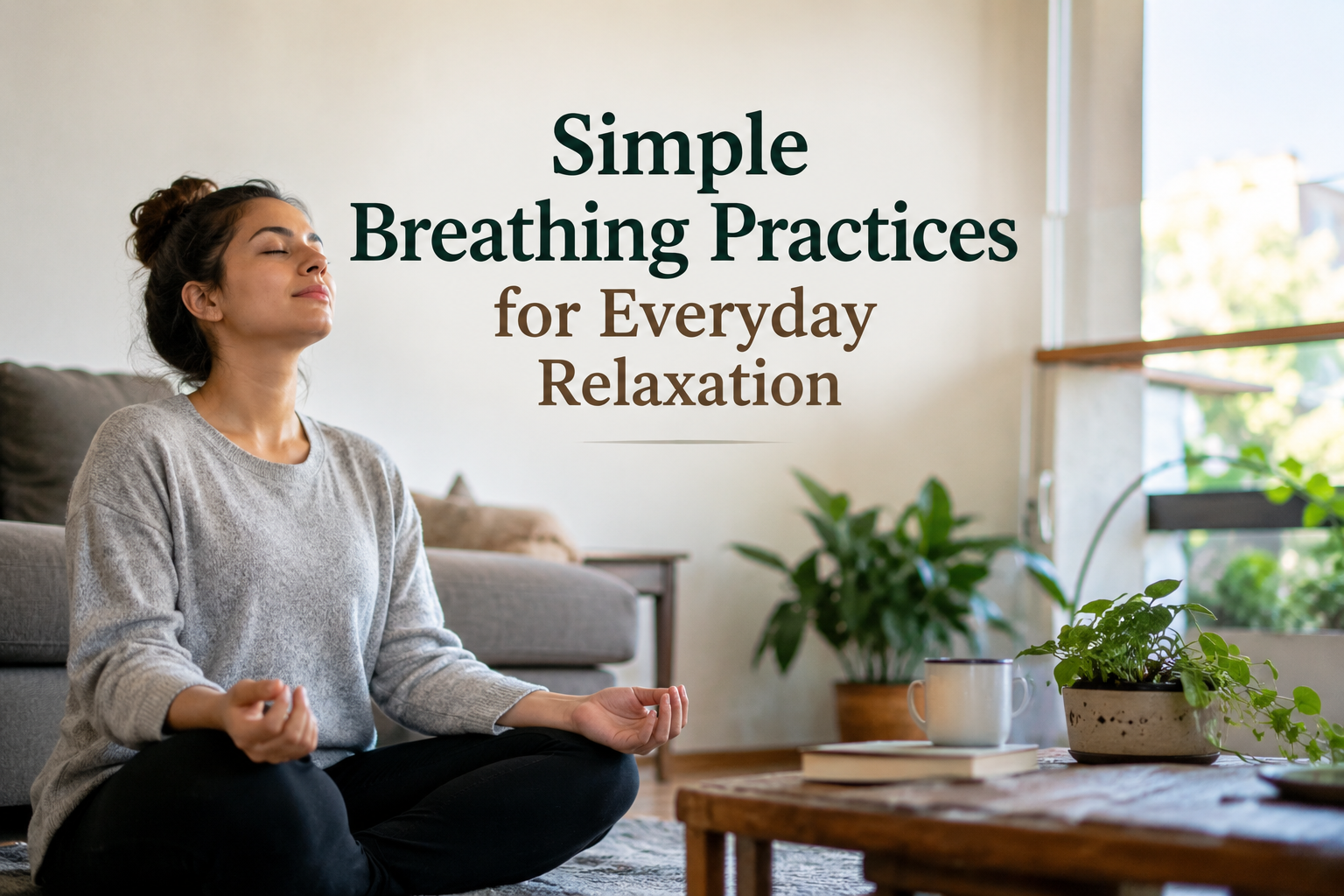
Life can feel busy even on ordinary days. Work, family responsibilities, phone notifications, traffic, deadlines, and constant thinking can make the mind feel crowded. Sometimes we do not even notice how tense the body has become until we sit quietly for a few minutes.
One of the simplest ways to create a feeling of calm is through breathing.
Breathing is something we do every moment, but most of the time we do it without paying attention. When we become more aware of the way we breathe, it can help us slow down, feel more settled, and create a small space between ourselves and the pressure of the day.
Simple breathing practices for everyday relaxation do not require special equipment, a quiet room, or a long meditation session. They can be practiced at home, at work, before sleep, during a break, or even while sitting in a parked car.
The goal is not to force the body to become completely relaxed. The goal is simply to breathe with more awareness and allow the body to settle naturally.
Why Breathing Can Feel Relaxing
Breathing changes throughout the day.
When we are calm, breathing often becomes slower and more comfortable. When we feel rushed, worried, angry, or under pressure, breathing may become faster and shallower.
This connection works in both directions.
Our emotions can affect the way we breathe, and the way we breathe can also influence how settled we feel.
Slow and comfortable breathing encourages us to stop rushing for a moment. It gives the mind something simple to focus on and helps bring attention back to the present.
This is one reason breathing exercises are often included in relaxation routines, meditation, yoga, mindfulness, and sleep habits.
You do not need to control every breath. In fact, breathing exercises usually work best when they feel gentle rather than forced.
Start by Noticing Your Natural Breath
Before trying any breathing technique, it can be helpful to simply observe your normal breathing.
Sit in a comfortable position.
Relax your shoulders.
Place your feet on the floor if you are sitting in a chair.
Then notice your breathing without changing it.
Pay attention to the air entering your nose.
Notice the small movement in your chest or stomach.
Feel the breath leaving your body.
Continue for one or two minutes.
This simple practice is useful because it teaches awareness before control. Many people immediately try to take very deep breaths, but relaxation does not always require the biggest breath possible.
Sometimes the most calming breath is simply a slower and more comfortable version of your natural breathing.
Practice Slow Belly Breathing
Belly breathing is one of the easiest breathing practices for everyday relaxation.
Sit or lie down comfortably.
Place one hand on your chest and the other on your stomach.
Breathe in slowly through your nose.
Try to allow your stomach to rise gently while keeping your shoulders relaxed.
Then breathe out slowly.
Notice your stomach becoming softer as the air leaves your body.
Continue for several breaths.
You do not need to push your stomach outward or take an unusually large breath. The movement should feel natural.
Belly breathing can be especially useful after a busy day because it encourages you to slow your breathing rhythm and release unnecessary tension.
Try the Longer Exhale Practice
One very simple relaxation method is to make the exhale slightly longer than the inhale.
For example, breathe in comfortably for about four seconds.
Then breathe out slowly for about six seconds.
Repeat the pattern several times.
There is nothing magical about these exact numbers. The important idea is that the breathing should remain comfortable.
If four seconds feels too long, you can breathe in for three seconds and breathe out for four or five seconds.
A slightly longer exhale can create a peaceful rhythm that feels especially helpful when you are trying to unwind.
It can also be a useful part of an evening relaxation routine.
Use Equal Breathing for Mental Focus
Equal breathing is another simple technique.
Breathe in for a comfortable count.
Then breathe out for the same count.
For example, inhale for four seconds and exhale for four seconds.
Continue for one or two minutes.
The steady rhythm gives the mind something simple to follow.
This can be helpful when your thoughts feel scattered or when you are moving from one task to another.
You can practice equal breathing before studying, before starting work, or while taking a short break.
The aim is not to empty the mind completely. It is simply to bring attention back to one steady activity.
Practice Box Breathing Gently
Box breathing is a well known breathing pattern that follows four equal stages.
Breathe in slowly for four counts.
Pause gently for four counts.
Breathe out for four counts.
Pause again for four counts.
Then repeat.
The pattern creates a clear structure that some people find useful during stressful moments.
However, the pauses should never feel uncomfortable.
If holding your breath creates tension, shorten the pause or skip it completely.
Relaxation exercises should feel supportive, not demanding.
You can also use a simpler version by breathing in for four counts and breathing out for four counts without holding your breath.
Try Five Calm Breaths
You do not always need a full breathing session.
Sometimes five slow breaths are enough to create a short mental reset.
This practice is useful because it can be done almost anywhere.
Stop what you are doing for a moment.
Take one comfortable breath in.
Breathe out slowly.
Repeat five times.
During each breath, allow your shoulders, jaw, and hands to become a little softer.
This technique works well between meetings, after reading stressful messages, before answering an important phone call, or before entering your home after work.
It creates a small pause in the day without requiring much time.
Combine Breathing With Shoulder Relaxation
Breathing can feel even more effective when combined with simple physical relaxation.
As you breathe in, notice your shoulders.
As you breathe out, allow them to drop naturally.
On the next breath, notice your jaw.
As you breathe out, relax it.
Then notice your hands.
Let your fingers become softer.
You can continue moving your attention through different parts of the body.
This practice helps you notice where you may be holding unnecessary tension.
Many people tense their shoulders or jaw without realizing it, especially while working on a computer or using a phone.
Use Breathing During a Busy Workday
Relaxation does not have to happen only at home.
Simple breathing practices can be included in a normal workday.
For example, before opening your email in the morning, take three slow breaths.
Before an important meeting, spend one minute breathing comfortably.
After finishing a difficult task, pause for five breaths before starting the next one.
These small moments can make the day feel less rushed.
They also help create clearer transitions between activities.
Without these transitions, one stressful task can easily carry tension into the next part of the day.
Practice Before Sleep
Breathing exercises can also become part of a relaxing bedtime routine.
Once you are comfortable in bed, close your eyes and notice your natural breath.
Then slowly lengthen the exhale.
You may breathe in for three or four seconds and breathe out for five or six seconds.
Continue without forcing the rhythm.
Try to focus on the feeling of the breath rather than on whether you are falling asleep quickly.
The purpose is to create a calmer environment for rest.
If your mind becomes busy, simply bring your attention back to the next breath.
There is no need to fight your thoughts.
Use Breathing When Waiting
Waiting is a surprisingly useful time to practice breathing.
You might be waiting in a queue, sitting in a clinic, waiting for a meeting to begin, or waiting for someone to arrive.
Instead of immediately reaching for your phone, spend a few moments noticing your breathing.
Take slow, comfortable breaths.
Relax your shoulders.
Notice your surroundings.
This turns ordinary waiting time into a short relaxation break.
Because breathing exercises are quiet and invisible, you can practice them without drawing attention.
Pair Breathing With Walking
Breathing practices do not always require sitting still.
You can also combine relaxed breathing with gentle walking.
Walk at a comfortable pace.
Pay attention to your steps.
Notice your breath moving naturally.
You may find a rhythm such as breathing in for three steps and breathing out for four steps.
Do not force the timing.
The combination of movement and breathing can be useful after sitting for a long time.
A short walk outside may also help you mentally separate work time from personal time.
Avoid Trying Too Hard
One of the biggest mistakes people make with breathing exercises is trying to breathe too deeply.
Very large or rapid breaths can sometimes make a person feel lightheaded or uncomfortable.
Relaxation breathing should usually feel easy.
The breath should not feel like hard work.
You do not need to fill your lungs completely every time.
Think of the practice as softening your breathing rather than maximizing it.
If you feel dizzy, uncomfortable, or short of breath, stop the exercise and return to your normal breathing.
Make Breathing a Small Daily Habit
Breathing exercises become easier when they are connected to something you already do.
You might take five slow breaths after brushing your teeth.
You could practice for one minute after sitting at your desk.
You may use slow breathing before lunch or before going to bed.
These small habits are often easier to maintain than long relaxation sessions.
Consistency matters more than duration.
A short practice done regularly may feel more useful than a long session that you rarely have time to complete.
Create a Calm Breathing Space at Home
You do not need a special meditation room, but having a comfortable place to sit can make relaxation easier.
Choose a chair, corner of the bedroom, or quiet area of the living room.
Keep the space simple.
Reduce unnecessary noise when possible.
Sit comfortably and give yourself a few minutes without checking your phone.
Over time, your brain may begin to associate that place with slowing down.
This can make it easier to enter a calmer routine.
Do Not Judge Your Thoughts
People sometimes believe they are doing breathing exercises incorrectly because thoughts continue appearing.
That is completely normal.
Breathing practice is not about stopping every thought.
You may remember something from work.
You may start planning tomorrow.
You may think about a conversation from earlier in the day.
When you notice that your attention has moved away from your breathing, gently return to the next breath.
There is no need to become frustrated.
The act of returning attention is part of the practice.
Use Breathing Before Difficult Conversations
Breathing can also be useful before emotionally important situations.
Before making a difficult phone call, responding to criticism, or having a serious conversation, take a few slow breaths.
This small pause can give you time to settle before reacting.
It does not guarantee that the conversation will be easy, but it may help you approach it with more awareness.
Sometimes a few seconds of calm can change the tone of an entire discussion.
Keep the Practice Comfortable
Different breathing techniques work for different people.
Some people enjoy counting.
Others prefer simply watching the breath.
Some like longer exhales, while others feel more comfortable with equal breathing.
There is no single technique that everyone must follow.
Choose the method that feels natural and easy to repeat.
If a breathing exercise creates discomfort, anxiety, dizziness, or a feeling of air hunger, stop and return to normal breathing.
People with respiratory, heart, or other medical conditions may also want to ask a qualified healthcare professional whether particular breathing exercises are suitable for them.
Everyday Relaxation Does Not Need to Be Complicated
Modern wellness advice can sometimes make relaxation sound like another task that requires special equipment, long routines, or perfect discipline.
Breathing reminds us that relaxation can be much simpler.
You already carry the basic tool with you everywhere.
You can pause for five breaths.
You can slow your exhale.
You can relax your shoulders while breathing.
You can notice your breath while waiting.
You can spend one quiet minute breathing before sleep.
These small practices may not remove every source of stress, but they can create short periods of calm throughout the day.
Those moments can matter.
Final Thoughts
Simple breathing practices for everyday relaxation are valuable because they are easy, flexible, and available almost anywhere.
You do not need to become an expert in meditation or follow complicated breathing patterns. Start by noticing your natural breath. Then experiment with slow belly breathing, equal breathing, longer exhales, or five calm breaths.
Keep the practice comfortable and realistic.
A few peaceful breaths in the morning, during work, after a busy day, or before sleep can become small reminders to slow down and reconnect with the present moment.
The goal is not perfect relaxation.
The goal is to create a little more calm in an ordinary day, one comfortable breath at a time.