

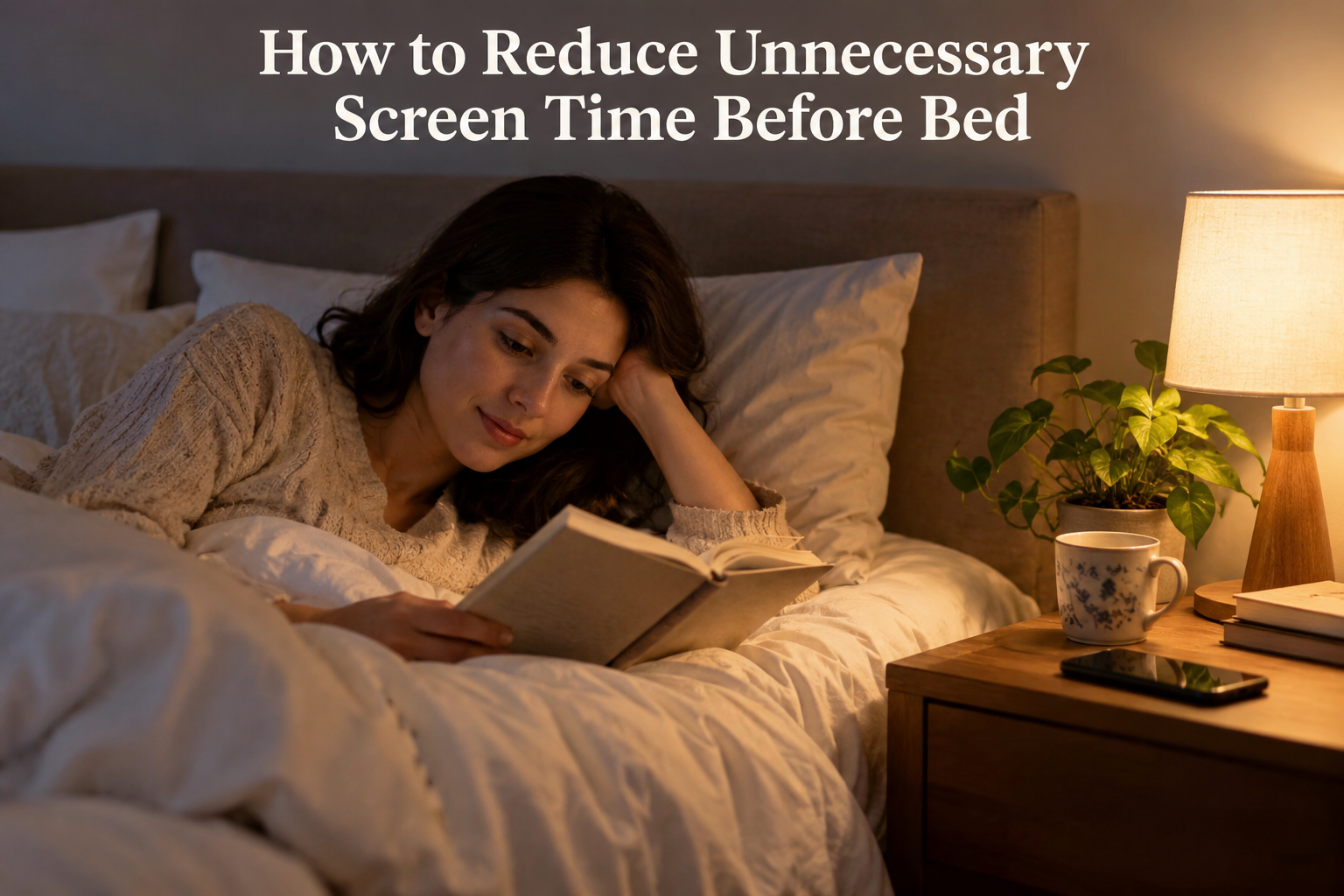
Screens have become a normal part of everyday life. We use phones to communicate, computers to work, televisions to relax, and tablets to read or watch videos. Technology can make life easier, but using screens too much at night can quietly become a habit that affects the way we prepare for sleep.
Many people plan to check their phone for only a few minutes before bed, but those few minutes can easily become half an hour or more. One video leads to another, a message creates another conversation, and social media encourages endless scrolling. Before we realize it, our intended bedtime has already passed.
Learning how to reduce unnecessary screen time before bed does not mean completely avoiding technology. The goal is simply to become more intentional about how we use screens during the final part of the day. Small changes can create a calmer evening routine and make bedtime feel less rushed.
Why Screen Time Before Bed Becomes a Habit
Nighttime screen use often happens automatically. After completing work, household responsibilities, or studies, many people finally have some free time. The phone becomes an easy source of entertainment.
Scrolling through social media, watching videos, reading news, or checking messages can feel relaxing because these activities require little effort. The problem is that digital content is designed to keep our attention.
There is always another post, another video, another message, or another story to explore.
Because of this, people may continue using their devices even when they are already tired.
Recognizing this pattern is an important first step. Instead of thinking that you need stronger willpower, it can be more helpful to change the environment and create healthier evening habits.
Set a Clear Time to Stop Using Screens
One of the simplest ways to reduce unnecessary screen time before bed is to decide when screen use will end.
Choose a realistic time based on your normal bedtime.
For example, if you usually sleep at 11 pm, you might decide to put your phone away at 10 pm or 10:30 pm.
The exact time is less important than being consistent.
A regular stopping time creates a clear boundary between the digital part of your day and your bedtime routine.
At first, it may feel unusual because you are used to checking your phone until you fall asleep. After several days, however, your evening can begin to feel more organized.
Start with a short period if necessary. Even reducing screen use by twenty or thirty minutes before bed can be a useful beginning.
Keep Your Phone Away From the Bed
The location of your phone can strongly influence how often you use it.
If your phone is beside your pillow, it becomes very easy to check messages, notifications, videos, or social media. You may reach for it without even thinking.
Try placing your phone on a desk, shelf, or table that is not directly beside your bed.
Another option is to charge your phone in another part of the room.
When the device requires extra effort to reach, you are less likely to pick it up unnecessarily.
Some people also charge their phone outside the bedroom. This can create an even clearer separation between screen time and sleep time.
Turn Off Unnecessary Notifications
Notifications are designed to capture attention.
A single sound, vibration, or light on your screen can make you curious about what happened. Even if the message is not important, you may unlock your phone and then become distracted by other apps.
Reducing notifications during the evening can make it easier to disconnect.
Most smartphones allow you to silence notifications during specific hours. You can also choose which apps are allowed to send alerts.
Important calls or messages can remain available while social media, shopping apps, games, and other nonessential notifications stay quiet.
This creates a calmer digital environment before bed.
Avoid Endless Scrolling
One of the biggest sources of unnecessary screen time is endless scrolling.
Social media feeds, short videos, and news platforms continuously provide new content. There is rarely a natural stopping point.
You may think you are using your phone for five minutes, but twenty or thirty minutes can disappear very quickly.
One practical strategy is to enter an app with a specific purpose.
For example, you might open your phone to reply to two messages and then close the app.
When you use technology with a clear purpose, you are less likely to become trapped in endless browsing.
You can also set app limits if your phone offers this feature.
Create a Simple Evening Routine
Reducing screen time becomes easier when you have something else to do.
Instead of simply telling yourself not to use your phone, create a simple evening routine that replaces screen based entertainment.
Your routine does not need to be complicated.
You could prepare your clothes for the next day, organize your room, wash your face, brush your teeth, read a book, write a few notes, or sit quietly for several minutes.
These activities give your brain a signal that the active part of the day is ending.
A consistent routine can eventually become something you look forward to.
Read a Physical Book
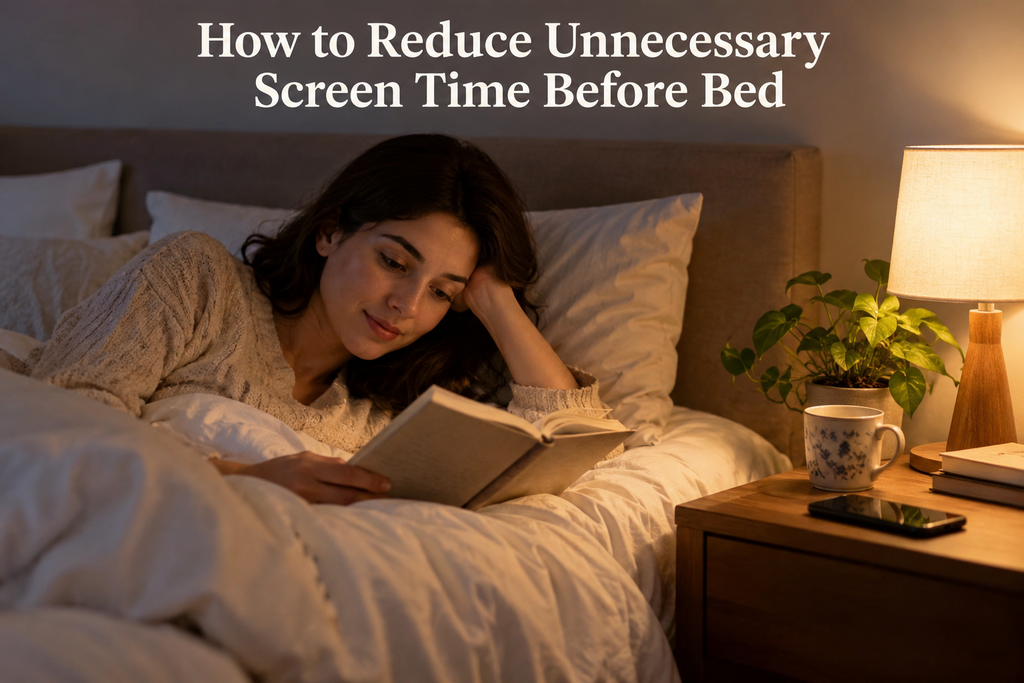
Reading can be a relaxing alternative to using a phone before bed.
A physical book removes many of the distractions that come with digital devices. There are no notifications, messages, advertisements, or videos competing for your attention.
Choose something enjoyable and easy to read.
The goal is not to study difficult material unless you enjoy doing so. A novel, biography, travel book, history book, or collection of short essays can work well.
Reading even a few pages can help replace the habit of scrolling through your phone.
Keep the book near your bed so it becomes the easiest option when you want something to do.
Prepare for Tomorrow
Another useful way to reduce unnecessary screen time before bed is to spend a few minutes preparing for the next day.
You can organize your clothes, pack your bag, prepare your work materials, write a small task list, or check your schedule.
Try to do any necessary digital planning first and then put your devices away.
Preparing for tomorrow can create a sense of completion.
Instead of ending the day with random scrolling, you finish the evening knowing that some of tomorrow’s responsibilities are already organized.
This can also make mornings feel less rushed.
Use an Alarm Clock Instead of Your Phone
Many people keep their phones beside the bed because they use them as an alarm.
The problem is that having the phone nearby makes nighttime scrolling much easier.
A simple alarm clock can solve this problem.
By using a separate alarm clock, you no longer need to keep your phone within reach while sleeping.
This small change can reduce both late night phone use and the habit of checking your phone immediately after waking up.
It creates a healthier distance between your device and your sleeping space.
Make Your Bedroom Less Digital
The environment around you influences your habits.
If your bedroom contains several screens, it becomes easy to continue watching or browsing late into the night.
Try to make your bedroom feel more connected with rest than entertainment.
Keep unnecessary devices away from the bed. If possible, avoid using a laptop while lying under the blankets.
You can also keep chargers, headphones, and tablets in another area.
A bedroom does not need to be completely free from technology, but reducing visible digital distractions can make it easier to relax.
Replace Screen Time With Calm Activities
You are more likely to reduce screen time if you have enjoyable alternatives.
Different activities work for different people.
You might listen to quiet music, stretch gently, organize your room, read, write in a notebook, prepare clothes for tomorrow, or have a short conversation with a family member.
Some people enjoy simple hobbies such as drawing, journaling, or solving a puzzle.
The important thing is to choose activities that feel calming rather than demanding.
Over time, these alternatives can become part of your natural evening routine.
Avoid Taking Work Into Bed
For many people, work is one of the main reasons screen time continues late into the evening.
Emails, messages, documents, and work groups can make it difficult to mentally end the day.
Whenever possible, create a clear time when work ends.
Finish important tasks earlier and avoid checking work messages repeatedly once you are in bed.
If you remember something important, write it down in a notebook so you can deal with it the next day.
Creating a boundary between work and bedtime can help your bedroom feel more restful.
Be Careful With Short Videos
Short video platforms can consume large amounts of time without people realizing it.
Because each video lasts only a few seconds or minutes, it feels easy to watch one more.
However, dozens of short videos can quickly add up to a long period of screen time.
If short videos are one of your main nighttime habits, consider avoiding these apps during the final hour before bed.
You might also move the apps away from your home screen so they are less convenient to open automatically.
Small barriers can help interrupt automatic habits.
Track Your Evening Screen Time
Many smartphones provide information about daily screen use.
Checking this data occasionally can help you understand your habits.
You may discover that you spend much more time on certain apps than you expected.
Do not use the information to criticize yourself.
Instead, treat it as useful feedback.
For example, if you discover that you spend forty minutes watching videos every night before bed, you could set a goal to reduce that time gradually.
Awareness often makes behavior easier to change.
Reduce Screen Time Gradually
Trying to completely change your habits overnight can be difficult.
A gradual approach is often more realistic.
If you normally use your phone until midnight, try putting it away fifteen minutes earlier for several nights.
Then increase the screen free period to thirty minutes.
Later, you might extend it further if that feels helpful.
Gradual improvement can feel much easier than creating strict rules that are difficult to maintain.
The goal is not perfection. The goal is to reduce unnecessary screen time and build a healthier evening routine.
Keep Necessary Screen Use Separate From Entertainment
Not all screen use is unnecessary.
Sometimes you may need your phone to set an alarm, communicate with family, check transportation information, or complete an important task.
The key is to separate necessary use from entertainment.
Complete essential digital tasks first.
After that, put the device away instead of moving from one app to another.
This simple distinction can help you become more conscious of why you are using your screen.
Make Bedtime More Enjoyable
People often return to their phones because bedtime feels boring.
Creating a comfortable evening environment can make it easier to disconnect.
Keep your bedroom tidy, use comfortable bedding, lower bright lights, and choose relaxing activities.
A peaceful environment gives you something better to transition into instead of endless scrolling.
When bedtime feels pleasant, reducing screen use becomes less about restriction and more about choosing a calmer way to end the day.
Do Not Worry About Being Perfect
There will be evenings when you use your phone longer than planned.
That does not mean your routine has failed.
Habits develop gradually, and occasional changes are normal.
What matters is returning to the routine the next night.
Try to focus on your overall pattern instead of one evening.
If you reduce unnecessary screen time most nights, you are already making meaningful progress.
Final Thoughts
Learning how to reduce unnecessary screen time before bed is mainly about creating better boundaries around technology.
You do not need to remove every screen from your life. Phones, computers, and televisions are useful tools. The goal is simply to prevent unnecessary digital activity from taking over the final part of your evening.
Start with simple changes. Choose a regular time to stop scrolling. Keep your phone away from the bed. Silence unnecessary notifications. Read a physical book, prepare for tomorrow, or enjoy another calm activity.
These small habits can make evenings feel slower, quieter, and more intentional.
The most effective routine is one that fits naturally into your life. Instead of trying to create a perfect bedtime immediately, make one small improvement and continue building from there.
Over time, reducing unnecessary screen time before bed can become less of a challenge and more of a normal part of your daily routine.