

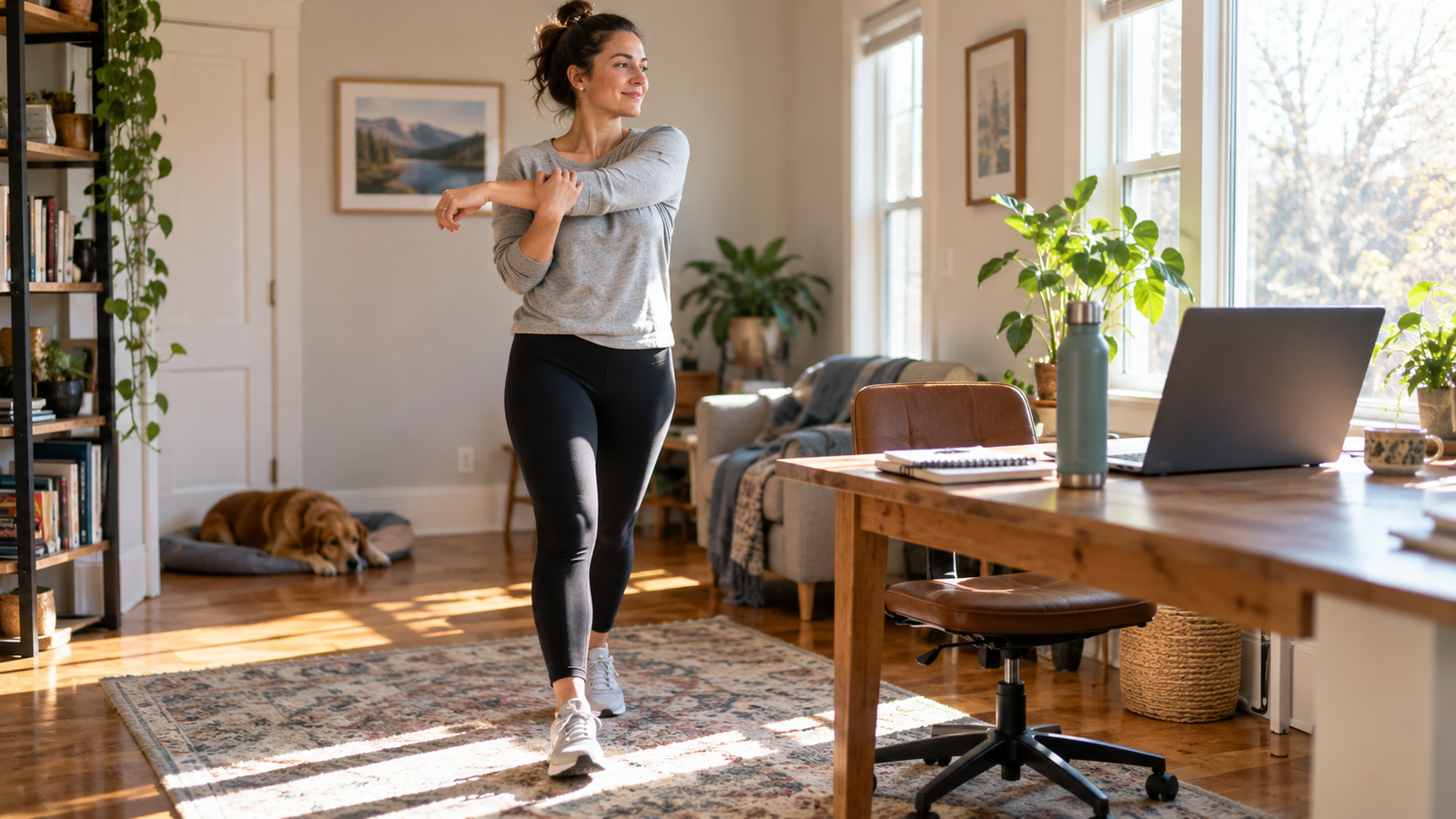
Modern life has made many daily tasks easier, but it has also made us much less active. We can work from a chair, order food from a phone, travel everywhere by car, and spend our free time watching screens. While these conveniences save time and energy, they can also reduce the amount of movement our bodies get each day.
The good news is that you do not need to spend hours in a gym to become more active. Small changes can make a meaningful difference. Walking a little more, standing up regularly, doing simple household tasks, and moving during breaks can all help increase your daily activity.
Learning easy ways to add more movement to your day can make physical activity feel natural instead of difficult. The goal is not to completely change your lifestyle overnight. It is to find simple opportunities to move more during the activities you already do.
Why Daily Movement Matters
The human body is designed to move. Our muscles, joints, heart, lungs, and bones all benefit from regular activity. When we sit for long periods, many parts of the body remain inactive.
Daily movement helps support circulation and keeps muscles working. It can also help maintain flexibility, balance, and physical strength.
Movement is not only about burning calories. It also plays an important role in maintaining general health and supporting the body’s normal functions.
Even light activities such as walking around the house or standing while talking can increase the amount of energy your body uses compared with sitting still.
The important idea is simple. Your daily movement adds up.
A few minutes of activity here and there may not seem important, but several small periods of movement throughout the day can become a meaningful amount of physical activity.
Start Your Day With Gentle Movement
One of the easiest ways to add more movement to your day is to begin shortly after waking up.
You do not need a difficult workout. A few gentle stretches can help wake up your muscles and joints.
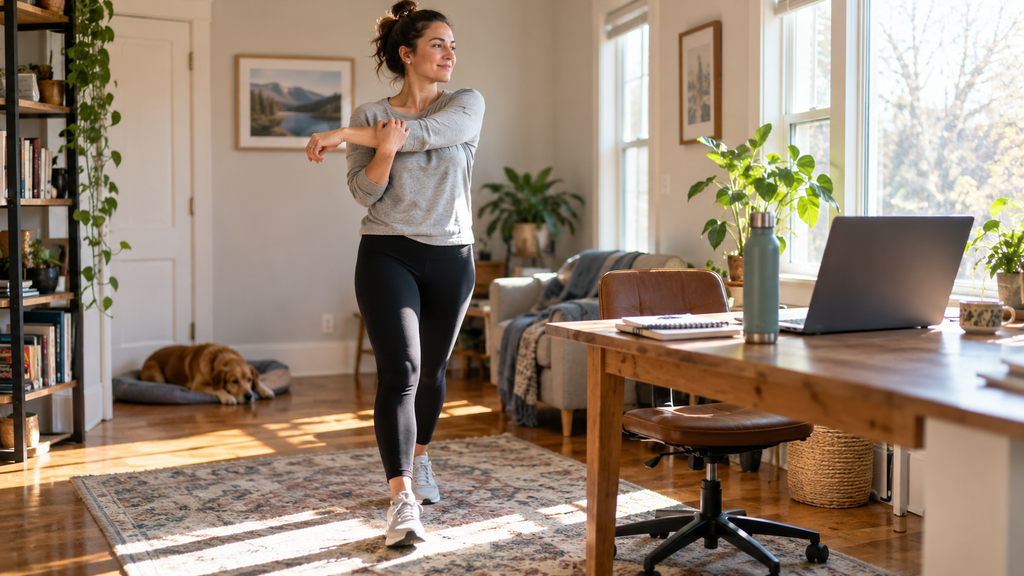
You might stretch your arms above your head, slowly rotate your shoulders, gently move your neck, and stretch your legs.
You can also walk around your home for a few minutes while preparing breakfast.
Starting the morning with movement can also create a positive habit. When physical activity becomes part of your normal routine, it may feel easier to continue moving throughout the rest of the day.
Walk Whenever You Have the Opportunity
Walking is one of the simplest forms of physical activity.
It does not require special equipment, complicated training, or a gym membership. For most people, it can easily become part of everyday life.
Look for small chances to walk more.
Instead of parking directly beside the entrance of a store, you can park slightly farther away and walk the remaining distance.
If you use public transportation, you may sometimes get off one stop earlier and walk the rest of the way when conditions are safe and convenient.
At home, you can walk around while talking on the phone.
You can also take a short walk after a meal or walk around your neighborhood in the evening.
These small walking habits can gradually increase the amount of movement in your day without requiring a large amount of extra time.
Use the Stairs More Often
Elevators and escalators are convenient, especially in tall buildings. However, when the distance is reasonable, taking the stairs can be an easy way to increase daily activity.
Walking up stairs makes the muscles in your legs work harder than normal walking. It also raises your breathing rate and heart rate for a short period.
You do not need to climb many floors.
Even using the stairs for one or two floors can add extra movement.
If climbing stairs is difficult because of physical limitations, another form of gentle activity may be more appropriate.
The main idea is to choose movement whenever a simple opportunity appears.
Take Movement Breaks While Working
Many people now spend several hours each day sitting at a desk.
Long periods of sitting can make the body feel stiff and tired. A simple solution is to take regular movement breaks.
Every so often, stand up from your chair and move around.
You could walk to another room, stretch your arms, refill your water bottle, or simply stand for a few minutes.
These breaks do not need to be long.
Even a short break can interrupt continuous sitting and give your muscles a chance to move.
You can also connect movement with regular activities. For example, each time you finish a task, answer an important email, or complete a meeting, you could stand up and walk for a minute.
Small routines like these can help movement become automatic.
Walk During Phone Calls
Phone calls can sometimes last ten, twenty, or even thirty minutes.
Instead of sitting during every call, consider walking around while you talk.
You can walk around your home, office, garden, or another safe area.
This is one of the easiest ways to add movement because you are using time that would otherwise be spent sitting.
You may be surprised by how many extra steps you can take during a long conversation.
If walking is not possible, simply standing during part of the call can still increase movement compared with remaining seated.
Turn Household Chores Into Activity
Household work is another useful source of daily movement.
Cleaning floors, washing dishes, doing laundry, gardening, organizing rooms, and carrying groceries all require physical effort.
Sometimes people think exercise only counts when it happens in a gym. In reality, many daily tasks involve movement.
You can make household activities slightly more active by working at a comfortable but steady pace.
For example, while cleaning your home, you may move from room to room more often instead of collecting everything in one trip.
Gardening can also involve bending, walking, lifting light objects, and using different muscle groups.
Instead of seeing chores only as work, you can also see them as opportunities to keep your body active.
Move While Watching Television
Watching television does not always have to mean sitting still for several hours.
You can add movement during advertisement breaks or between episodes.
Stand up, walk around the room, stretch, or do a few simple body movements.
You can also perform light activities while watching your favorite program.
Some people walk in place, stretch their legs, or do gentle exercises while keeping their attention on the television.
The goal is not to turn relaxation into a difficult workout.
It is simply to reduce the amount of time spent completely inactive.
Keep Frequently Used Items Slightly Farther Away
The way you organize your environment can influence how much you move.
If everything you need is within arm’s reach, you may spend long periods without standing.
You can create small reasons to move.
For example, keep your water bottle in a place that requires you to stand up occasionally.
Place certain office supplies on another table.
At home, you can store some commonly used items in locations that require a short walk.
These small changes may seem unimportant, but they create repeated opportunities for movement throughout the day.
Take Short Walks After Meals
Walking after meals can be a simple addition to your daily routine.
You do not need to walk quickly or travel a long distance.
A calm walk around your neighborhood, garden, office building, or home can help you stay active.
If you eat three meals each day and walk briefly after one or two of them, those minutes can add up over the week.
Walking after meals can also provide a mental break.
Instead of immediately returning to a chair or screen, you have a chance to move, relax, and change your surroundings.
Make Social Time More Active
Meeting friends and family often involves sitting in restaurants, homes, or coffee shops.
You can occasionally choose activities that include movement.
For example, instead of sitting for the entire visit, you could take a walk together.
Families can visit a park, walk around a local market, explore a new neighborhood, or play simple outdoor games.
These activities make movement more enjoyable because the focus is not only on exercise.
You are spending time with people while naturally being more active.
Play With Children
Children often enjoy activities that involve movement.
If you have children in your family, playing with them can be an easy way to become more active.
You can walk, play with a ball, ride bicycles, visit a park, or create simple games at home.
Even short periods of active play can increase movement.
Children can also remind adults that movement does not always need to feel serious.
Sometimes the easiest way to become more active is simply to have fun.
Use Waiting Time for Movement
Throughout the day, we often spend small periods waiting.
You may wait for food to cook, for water to boil, for a computer file to load, or for someone to arrive.
Instead of automatically sitting down or checking your phone, use some of that waiting time to move.
You can walk around the room, stretch your legs, organize something nearby, or stand instead of sitting.
Each individual moment may only last a minute or two.
However, repeated several times during the day, these moments become additional activity.
Set a Simple Step Goal
Some people find it motivating to track how much they walk.
Many phones and smart watches can count steps automatically.
You do not need to choose an extremely high target.
Start by learning how many steps you normally take in a day.
Then try adding a small amount.
For example, if you normally take around four thousand steps, you might try gradually increasing that number.
The goal should feel realistic.
Step tracking can be useful because it shows how small choices affect your total activity.
Taking the stairs, walking during a phone call, or going for a short evening walk can all increase your daily number.
Stand More During the Day
Standing is not the same as exercise, but it can help reduce long periods of sitting.
Look for situations where standing feels natural.
You might stand while talking to a coworker, reading a short document, waiting for an appointment, or using your phone.
Some people also use standing desks for part of the working day.
However, standing for extremely long periods can also become uncomfortable.
The best approach is usually variety.
Sit when you need to sit, stand when you can, and walk regularly.
Changing positions throughout the day allows different muscles to work.
Make Movement Convenient
One reason people struggle to stay active is that exercise can feel inconvenient.
Making movement easier can help.
Keep comfortable walking shoes somewhere visible.
Choose walking routes near your home.
Keep simple exercise equipment in an easy to reach place if you use it.
If you enjoy walking after dinner, prepare for it before eating.
The fewer obstacles you create, the easier movement becomes.
Habits are often easier to maintain when they fit naturally into your lifestyle.
Do Not Depend Only on Motivation
Motivation changes from day to day.
Some mornings you may feel energetic. On other days, you may not feel interested in exercise at all.
This is why habits are often more useful than motivation.
Instead of deciding each day whether you will move, connect movement with something you already do.
Walk after lunch.
Stretch after waking up.
Stand during phone calls.
Take the stairs when possible.
Walk for a few minutes after finishing work.
When movement becomes connected to your routine, you do not need to make a new decision every time.
Start Small and Build Gradually
One of the biggest mistakes people make is trying to change everything at once.
They may suddenly decide to exercise every day, walk thousands of extra steps, change their diet, and wake up early.
Large changes can sometimes be difficult to maintain.
A simpler approach is to begin with one or two habits.
You might start by taking a ten minute walk each evening.
After that habit feels normal, add another small change.
Perhaps you begin standing during phone calls.
Later, you may start taking the stairs more often.
Gradual improvement often feels more manageable than trying to create a completely new lifestyle in one week.
Choose Activities You Enjoy
Movement becomes easier when you enjoy what you are doing.
Not everyone enjoys gyms or structured workouts.
Some people prefer walking.
Others enjoy gardening, dancing, cycling, swimming, household projects, or playing sports.
There is no single perfect activity for everyone.
The best form of movement is often something you are willing to do regularly.
Try different activities and notice which ones make you feel comfortable and interested.
Enjoyable activities are usually easier to repeat.
Remember That Every Bit of Movement Counts
It is easy to think that physical activity only matters if you exercise for a long period.
This can discourage people who have busy schedules.
In reality, movement can happen throughout the day.
A five minute walk matters.
Taking the stairs matters.
Standing up during a phone call matters.
Cleaning your home matters.
Walking around while waiting matters.
Playing with children matters.
Each activity may seem small, but your body experiences the total amount of movement you perform during the day.
This is why creating an active lifestyle can sometimes be more practical than depending only on formal exercise sessions.
Create a Daily Movement Routine
A simple daily routine may look something like this.
In the morning, stretch for a few minutes.
Walk a little while preparing breakfast.
During work, stand up regularly and take short movement breaks.
Walk during some phone calls.
Use stairs when practical.
Take a short walk after lunch.
Do some household work in the evening.
Take another gentle walk after dinner.
None of these activities needs to be difficult.
Together, however, they can create a much more active day.
Final Thoughts
Finding easy ways to add more movement to your day does not require a complete lifestyle transformation.
The most effective approach is often to look at your normal routine and find small moments where movement can replace sitting.
Walk when you can. Stand regularly. Take the stairs when practical. Move during phone calls. Use household chores as activity. Play with your children. Take short walks after meals. Stretch during breaks.
Most importantly, start with changes that feel realistic.
You do not need to become extremely active overnight. Daily movement is built through repeated small choices.
When these choices become habits, staying active can begin to feel like a natural part of life rather than another task on your schedule.
A healthier routine often starts with something very simple.
Stand up.
Take a few steps.
Then keep moving.