

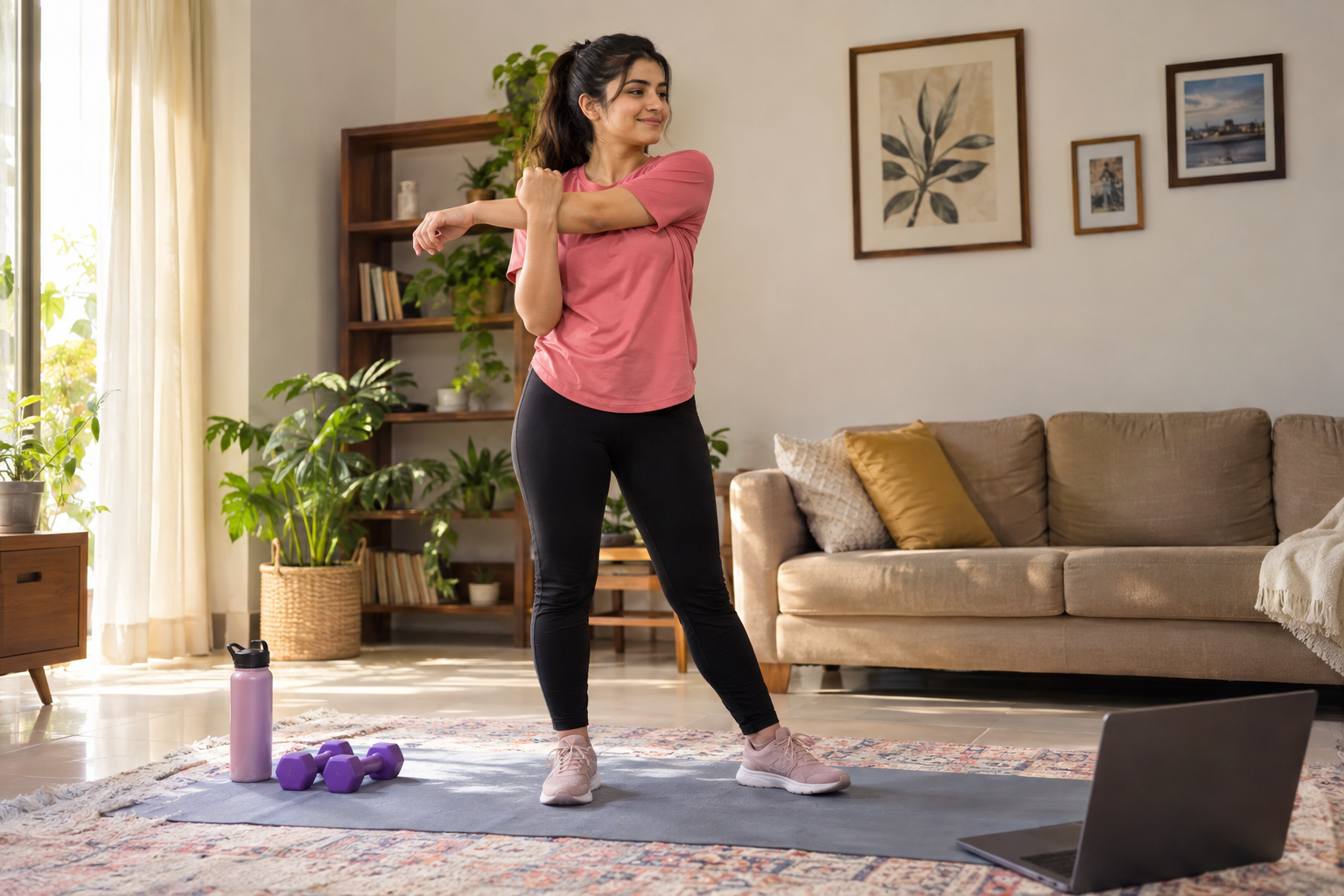
Building an enjoyable home exercise routine can be one of the easiest ways to become more active without making your daily life complicated. You do not need an expensive gym membership, fancy machines, or hours of free time. What matters most is creating a routine that feels comfortable, practical, and enjoyable enough to continue.
Many people start exercising with excitement but stop after a few days or weeks. In most cases, the problem is not a lack of motivation. The real problem is that the routine feels too difficult, too boring, or too demanding.
A good home exercise routine should fit naturally into your lifestyle. It should give you something to look forward to rather than something you constantly try to avoid.
After reading about exercise habits and trying different approaches, I have learned that consistency becomes much easier when exercise feels simple and enjoyable. The goal is not to create the hardest possible workout. The goal is to create a routine that you can realistically follow week after week.
Why Home Exercise Can Be a Good Choice
Exercising at home gives you a level of freedom that is difficult to find in many other forms of exercise.
You can choose your own time, your own exercises, and your own pace. There is no need to travel somewhere or prepare special clothing just to begin.
This can make home exercise especially useful for people who have busy jobs, family responsibilities, limited free time, or simply prefer exercising privately.
Another advantage is that home workouts can be flexible. If you only have fifteen minutes, you can still move your body. If you have more time, you can create a longer session.
This flexibility makes it easier to stay consistent.
The biggest challenge, however, is that there is nobody forcing you to exercise. You need to build a routine that is enjoyable enough to make you want to return to it.
Start With a Simple Goal
One of the best ways to build an enjoyable home exercise routine is to start with a clear but simple goal.
Your goal does not need to be dramatic.
You might want to become more active, improve your strength, feel more energetic, improve flexibility, or simply spend less time sitting.
A simple goal gives your routine direction.
For example, instead of saying, “I want to get extremely fit,” you could say, “I want to exercise at home four times a week for twenty minutes.”
That goal is easier to understand and easier to follow.
When a goal feels realistic, you are more likely to continue.
Choose Exercises You Actually Enjoy
This may sound obvious, but many people ignore it.
They choose exercises because they believe those exercises are the most effective, even if they hate doing them.
That usually leads to frustration.
There are many ways to exercise at home. You do not have to force yourself to do a specific workout style.
You can walk around the house, dance, stretch, perform bodyweight exercises, follow a yoga routine, use resistance bands, climb stairs, or do simple strength movements.
The best exercise is often the one you are willing to repeat.
If you enjoy music, you might enjoy dancing or doing a workout while listening to your favorite songs.
If you prefer calm activities, stretching or yoga may be more suitable.
If you enjoy feeling physically challenged, bodyweight strength exercises may be more satisfying.
The important thing is to find movement that feels good to you.
Keep Your Routine Short in the Beginning
A common mistake is trying to exercise for too long when starting.
People often believe that a workout only counts if it lasts for an hour.
That is not true.
A ten minute or twenty minute workout can still be useful, especially when you are building a new habit.
Short workouts are easier to begin because they do not feel overwhelming.
Once you become comfortable exercising regularly, you can slowly increase the length of your sessions.
Starting small is often more effective than beginning with a complicated plan.
For example, you might begin with fifteen minutes three times a week.
After a few weeks, you can increase the routine to twenty or thirty minutes if that feels comfortable.
Create a Comfortable Exercise Space
Your home exercise area does not need to look like a gym.
You only need enough space to move safely.
A corner of a bedroom, living room, or another open area can work well.
Try to keep the space clean and free from unnecessary obstacles.
If possible, keep your exercise mat, resistance bands, or other equipment nearby. When your exercise items are easy to see and reach, starting your workout becomes easier.
You can also make the area more enjoyable by opening a window, playing music, or keeping a bottle of water nearby.
The environment can influence how you feel about exercising.
A comfortable space can make your routine feel more inviting.
Use a Balanced Mix of Activities
A good home exercise routine does not need to focus on only one type of movement.
Including different forms of activity can make your routine more interesting and support different areas of fitness.
You can include some strength exercises, some mobility work, and some activities that increase your heart rate.
For example, a simple home routine could include squats, wall pushups, gentle lunges, walking in place, arm movements, and stretching.
You do not need to complete every type of exercise every day.
You can spread different activities across the week.
Variety can help prevent boredom and keep your routine fresh.
Create a Weekly Schedule
A home exercise routine becomes easier when you know when you are going to exercise.
Without a plan, it is easy to keep delaying your workout.
Try choosing specific days and approximate times.
For example, you might exercise on Monday, Wednesday, Friday, and Saturday.
Your workout does not have to happen at exactly the same time every day, but having a general routine can help.
You might exercise in the morning before work, during a lunch break, or in the evening.
Choose a time when you usually have enough energy and fewer interruptions.
It is also useful to keep your schedule flexible.
If something unexpected happens, move your workout instead of giving up on it completely.
Make Exercise Part of Your Existing Routine
One useful habit building method is connecting exercise to something you already do every day.
For example, you can exercise after drinking your morning tea, after returning from work, or before taking your evening shower.
When you connect exercise with an existing habit, it becomes easier to remember.
Over time, the two activities can begin to feel naturally connected.
You may eventually reach a point where finishing one activity automatically reminds you to exercise.
This can reduce the need for constant motivation.
Use Music to Make Exercise More Enjoyable
Music can completely change the mood of a workout.
An energetic song may make simple movements feel more exciting, while calm music can make stretching or yoga more relaxing.
Create a playlist specifically for exercise.
Try choosing songs that make you want to move.
You can also listen to podcasts or audiobooks if your workout is gentle enough to follow them comfortably.
Combining exercise with something you enjoy can make the experience feel less like a task.
Try Different Workout Styles
Doing the same exercises every day can become boring.
Experimenting with different activities can make your home exercise routine more enjoyable.
You might try a strength workout one day, dancing another day, stretching the next day, and a simple circuit later in the week.
You can also change the order of your exercises.
Small changes can make familiar movements feel more interesting.
There is no rule saying every workout has to look exactly the same.
The goal is to stay active in a way that you enjoy.
Focus on How Exercise Makes You Feel
Many people only think about exercise in terms of appearance or body weight.
This can make exercise feel frustrating, especially when visible changes happen slowly.
It can be more helpful to notice how exercise affects your daily life.
You may feel more energetic.
You may sleep better.
You may feel more comfortable when walking or climbing stairs.
You may notice improved mobility or strength.
These small improvements can be powerful sources of motivation.
When you focus on how movement makes you feel, exercise can become more meaningful.
Do Not Make Every Workout Difficult
A workout does not need to leave you exhausted to be useful.
Some days you may feel energetic and ready for a challenging session.
Other days you may feel tired.
On those days, a gentle walk, light stretching, or a shorter workout can still be valuable.
Learning to adjust your exercise based on your energy level can help you stay consistent.
If every workout feels extremely difficult, you may eventually start avoiding exercise.
A sustainable routine includes both challenging and easier days.
Track Your Progress in a Simple Way
Tracking your exercise can help you see how consistent you are becoming.
You do not need complicated apps or detailed fitness charts.
A simple calendar can work perfectly.
Put a mark on every day you exercise.
After a few weeks, you will be able to see your progress.
You can also write down simple notes such as how long you exercised or how you felt afterward.
This can help you notice improvements that you might otherwise forget.
Progress is not always about lifting heavier weights or exercising longer.
Sometimes progress simply means that exercise has become a regular part of your week.
Avoid Comparing Yourself With Others
Social media can make fitness look much more complicated than it needs to be.
You may see people completing advanced workouts, using expensive equipment, or exercising for long periods.
That does not mean you need to do the same.
Your home exercise routine should be based on your own lifestyle, ability, and goals.
Someone else’s routine may not be suitable for you.
Focus on your own consistency.
Even small improvements are meaningful when they are repeated over time.
Use Basic Equipment Only If You Want It
You can create an effective home exercise routine without buying equipment.
Bodyweight exercises can be enough for many beginners.
However, simple equipment can add variety if you enjoy using it.
Resistance bands, a yoga mat, light dumbbells, or even household objects can be useful.
Avoid buying too much equipment at the beginning.
You may discover that you prefer workouts that require almost nothing.
Start with what you already have and add equipment only when it supports your routine.
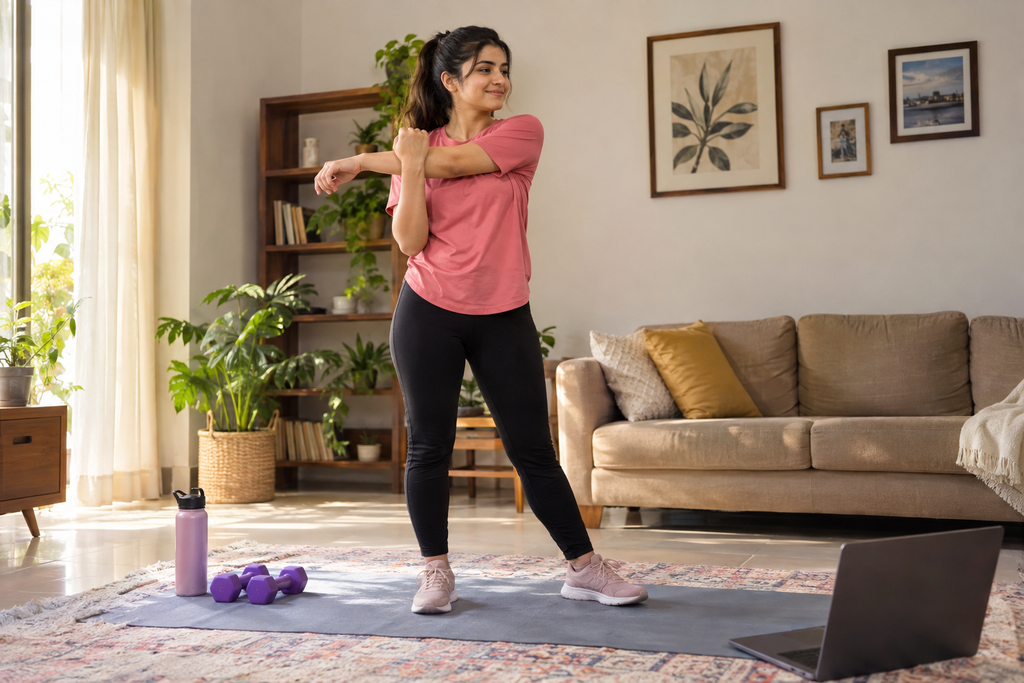
Include Warmups and Gentle Movement
Starting a workout suddenly can feel uncomfortable.
A short warmup can help your body prepare for movement.
You might walk in place, rotate your shoulders, move your arms gently, or perform slow versions of the exercises you plan to do.
Your warmup does not need to be long.
A few minutes of easy movement can help you transition into your workout.
At the end of the session, you can slow down gradually and include gentle stretching if it feels comfortable.
Make the Routine Flexible
Life does not always follow a perfect schedule.
Some days will be busy.
Sometimes you may have less energy than usual.
Instead of giving up when you cannot complete your normal routine, create a shorter backup workout.
For example, your normal workout might last thirty minutes, but your backup workout could last ten minutes.
This allows you to maintain the habit even on busy days.
A flexible routine is often easier to maintain than a rigid one.
Use Small Challenges to Stay Interested
Small personal challenges can make exercise more enjoyable.
You might challenge yourself to complete a certain number of workouts during the month.
You could also try increasing the number of repetitions of an exercise gradually.
The key is to keep challenges realistic.
They should feel interesting, not stressful.
You can also create fun challenges with family members.
For example, you might see who can complete the most walking minutes during the week.
Adding a playful element can make physical activity feel less serious.
Exercise With Family When Possible
Home exercise can become a shared activity.
If other family members are interested, you can exercise together.
You might go for a walk, stretch together, dance, or perform simple movements in the living room.
Exercising with others can make the experience more enjoyable.
It can also create a sense of accountability.
You may be more likely to start your workout when someone else is joining you.
At the same time, it is perfectly fine to exercise alone if you prefer quiet time.
Celebrate Consistency
You do not need to wait until you achieve a major fitness goal before feeling proud of your progress.
Completing a month of regular workouts is an achievement.
Exercising on a busy day is also an achievement.
Recognizing small successes can help you stay motivated.
Your reward does not need to be related to food or shopping.
You can simply enjoy a relaxing evening, watch a favorite movie, or spend time doing something you like.
The purpose is to recognize the effort you are making.
What to Do When Motivation Disappears
Motivation naturally changes.
You will not always feel excited about exercising.
This is normal.
Instead of depending entirely on motivation, focus on the routine itself.
On low motivation days, tell yourself that you only need to exercise for five minutes.
Once you begin, you may decide to continue.
If not, you have still maintained the habit of showing up.
Sometimes the hardest part of exercise is simply starting.
Listen to Your Body
An enjoyable routine should not constantly cause pain or extreme discomfort.
Pay attention to how your body responds to different exercises.
Normal muscle fatigue can happen, especially when trying new activities, but sharp or unusual pain should not be ignored.
Use comfortable movements and proper technique.
If you have an existing health condition or have been inactive for a long time, professional medical guidance may be useful before starting a demanding exercise program.
The goal is to become more active safely, not to push your body beyond what it can comfortably handle.
Allow Your Routine to Change
The routine that works for you today may not be the same routine you want six months from now.
Your schedule may change.
Your fitness may improve.
You may discover new activities that you enjoy more.
That is completely normal.
Think of your home exercise routine as something flexible rather than permanent.
Review it occasionally and ask yourself whether it still feels enjoyable.
If it starts feeling boring, change some exercises.
If it feels too easy, increase the challenge gradually.
If it feels too difficult, simplify it.
A routine that changes with you is easier to maintain.
A Simple Example of a Home Exercise Routine
A beginner routine does not need to be complicated.
You might begin with five minutes of gentle movement.
Then perform a few simple exercises such as bodyweight squats, wall pushups, marching in place, gentle lunges, and arm movements.
You can repeat the exercises for several rounds depending on your comfort level.
Finish with a few minutes of slower movement or stretching.
The entire session might take twenty minutes.
On another day, you might simply walk or follow a gentle stretching routine.
There is no perfect formula.
What matters most is choosing activities that you can continue.
Final Thoughts
Learning how to build an enjoyable home exercise routine is mainly about finding the right balance between movement, convenience, and enjoyment.
You do not need to copy complicated workout programs.
You do not need to exercise for hours.
You do not need expensive equipment.
Start with a small amount of activity and choose movements you enjoy.
Create a comfortable exercise space and choose a schedule that fits naturally into your day.
Add variety when you feel bored and allow yourself to have easier days when necessary.
Most importantly, focus on consistency rather than perfection.
Exercise becomes easier to maintain when it feels like a normal part of your lifestyle instead of a temporary challenge.
A simple routine that you genuinely enjoy can be far more valuable than an intense routine that you stop after a few weeks.
The best home exercise routine is the one that helps you move regularly, feel better, and look forward to doing it again.