

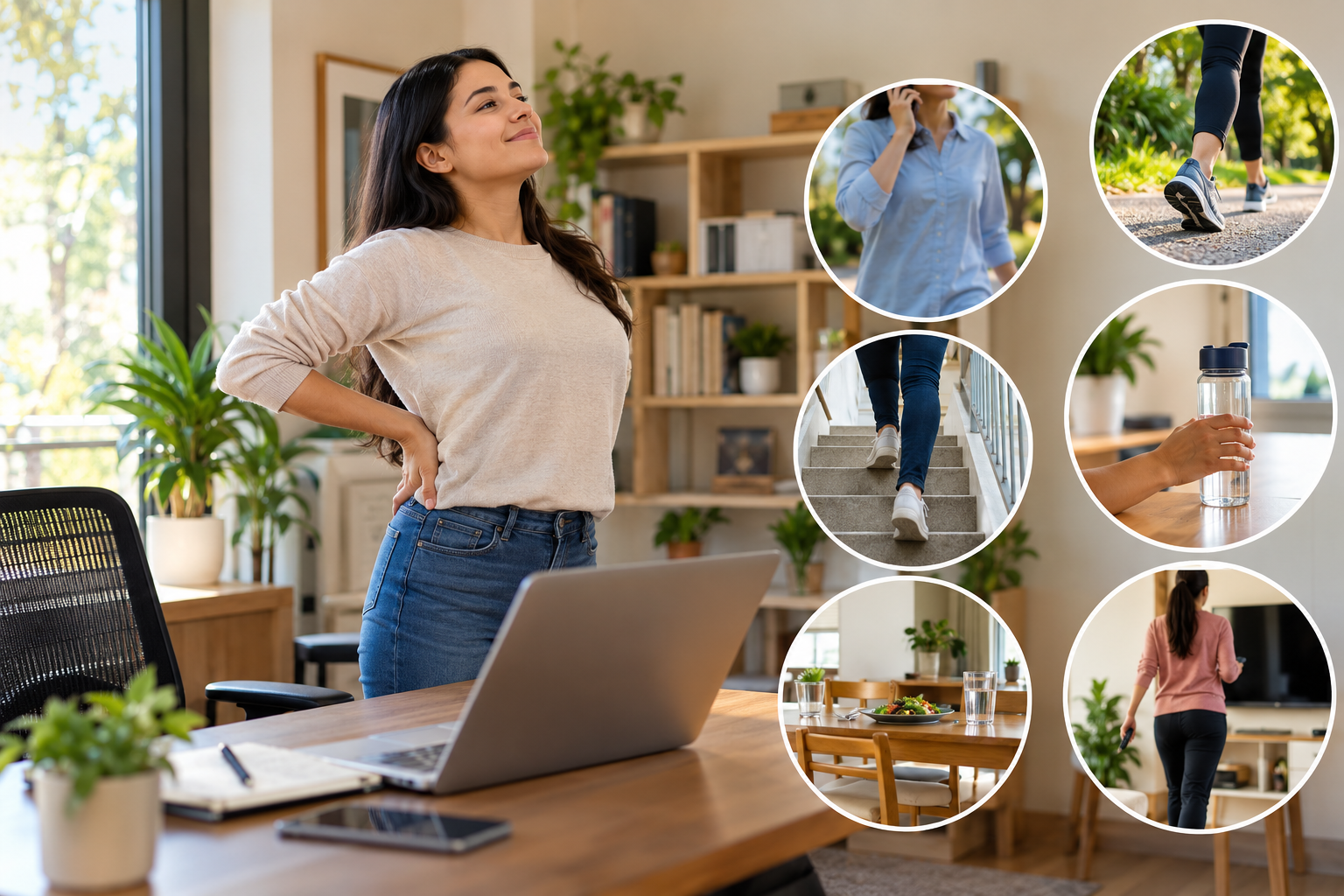
Sitting has become a normal part of modern life. Many of us sit while working, studying, eating, driving, watching television, using a phone, or spending time on a computer. Because sitting is so common, it is easy to spend several hours in the same position without even realizing it.
The problem is not that sitting itself is always bad. Our bodies need rest, and sitting is a normal human activity. The real concern is spending very long periods sitting without getting up or moving. When sitting continues for hours with very little movement, the body may become stiff, energy levels can drop, and everyday mobility may gradually become more difficult.
The good news is that reducing long periods of sitting does not require a difficult exercise program. Small changes throughout the day can make a noticeable difference. Standing for a few minutes, walking around the room, stretching your legs, or doing a simple household task can help break up sitting time.
The most practical approach is to focus on regular movement rather than trying to avoid sitting completely. This article explains simple ways to reduce long periods of sitting and make movement a more natural part of everyday life.
Why Long Periods of Sitting Are So Common
Modern routines are designed around convenience. Computers allow us to work without leaving a desk. Cars allow us to travel without walking. Online shopping reduces the need to visit stores, and entertainment is available on televisions, phones, and tablets.
These conveniences save time and effort, but they can also reduce natural movement.
In the past, many daily activities required more physical effort. People often walked farther, stood more frequently, and completed more tasks by hand. Today, it is possible to spend much of the day moving from one chair to another.
A typical day may include sitting during breakfast, commuting to work, working at a desk, eating lunch, driving home, relaxing on a sofa, and using a phone before bed.
None of these activities may seem excessive by themselves. However, when combined, they can create many hours of sitting.
This is why reducing sitting time usually requires awareness rather than extreme lifestyle changes.
Start by Paying Attention to Your Sitting Habits
The first step toward reducing long periods of sitting is understanding when you sit the most.
You may sit for several hours while working without noticing how much time has passed. You may also spend longer than expected watching videos, browsing social media, or playing games.
For one or two days, simply observe your routine.
Ask yourself a few basic questions.
How long do I usually sit before standing?
Which activities keep me sitting the longest?
Could I perform any of these activities while standing or moving?
When am I most likely to forget about movement?
This simple awareness can reveal opportunities for change.
You do not need to record every minute. The goal is simply to recognize the longest sitting periods in your day.
Once you identify them, you can begin breaking them into shorter sections.
Stand Up Regularly
One of the easiest ways to reduce long periods of sitting is simply to stand up more often.
You do not need to remain standing for half an hour. Even a few minutes can interrupt a long sitting session.
For example, if you have been working at a desk for a long time, stand up and stretch your legs. Walk to another room, drink some water, look outside, or complete a small task.
These short breaks can make movement feel natural rather than forced.
A useful habit is to stand whenever you finish a specific task.
You might stand after completing an email, finishing a chapter, ending a phone call, or completing a work assignment.
Linking movement to activities you already perform can make the habit easier to remember.
Take Short Walking Breaks
Walking is one of the simplest forms of movement available to most people.
You do not need special clothing, equipment, or a gym membership. A short walk around your home, office, garden, or hallway can help break up sitting time.
If you work from home, walk around the room between tasks.
If you work in an office, consider walking to speak with a colleague instead of sending a message when appropriate.
During longer breaks, walk outside for a few minutes.
The goal is not always to exercise intensely. The purpose is to interrupt long periods of inactivity.
Several short walks throughout the day may also feel easier to maintain than one long workout.
Use Phone Calls as a Chance to Move
Phone calls provide an excellent opportunity to reduce sitting.
If you do not need to look at a computer or take detailed notes, try standing or walking while talking.
You can walk around your room, hallway, office, or garden.
Many people find that walking during phone calls feels natural because the conversation keeps the mind occupied.
A ten minute phone call can become ten minutes of gentle movement without requiring additional time from your day.
If you receive several calls during the day, this habit can significantly reduce continuous sitting.
Keep Water Away From Your Desk
Convenience often encourages sitting.
If everything you need is within arm’s reach, there is little reason to stand.
One simple strategy is to keep your water bottle, tea, or other frequently used items a short distance away.
This creates a natural reason to stand and move.
For example, instead of keeping a large water container on your desk, you might use a smaller glass and refill it regularly.
This encourages short walking breaks while also helping you remember to drink water.
The same idea can be applied to printers, notebooks, or other items that you use throughout the day.
You do not need to make life inconvenient. A small amount of extra movement is enough.
Avoid Eating Every Meal at Your Desk
Eating at a work desk can extend sitting time without you noticing.
You may work for several hours, eat lunch in the same chair, and then immediately return to work. This removes a natural opportunity to move.
Whenever possible, eat meals away from your work area.
Walk to the kitchen, dining table, cafeteria, or another suitable place.
Even if the walking distance is short, changing locations creates a break in sitting.
It can also help separate work time from meal time, which may make the day feel less repetitive.
After eating, consider taking a short walk instead of immediately returning to your chair.
Stand While Watching Television
Television and online videos can contribute to long periods of sitting, especially in the evening.
You do not need to stop watching your favorite programs. Instead, look for small opportunities to move.
You could stand during advertisements, walk around during introductions, or stretch while watching.
If you are watching a long movie, consider getting up every so often to refill water, tidy the room, or walk around for a minute.
Some people also enjoy doing light household activities while listening to videos or podcasts.
These habits reduce sitting without taking away from relaxation.
Use Household Tasks as Movement Breaks
Household tasks can be a useful source of everyday movement.
Instead of completing all chores at one time, you can use small tasks to break up sitting periods.
For example, after working for a while, you might wash a few dishes, water plants, fold clothes, organize a shelf, or sweep part of a room.
These activities may only take a few minutes, but they encourage standing, walking, reaching, and bending.
They can also provide a mental break from screen based work.
This does not mean you need to turn every break into housework. The idea is simply to recognize that ordinary tasks can help you move.
Create a Simple Movement Reminder
When people become focused on work or entertainment, time can pass quickly.
A reminder can help interrupt long sitting sessions.
You might use a phone alarm, computer reminder, smartwatch, or calendar notification.
The reminder does not need to tell you to complete a workout. It can simply remind you to stand and move for a few minutes.
Choose a schedule that feels realistic.
Some people prefer a reminder every hour, while others naturally move more often.
The exact timing matters less than avoiding very long periods without movement.
Over time, you may begin standing automatically and rely less on reminders.
Change Your Position Often
Reducing sitting is not only about standing. It is also useful to avoid staying in exactly the same position for too long.
If you are sitting, adjust your posture occasionally.
Move your feet.
Straighten your legs.
Roll your shoulders gently.
Turn your upper body.
Change the position of your chair when appropriate.
Small movements may help you feel less stiff during tasks that require sitting.
However, changing position should not replace standing and walking completely. It is best used together with regular movement breaks.
Consider a Standing Work Option
If your job involves many hours at a computer, a standing work option may help.
This does not necessarily mean buying an expensive standing desk.
Some people use an adjustable desk, while others create a safe temporary standing surface for short periods.
The goal is not to stand all day. Standing continuously can also become uncomfortable.
A better approach is to alternate between sitting and standing.
You might sit while completing detailed work and stand during simpler tasks such as reading, checking messages, or attending online meetings.
Changing positions regularly can make a long workday feel more active.
Walk During Short Breaks
Many people spend their work breaks sitting because they want to rest.
Rest is important, but a short walk can sometimes feel more refreshing than staying in the same chair.
If you have five or ten minutes available, walk around your building, garden, office, or nearby area.
You do not need to walk quickly.
A comfortable pace is enough to change your position and get your body moving.
You can still use part of your break to sit and relax afterward.
The important point is that every break does not have to involve more sitting.
Park Slightly Farther Away
If you drive regularly, parking slightly farther from the entrance can add a small amount of walking to your day.
There is no need to park extremely far away.
Simply choosing a space that requires an extra minute or two of walking can increase daily movement.
This can work at offices, shopping centers, schools, or other places you visit regularly.
Small amounts of walking may seem unimportant, but repeated habits can add up over time.
Use Stairs When Practical
Taking the stairs is another simple way to add movement during the day.
If you only need to travel one or two floors and it is comfortable for you, stairs may be a convenient alternative to an elevator.
However, this is not suitable for everyone.
People with mobility problems, injuries, or certain health conditions may need to use elevators.
The goal is not to force difficult movement. It is to look for safe and practical opportunities that fit your own ability.
Walk Short Distances When Possible
Cars and motorcycles make travel convenient, but they can also reduce everyday walking.
If a destination is nearby, consider walking when it is safe and practical.
You might walk to a local shop, visit a nearby friend, or complete a small errand on foot.
Even replacing one short vehicle trip occasionally can increase movement.
Weather, traffic, safety, distance, and personal mobility should always be considered.
The idea is not to stop using vehicles. It is simply to notice when walking may be a reasonable option.
Move While Waiting
Waiting time is another opportunity for movement.
You may spend several minutes waiting for food to cook, a computer to update, a meeting to begin, or someone to arrive.
Instead of automatically sitting down, remain standing or walk around.
You could stretch gently, organize something nearby, or simply walk a few steps.
These short moments often seem too small to matter, but they can help break up a day that would otherwise involve continuous sitting.
Make Social Activities More Active
Social time does not always have to involve sitting in a restaurant or living room.
You can occasionally invite a friend or family member for a walk.
Walking while talking can feel relaxed and natural.
Families can also take short evening walks together or visit parks and outdoor areas.
These activities combine conversation with movement.
This may make physical activity feel less like exercise and more like part of everyday life.
Reduce Unnecessary Screen Time
Phones, tablets, computers, and televisions are useful, but they can encourage long periods of inactivity.
Sometimes we continue scrolling or watching content even when we are no longer particularly interested.
Becoming more aware of unnecessary screen time can create space for movement.
You do not need to remove technology from your life.
Instead, consider setting natural limits.
After watching one episode, stand up before starting another.
After spending time on social media, put the phone down and walk around.
Small boundaries can prevent screen time from turning into several continuous hours of sitting.
Build Movement Into Your Morning
The way you begin your day can influence how active you feel later.
Instead of moving directly from bed to a chair, spend a few minutes moving around.
You might open curtains, make breakfast, water plants, tidy a room, or walk outside briefly.
A short morning movement routine does not need to be intense.
The purpose is simply to begin the day with activity rather than immediately settling into long periods of sitting.
Add Movement to Your Evening Routine
Evenings are often when people sit the longest.
After work, it is natural to want to relax. However, relaxation does not always have to mean remaining seated for several hours.
You can break up evening sitting with simple activities.
Walk after dinner.
Prepare things for the next day.
Water plants.
Tidy the kitchen.
Stretch gently.
Take a short walk outside.
These activities can help create a better balance between rest and movement.
Do Not Aim for Perfection
One reason people struggle with lifestyle changes is that they try to change too much at once.
Reducing sitting does not require a perfect routine.
You do not need to count every minute or constantly worry about whether you are moving enough.
Start with one or two simple habits.
For example, you might decide to stand during phone calls and walk for a few minutes after lunch.
Once these habits feel normal, you can add others.
Small changes are usually easier to maintain than strict rules.
Make Movement Convenient
People are more likely to move when movement is easy.
Keep comfortable shoes available if you like walking.
Leave enough space around your desk to stand and stretch.
Place items you use regularly in locations that encourage a few extra steps.
Choose walking routes that are safe and pleasant.
When movement fits naturally into your environment, it requires less motivation.
The easier a habit feels, the more likely you are to continue it.
Listen to Your Body
Movement should generally feel comfortable.
If you have been sitting for a long time, you may notice stiffness when you first stand. Move gradually and avoid forcing uncomfortable stretches.
People with injuries, balance problems, chronic pain, or medical conditions may need to modify certain activities.
If movement causes unusual pain, dizziness, shortness of breath, or other concerning symptoms, it is sensible to seek professional medical advice.
The goal is to make daily life more active in a safe and sustainable way.
Focus on Frequency Rather Than Intensity
When trying to reduce sitting, frequent movement may be more practical than intense exercise.
A hard workout does not necessarily change the fact that someone may still sit for most of the remaining day.
Exercise is valuable, but it serves a different purpose from breaking up long sitting periods.
Think about movement as something that happens throughout the day.
Standing for a few minutes, walking to another room, taking the stairs, completing household tasks, and walking during phone calls can all contribute.
The goal is to make movement regular.
Create Habits That Fit Your Lifestyle
The best movement strategy is one that fits your normal routine.
A person who works in an office may need different habits from someone who works from home.
A student may benefit from standing between study sessions.
A driver may need to walk during rest stops.
Someone who watches television in the evening may benefit from movement breaks between programs.
There is no single routine that works for everyone.
Look at your own day and find the easiest places to add movement.
When habits match your lifestyle, they are more likely to last.
Final Thoughts
Reducing long periods of sitting does not require a major lifestyle transformation. It begins with noticing how much time you spend sitting and finding simple opportunities to move more often.
Stand up regularly. Walk during phone calls. Take short movement breaks. Eat meals away from your desk. Use household tasks as opportunities to move. Walk short distances when practical, and avoid spending every break sitting.
These changes may seem small, but that is exactly what makes them useful. They are easy to include in ordinary life.
The goal is not to eliminate sitting. Sitting is a normal part of resting, working, learning, and relaxing. The goal is to avoid remaining inactive in the same position for very long periods.
A few minutes of movement repeated throughout the day can make your routine feel more active and balanced.
Instead of thinking of movement as something that only happens during exercise, try to see it as part of everyday life. Stand, walk, stretch, and change position whenever it naturally fits into your day.
Over time, these simple habits can help you spend less time sitting continuously and make regular movement feel like a normal part of your routine.