

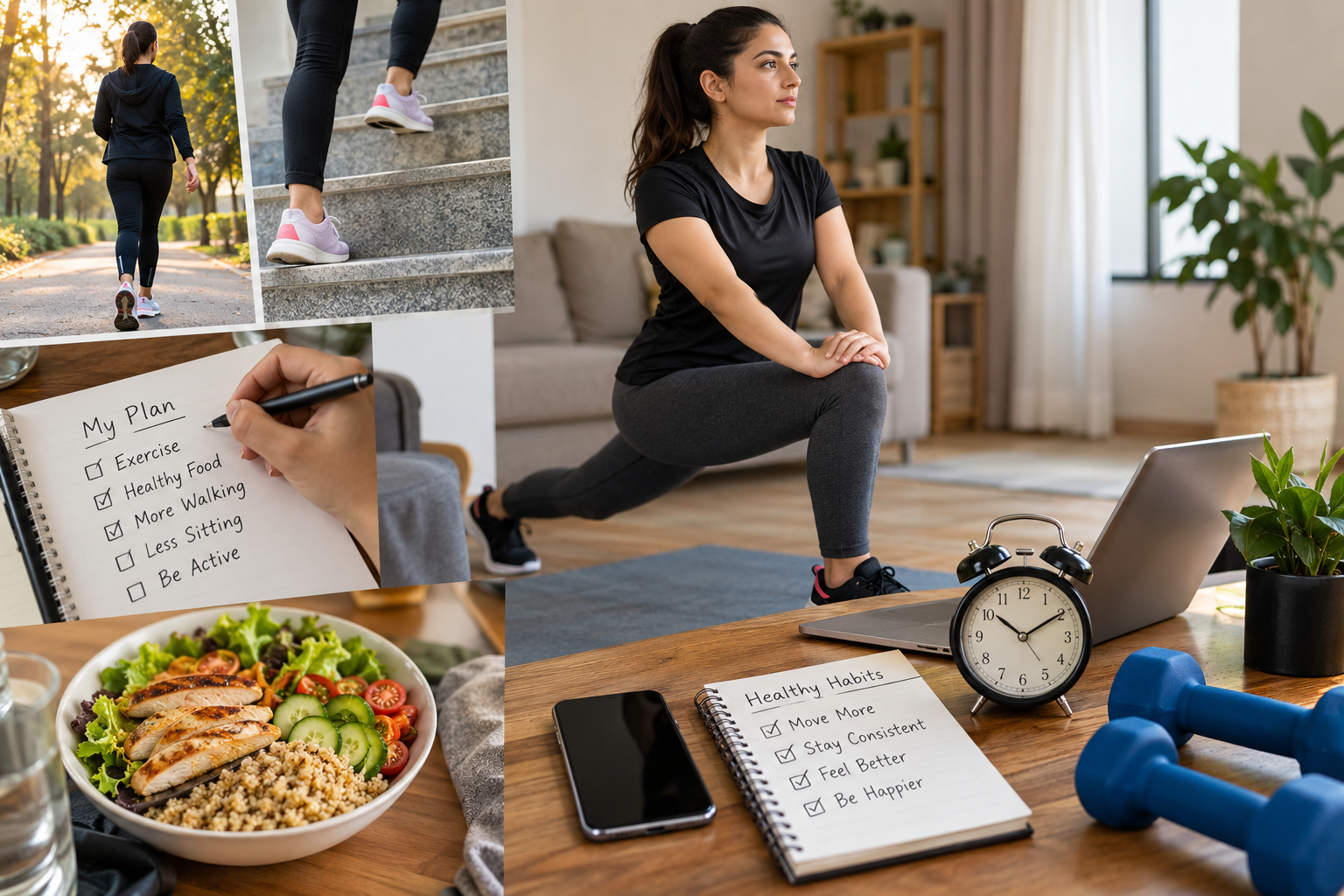
Finding time to exercise can feel difficult when your day is already full of work, family responsibilities, study, travel, household tasks, and other commitments. Many people believe they need at least one free hour before physical activity becomes worthwhile. Because of this belief, exercise often gets pushed to the end of the priority list.
The good news is that staying active does not always require a long workout.
Small amounts of movement can be added throughout the day. Walking for a few minutes, stretching between tasks, taking the stairs, doing simple bodyweight exercises, or standing up regularly can all help you build a more active lifestyle.
The most important thing is consistency.
When you have limited free time, the goal should not be to create the perfect fitness routine. The goal should be to find practical ways to move your body more often without making your daily schedule stressful.
In this article, I will explain how to stay active when you have limited free time and how small changes can gradually become part of your everyday routine.
Why Staying Active Matters
Physical activity supports many important functions of the body.
Regular movement can help maintain muscle strength, joint mobility, heart health, balance, flexibility, and overall physical fitness. It can also provide a useful mental break from long periods of sitting or concentrating on work.
Modern life has made daily movement less necessary than it was in the past.
Many people spend several hours sitting while working on computers, driving, studying, watching television, or using phones. Even people with busy schedules can sometimes spend a large part of the day physically inactive.
This is why intentional movement becomes important.
You may not have time for a long gym session, but you can still create several small opportunities to move.
These small moments can add up.
Stop Thinking of Exercise as One Long Session
One of the biggest obstacles to staying active is the idea that exercise must happen in a single long session.
For example, someone may think:
“I do not have 60 minutes today, so I cannot exercise.”
A better approach is to think:
“Where can I find five or ten minutes to move today?”
This simple change in thinking can make physical activity much easier to fit into your schedule.
Ten minutes in the morning, five minutes during lunch, and ten minutes in the evening already creates 25 minutes of activity.
You do not always need to complete everything at once.
Short movement sessions are often easier to maintain because they feel less demanding.
Start Your Day With a Few Minutes of Movement
The morning can be one of the easiest times to add physical activity because unexpected tasks have not yet taken over the day.
You do not need a complicated morning workout.
Even five minutes can be useful.
You might begin with:
Gentle stretching
Bodyweight squats
Arm circles
Walking around the house
Simple mobility exercises
A few push ups
Light yoga movements
The purpose is not necessarily to perform an intense workout.
The goal is simply to wake up your body and begin the day with movement.
Once this becomes part of your morning routine, it may feel as natural as brushing your teeth or drinking water.
Walk Whenever You Have the Opportunity
Walking is one of the simplest ways to stay active with limited free time.
It requires no special equipment and can often be added to activities you are already doing.
For example, you can walk while making a phone call.
You can take a short walk after lunch.
You can park slightly farther away from the entrance of a building.
You can walk to a nearby shop instead of driving when practical.
You can take a few extra laps around your home, office, or workplace.
These choices may seem small, but they increase your total daily movement without requiring a separate workout schedule.
Walking can also be easier to maintain because it does not usually require changing clothes or preparing equipment.
Use Your Work Breaks Wisely
Short work breaks are another useful opportunity for physical activity.
Instead of spending every break sitting and checking your phone, use part of the time to move.
You could stand up and stretch.
Walk down a hallway.
Go outside for fresh air.
Do a few calf raises.
Walk up and down a staircase.
Perform some gentle shoulder and neck movements.
Even two or three minutes of movement can help break up long periods of sitting.
If you work at a desk, setting a reminder to stand up regularly may also help.
The idea is not to interrupt your productivity.
It is simply to avoid remaining in the same position for many hours.
Turn Daily Tasks Into Physical Activity
You may already be doing more physical activity than you realize.
Household activities such as cleaning, gardening, carrying groceries, washing the car, climbing stairs, and organizing rooms all involve movement.
Instead of viewing these tasks only as chores, think of them as opportunities to stay physically active.
For example, when cleaning your home, you can move at a slightly faster pace.
When carrying light shopping bags, you are also using your arms, shoulders, and core muscles.
When gardening, you may bend, walk, lift, reach, and squat.
These activities may not replace structured exercise completely, but they can contribute to an active lifestyle.
Use the Stairs More Often
Taking the stairs is a simple way to increase daily movement.
If you regularly use elevators or escalators, consider taking the stairs when it is comfortable and practical.
Climbing stairs uses several large muscles in the legs and increases physical effort within a short amount of time.
You do not need to climb many floors.
Even one or two floors can add useful movement to your day.
If you work in a building with stairs, you could also walk up and down them during a short break.
Small choices like this become valuable when repeated regularly.
Try Short Bodyweight Workouts
When free time is limited, bodyweight exercises can be very convenient.
You do not need a gym or expensive equipment.
You can perform many exercises in a small space.
Examples include:
Squats
Wall push ups
Regular push ups
Lunges
Glute bridges
Calf raises
Planks
Standing knee raises
A simple routine could contain four or five exercises performed for a short period.
Even a ten minute session can help you maintain the habit of exercising.
The important part is choosing exercises that match your current ability.
Good technique is more important than rushing.
Keep Your Exercise Clothes Easy to Reach
Small barriers often prevent people from exercising.
If your shoes are hidden in a cupboard and your exercise clothes are difficult to find, even a short workout can feel inconvenient.
Make movement easier by preparing what you need in advance.
Keep comfortable shoes near the door.
Place your exercise clothes somewhere visible.
Keep a yoga mat ready if you use one.
If you exercise at work, keep an extra pair of comfortable shoes there if possible.
When preparation becomes simple, you are more likely to use small windows of free time.
Schedule Movement Like Any Other Important Task
People often schedule meetings, appointments, study sessions, shopping, and family activities.
Physical activity can also be placed on your schedule.
You do not need to block an entire hour.
A ten or fifteen minute period may be enough.
For example, you could schedule:
Ten minutes before breakfast
A short walk during lunch
Fifteen minutes after work
A family walk after dinner
Treating movement as a planned activity can reduce the chance of forgetting it.
It also helps you notice where small periods of free time actually exist.
Combine Exercise With Something You Already Enjoy
One of the easiest ways to remain active is to combine movement with another activity you enjoy.
For example, you can listen to a podcast while walking.
You can watch a television show while using a stationary bike.
You can listen to music while cleaning your home.
You can walk while talking to a friend.
You can stretch while watching a short video.
This approach makes physical activity feel less like an additional responsibility.
Instead, it becomes part of something you were already planning to do.
Reduce Unnecessary Sitting
Staying active is not only about exercising more.
It can also involve sitting less.
Look at your normal day and identify situations where you could stand or move instead.
For example, you might stand during certain phone calls.
You might walk around the room while thinking.
You could stand while waiting for food to cook.
You could take short walking breaks instead of scrolling through social media.
You may also choose to walk to a coworker’s desk instead of sending a message when appropriate.
These small habits help increase daily movement without taking much extra time.
Exercise While Watching Television
Many people say they do not have time to exercise but still spend some time watching television or online videos.
This can become an opportunity for movement.
You could walk in place while watching.
Stretch during advertisements.
Do squats between episodes.
Perform light exercises while listening rather than sitting.
You do not need to turn your entire entertainment time into a workout.
Even using a few minutes can increase your activity level.
This is especially helpful on days when your schedule feels extremely busy.
Make Your Lunch Break More Active
Lunch breaks often provide another useful opportunity for movement.
If you have 30 minutes for lunch, you may not need the entire time for eating.
You could spend ten minutes walking before or after your meal.
A short walk may also provide a refreshing break from screens and work responsibilities.
If you work from home, you can walk around your neighborhood.
If you work in an office, you can walk outside or around the building.
The goal is to use part of the break intentionally instead of spending the entire period sitting.
Use a Simple Weekly Activity Plan
A complicated exercise plan can become difficult to follow when your schedule changes frequently.
A simple weekly structure may work better.
For example:
Monday could include a short walk.
Tuesday could include bodyweight exercises.
Wednesday could focus on stretching and mobility.
Thursday could include another walk.
Friday could include a short strength session.
The weekend could include a longer activity if you have more time.
You do not need to follow the plan perfectly.
It simply gives you direction.
If one day becomes too busy, continue again the following day instead of giving up on the entire week.
Focus on Consistency Rather Than Intensity
A common mistake is trying to do too much at the beginning.
Someone may suddenly decide to exercise hard every day.
After a few days, they become tired or busy and stop completely.
A better approach is to start with an amount of movement that feels realistic.
Ten minutes performed regularly may be more useful for building a long term habit than one very intense workout followed by several inactive days.
Once the habit becomes easier, you can gradually increase the duration or intensity.
Consistency creates progress over time.
Create Movement Triggers
A movement trigger is an activity that reminds you to move.
For example:
After drinking coffee, you stretch for two minutes.
After lunch, you walk for ten minutes.
After finishing a meeting, you stand and move around.
After brushing your teeth in the morning, you do ten squats.
Before taking a shower, you perform a short exercise routine.
Connecting movement to an existing habit can make it easier to remember.
Eventually, the two activities may become naturally linked.
Involve Your Family
Physical activity does not always need to be something you do alone.
Family activities can provide both movement and quality time.
You can walk together after dinner.
Play outdoor games with your children.
Visit a park.
Ride bicycles.
Do simple exercises at home.
Take an evening walk instead of spending the entire evening sitting indoors.
This approach can be especially helpful for people who feel that exercise takes time away from family responsibilities.
Instead of choosing between family time and physical activity, you can combine them.
Keep Your Goals Realistic
Your fitness goals should match your current lifestyle.
If you work long hours and have many responsibilities, expecting yourself to complete long workouts every day may not be realistic.
Start with smaller goals.
For example:
Walk for ten minutes each day.
Stand up at least once every hour.
Complete two short strength sessions each week.
Take the stairs when possible.
Stretch for five minutes before bed.
Simple goals are easier to follow and easier to measure.
Once these habits become comfortable, you can build on them.
Use Weekends to Add Longer Activities
Some people have more free time on weekends than during the working week.
If that is true for you, use part of the weekend for a longer activity.
You might go for a longer walk.
Visit a park.
Go hiking.
Ride a bicycle.
Play a sport.
Complete a longer home workout.
This can complement the shorter movement sessions you perform during busy weekdays.
However, you do not need to depend entirely on weekends.
It is still helpful to include some movement throughout the week.
Avoid the All or Nothing Mindset
One of the most important lessons about staying active is that something is usually better than nothing.
If you planned a 30 minute workout but only have ten minutes available, use the ten minutes.
If you cannot visit the gym, walk instead.
If you miss your morning workout, try a short evening session.
If you have an unusually busy week, focus on basic movement and return to your routine when your schedule becomes easier.
Missing one session does not mean you have failed.
Long term habits are built by returning to the routine again and again.
Track Your Progress Simply
Tracking activity can help you notice improvement.
However, it does not need to become complicated.
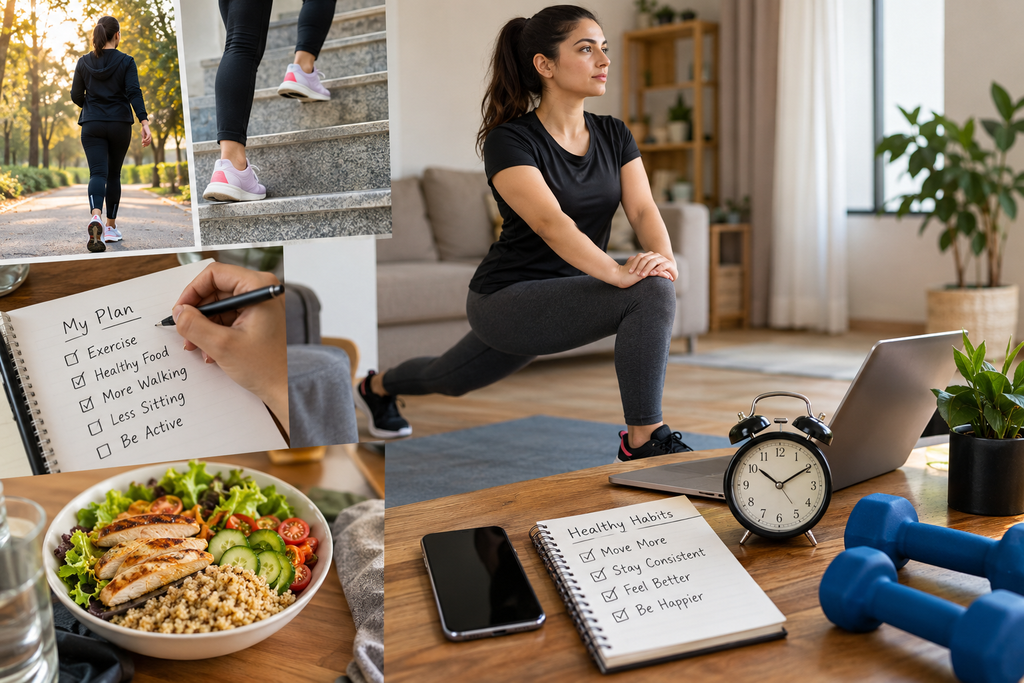
You could use a notebook, calendar, phone app, or simple checklist.
Record things such as:
How many days you walked
How many short workouts you completed
How often you took movement breaks
How many minutes you were active
The purpose is not to create pressure.
Tracking simply makes your habits more visible.
It can also help you identify which activities fit best into your schedule.
Protect Your Free Time From Distractions
Sometimes people have more free time than they realize, but it disappears through small distractions.
A few minutes checking social media can easily become half an hour.
Repeated throughout the day, this may use a large amount of time.
You do not need to remove entertainment from your life.
Instead, become more intentional about how you use small periods of free time.
For example, you might take a ten minute walk before opening a social media app.
You could complete a short workout before watching an episode of a television show.
Small changes in priorities can create enough time for regular movement.
Do Not Forget Rest and Recovery
Being active is important, but rest also matters.
Your body needs time to recover, especially after challenging exercise.
A busy person may already be dealing with limited sleep and mental stress.
Adding excessive exercise can make the routine harder to maintain.
Choose an activity level that leaves you feeling energized rather than completely exhausted.
Some days can include more exercise.
Other days can focus on walking, stretching, or gentle movement.
A balanced routine is usually easier to continue.
Build an Active Lifestyle Instead of Chasing Perfect Workouts
The easiest way to stay active when you have limited free time is to stop depending only on formal workouts.
Think about movement as part of your lifestyle.
Walk more.
Stand more often.
Use stairs.
Move during breaks.
Exercise for a few minutes when you can.
Play with your children.
Do household tasks actively.
Take short walks.
Stretch between activities.
When these habits become part of your normal day, staying active requires less planning.
You are no longer waiting for the perfect hour to exercise.
You are simply moving more throughout your day.
Final Thoughts
Learning how to stay active when you have limited free time is mainly about using small opportunities wisely.
You do not need to spend hours at the gym or follow a complicated fitness program.
A few minutes of movement in the morning, a short walk during lunch, some bodyweight exercises at home, and regular breaks from sitting can all contribute to a more active lifestyle.
The key is to make physical activity realistic.
Choose habits that fit your schedule instead of trying to force your life around an unrealistic exercise routine.
Some days you may have 30 minutes available.
Other days you may only have five.
Both can still be useful.
Over time, these small periods of activity can become regular habits.
And once movement becomes part of your everyday routine, staying active feels much easier, even when life remains busy.
The goal is not perfection.
The goal is to keep moving whenever you can.