

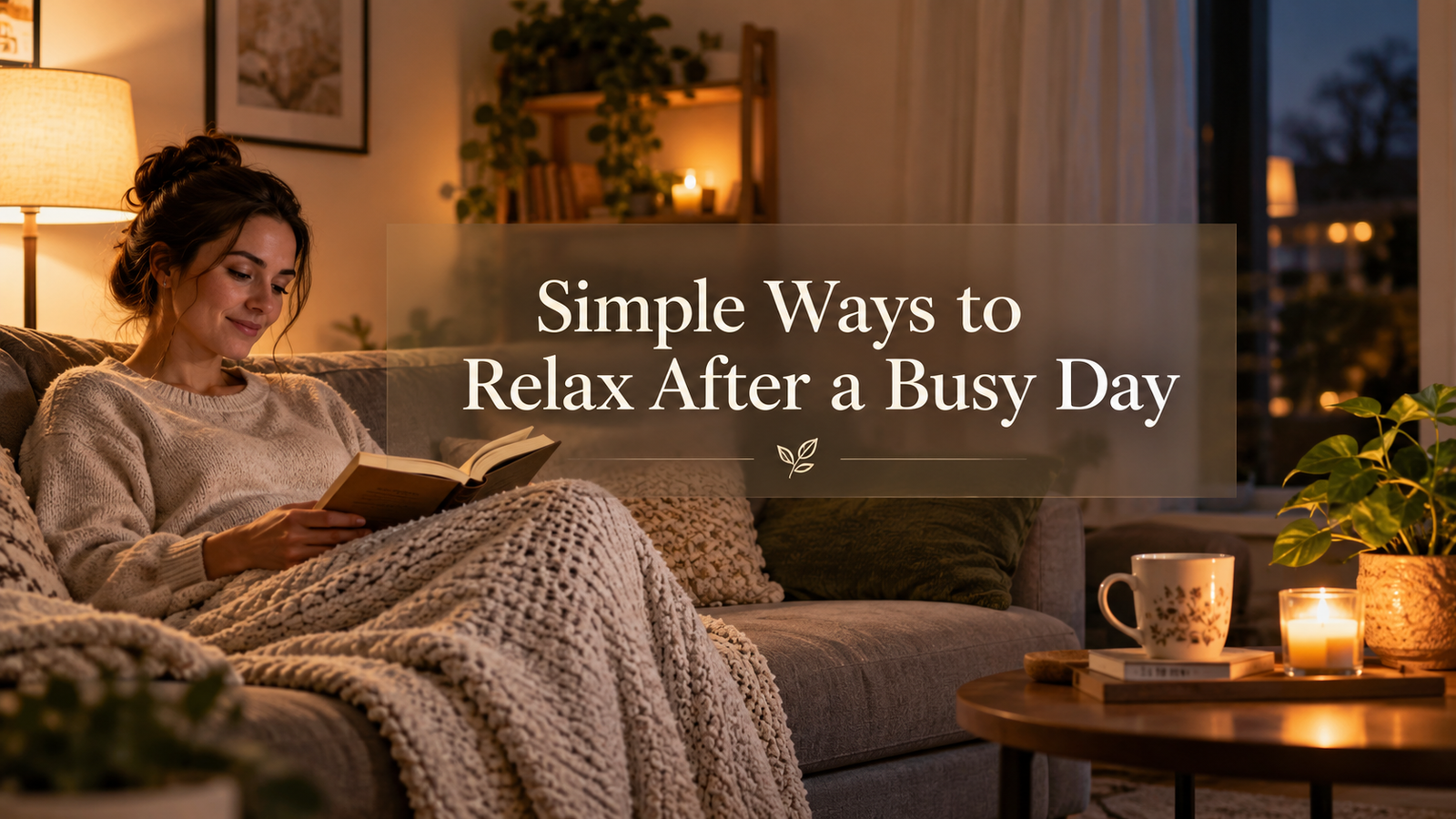
After a busy day, the mind and body often need time to slow down. Work, family responsibilities, travel, study, phone calls, messages, and daily tasks can leave us feeling mentally tired even when we have not done much physical activity. I have noticed that relaxing after a long day is not always about doing something special. Most of the time, simple habits can make the biggest difference.
Learning simple ways to relax after a busy day can help create a healthier evening routine. Relaxation gives the mind a chance to move away from daily pressure and allows the body to prepare for rest. The good thing is that we do not need expensive equipment, complicated routines, or a perfect environment. A few small changes can help us feel calmer and more comfortable at the end of the day.
Give Yourself a Few Quiet Minutes
One of the easiest ways to relax after a busy day is to spend a few minutes in silence.
When we come home, we are often tempted to immediately check our phone, turn on the television, or start another task. This keeps the brain active. Instead, sitting quietly for five or ten minutes can help create a clear break between the busy part of the day and the relaxing part of the evening.
You can sit on a chair, near a window, or in any comfortable place. There is no need to think about anything specific. Simply allow yourself to be still.
Quiet time can feel surprisingly refreshing, especially after a day filled with conversations, traffic, notifications, and responsibilities.
Change Into Comfortable Clothes
Something as simple as changing clothes can send a strong signal to the mind that the working day is over.
When I change into comfortable clothes after coming home, I immediately feel more relaxed. Loose clothing, soft fabrics, and comfortable slippers can help create a feeling of ease.
This small habit can become part of a relaxing evening routine. It separates work mode from home mode and makes the body feel more comfortable.
Comfort does not solve every problem, but it can make the evening feel softer and more peaceful.
Take a Warm Shower
A warm shower can be one of the most relaxing parts of the day.
Water helps remove the physical feeling of tiredness, sweat, dust, and discomfort. A warm shower can also create a sense of freshness that makes it easier to enjoy the evening.
Try not to rush. Give yourself a few peaceful minutes under the water. Pay attention to the warmth and allow your muscles to loosen.
After a busy day, this simple routine can help you feel as if you are starting a new part of the day.
Put Your Phone Away for a While
Phones are useful, but they can make relaxation difficult.
Even after work has finished, notifications, social media, videos, messages, and emails can keep the mind busy. We may think we are relaxing while scrolling, but the brain is still processing new information.
Try keeping your phone away for twenty or thirty minutes.
You can place it on a table, leave it in another room, or simply turn off unnecessary notifications.
This gives your mind space to slow down naturally.
A short screen break can also help you notice your surroundings, talk to family members, enjoy food, or simply sit quietly without feeling the need to check something every few minutes.
Drink Something Refreshing
A simple drink can become part of a peaceful evening routine.
Water is often a good choice after a long day, especially if you have been outside or have not been drinking enough during the day.
Some people also enjoy warm herbal tea or another non caffeinated drink in the evening.
The purpose is not the drink itself. The relaxing part comes from slowing down, sitting comfortably, and enjoying a few quiet moments.
Instead of drinking quickly while doing several other things, try to sit and enjoy your drink slowly.
Listen to Calm Music
Music can change the feeling of a room within seconds.
Soft music can create a peaceful atmosphere and help the mind move away from work related thoughts.
You do not need to listen to any particular type of music. Choose something that feels calming to you. It might be instrumental music, soft classical music, gentle nature sounds, slow songs, or peaceful background music.
Keep the volume comfortable.
Music can be especially relaxing while changing clothes, preparing dinner, reading, or simply sitting after a long day.
Spend a Little Time Outdoors
Fresh air can help improve the feeling of an evening.
If possible, step outside for a few minutes. You might sit in a garden, walk on a balcony, stand near an open window, or take a short walk around your neighborhood.
Being outdoors can create a natural break from indoor work and screen time.
Notice the sky, trees, breeze, birds, or evening light. You do not need to turn it into a workout.
The purpose is simply to slow down and enjoy a different environment.
Even ten minutes outside can feel refreshing after spending many hours indoors.
Take a Slow Walk
Walking is another simple way to relax after a busy day.
A slow evening walk gives the body gentle movement without creating extra pressure. Walking can also help clear the mind.
There is no need to focus on speed, distance, or calories. This is not about reaching a fitness target.
Walk at a comfortable pace and enjoy the movement.
You may prefer walking alone because it gives you quiet time. You may also enjoy walking with a family member or friend.
A peaceful walk can become one of the easiest ways to separate the stress of the day from the calm of the evening.
Stretch Your Body Gently
Sitting at a desk, driving, standing for long hours, or looking at a screen can leave the body feeling stiff.
Gentle stretching can help the body feel more comfortable.
Try simple movements for your neck, shoulders, arms, legs, and back. Avoid forcing any movement. Stretch slowly and stay within a comfortable range.
Even a few minutes can feel good after a long day.
Stretching also encourages us to pay attention to the body instead of staying focused on thoughts and responsibilities.
Eat Your Evening Meal Slowly
Busy people often rush through meals.
However, dinner can become a relaxing part of the day if we slow down.
Sit properly, reduce distractions, and give yourself time to enjoy your food.
Try not to spend the entire meal looking at your phone or thinking about tomorrow’s tasks.
Notice the taste, texture, and smell of your food.
Eating slowly can make the evening feel more peaceful and can also help create better awareness of how much food we are eating.
When possible, sharing dinner with family can also provide a comfortable opportunity to talk and reconnect.
Read Something Enjoyable
Reading can be an excellent way to relax after a busy day.
A good book can move your attention away from work, worries, and digital screens.
Choose something you genuinely enjoy. It might be fiction, history, travel, personal development, nature, biographies, or another subject that interests you.
The goal is not to finish a certain number of pages.
Read slowly and enjoy the experience.
Even ten pages before bedtime can become a peaceful daily habit.
Write Down What Is on Your Mind
Sometimes we struggle to relax because the mind keeps repeating unfinished tasks and worries.
Writing these thoughts down can help.
Take a notebook and write a few simple lines about your day. You can write what went well, what bothered you, and what needs attention tomorrow.
You can also make a short list of tomorrow’s important tasks.
Once the tasks are written down, you may feel less pressure to remember everything.
Writing can create mental space and make it easier to enjoy the rest of the evening.
Spend Time With Family
Relaxation does not always mean being alone.
Spending peaceful time with people we care about can also help us feel better after a busy day.
Talk about your day, share a meal, sit together, watch something enjoyable, or simply have a normal conversation.
Try to avoid turning every evening discussion into a conversation about problems, work, or responsibilities.
Sometimes simple conversation about ordinary things can be exactly what the mind needs.
Strong daily connections often grow from small moments rather than big events.
Do Something You Enjoy
Hobbies can be a powerful form of relaxation.
After a busy day, try spending some time doing something that makes you feel interested and comfortable.
This could include gardening, drawing, cooking, reading, photography, watching a favorite program, playing with children, caring for plants, or working on a small personal project.
A hobby gives the brain a different type of focus.
Instead of thinking about deadlines and responsibilities, you can focus on something you enjoy.
Even fifteen or twenty minutes can make an evening feel more meaningful.
Keep the Evening Simple
One mistake many people make is filling every free hour with more activities.
After a busy day, you do not always need to be productive.
It is fine to have an evening where nothing important happens.
You do not need to complete another project, organize the whole house, answer every message, or plan the next month.
Sometimes the best thing you can do is reduce your expectations for the evening.
Make dinner, clean what is necessary, spend time with family, and rest.
A simple evening can be more relaxing than an evening filled with entertainment and activities.
Prepare a Few Things for Tomorrow
Relaxation can become difficult when we are worried about the next morning.
A small amount of preparation can reduce this feeling.
You might prepare your clothes, organize your work bag, charge your devices, place important documents in one location, or write a short task list.
Keep this preparation brief.
The goal is not to spend the whole evening working. The purpose is to remove small morning decisions.
When everything important is ready, it becomes easier to relax because you know tomorrow has already been partly organized.
Reduce Bright Lights in the Evening
Lighting can affect the atmosphere of a room.
Bright lights may make a room feel active and energetic. Softer lighting can create a calmer evening environment.
If possible, reduce unnecessary bright lights as bedtime approaches.
Use comfortable lamps or softer room lighting.
This small change can help create a clear transition from daytime activity to evening rest.
A peaceful environment often makes relaxation easier.
Practice Slow Breathing
When the mind feels busy, slow breathing can help bring attention back to the present moment.
Sit comfortably and take a slow breath in. Then breathe out gently.
Continue for a few minutes without forcing the breath.
Try to keep your shoulders relaxed.
You do not need a complicated breathing technique. Simply breathing slowly and calmly can help create a sense of stillness.
This habit can be especially helpful when you feel mentally overstimulated after work.
Avoid Bringing Work Into Every Evening
Modern technology makes it easy to stay connected to work all the time.
Emails, work groups, messages, and notifications can continue long after working hours.
When possible, create a boundary between work and personal time.
You may decide that after a certain time, you will stop checking work related messages unless something is genuinely urgent.
Creating boundaries does not mean ignoring responsibilities.
It simply means giving your mind time to recover.
Regular mental breaks can make it easier to return to work with better focus the next day.
Do Not Pressure Yourself to Relax Perfectly
Relaxation should not become another task that you must complete correctly.
Some evenings you may feel calm quickly. On other days, your mind may stay busy.
That is normal.
Do not create a complicated routine with twenty rules and then feel frustrated when you cannot follow it.
Choose two or three simple habits that work well for you.
Maybe you enjoy a shower, a short walk, and reading.
Someone else may prefer quiet music, family conversation, and early bedtime.
The best evening routine is the one you can follow naturally.
Create a Regular Evening Routine
Repeating the same relaxing activities can help make evenings feel more predictable.
For example, your routine might include coming home, changing clothes, taking a shower, eating dinner, walking for fifteen minutes, reading, and preparing for bed.
The routine does not need to be strict.
Its purpose is simply to help the mind recognize that the busy part of the day is ending.
Over time, familiar evening habits can make it easier to slow down.
Final Thoughts
Finding simple ways to relax after a busy day does not require expensive products, complicated routines, or large amounts of free time. Relaxation often comes from small actions that help the mind and body move away from daily pressure.
A warm shower, a short walk, quiet music, gentle stretching, reading, spending time with family, reducing phone use, or sitting quietly for a few minutes can all make a difference.
The most important thing is to create a little space between your responsibilities and your rest.
You do not need to use every relaxation method at once. Start with one or two habits that feel natural to you. Try them regularly and notice how your evenings begin to change.
A peaceful evening can make the whole day feel more balanced. When we allow ourselves time to slow down, we are not wasting time. We are giving our mind and body an opportunity to recover, recharge, and prepare for another day.
Simple habits may look small, but when they become part of daily life, they can turn an ordinary evening into a calmer and more enjoyable part of the day.