

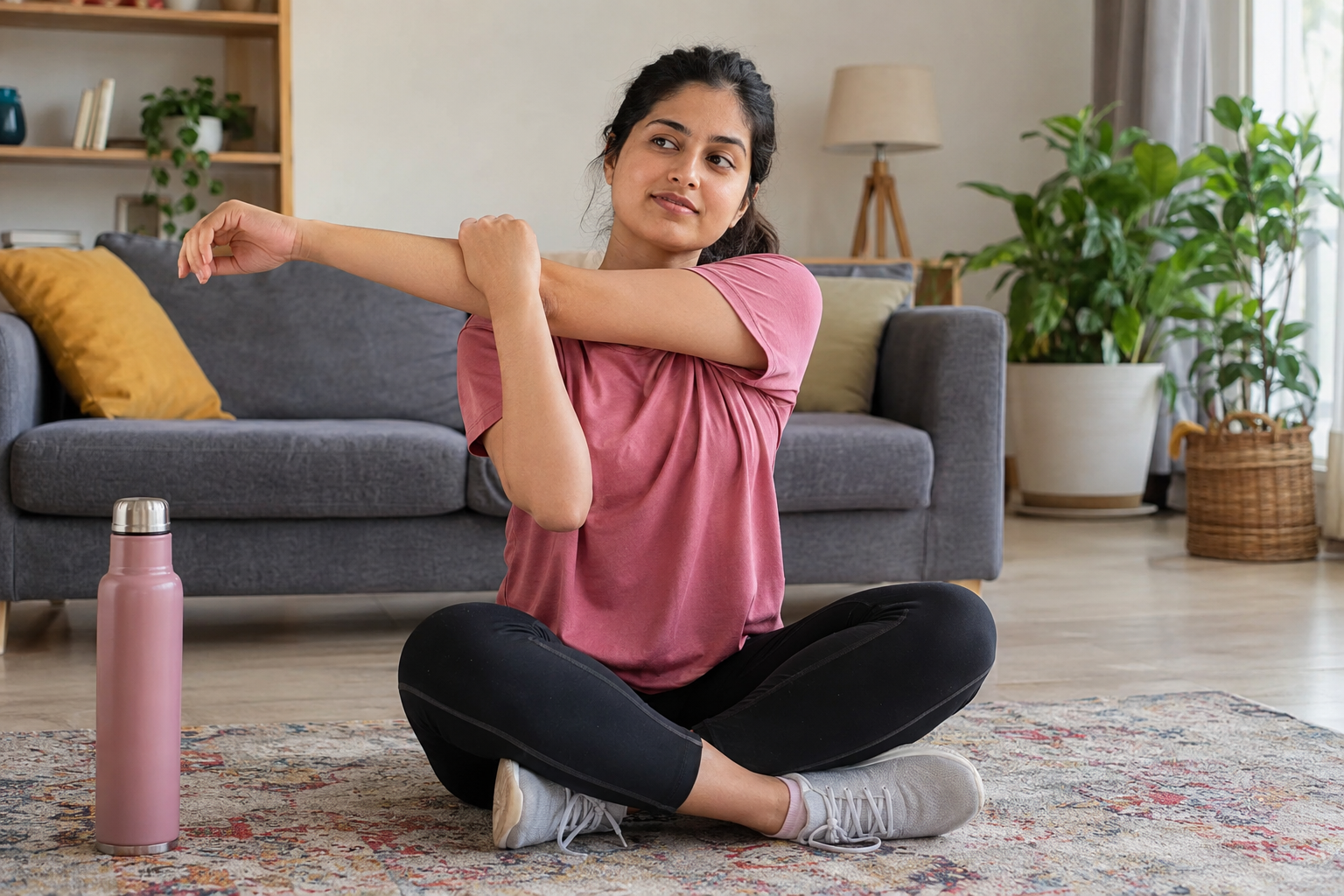
Many people think stretching is something that only athletes, gym lovers, or yoga students need to do. In reality, stretching can be useful for almost everyone. Our bodies are designed to move, bend, reach, turn, and change position throughout the day. Modern life, however, often keeps us sitting for long periods. We work at desks, drive cars, use phones, watch television, and spend hours in positions that can make the body feel stiff.
Simple stretching habits for everyday mobility can help you feel more comfortable as you move through your daily routine. You do not need complicated exercises, special equipment, or a large amount of free time. A few gentle stretches performed regularly can make movement feel easier and can help you become more aware of how your body feels.
The important thing is consistency. Stretching for a few minutes every day can be more practical than doing a long stretching session once in a while.
What Is Everyday Mobility?
Everyday mobility means your ability to move comfortably during normal activities. It includes simple actions such as getting out of bed, walking, bending to pick something up, reaching for an object, turning your head, climbing stairs, sitting down, and standing up.
Good mobility does not mean that you need to perform extreme stretches or complicated yoga poses. It simply means that your joints and muscles can move through the ranges that you need for daily life.
Mobility can change over time. Long periods of sitting, lack of physical activity, stress, repetitive movements, and normal aging can all influence how flexible and comfortable the body feels.
Regular stretching may help maintain flexibility and make everyday movement feel more natural.
Why Stretching Matters in Daily Life
Stretching gives your muscles and joints an opportunity to move in ways that may not happen during your normal routine.
For example, someone who sits at a desk for several hours may spend most of the day with the hips and knees bent. The shoulders may also move forward while working on a computer.
A few simple stretches can encourage the body to move in the opposite direction.
Stretching can also create a useful moment to check how your body feels. You may notice that one shoulder feels tighter than the other or that your hips feel stiff after sitting.
This awareness can encourage better movement habits throughout the day.
The goal of everyday stretching should not be to force your body into uncomfortable positions. It should be to support comfortable, controlled movement.
Start Your Morning With Gentle Movement
The morning can be a good time to introduce simple stretching habits for everyday mobility.
After several hours of sleep, the body may feel slightly stiff. Instead of immediately performing deep stretches, begin with gentle movements.
You can start while still standing beside your bed.
Raise both arms slowly above your head and reach upward. Keep your shoulders relaxed and take a comfortable breath.
Hold the position for a few seconds and then lower your arms.
Next, gently roll your shoulders backward several times. This movement can help wake up the upper body.
You can also slowly turn your head from side to side. Avoid forcing the movement. Simply move within a comfortable range.
A short morning routine can help your body transition from sleep into normal daily activity.
Stretch Your Neck Carefully
Many people spend several hours every day looking at phones, laptops, or computer screens. Because of this, the neck may remain in similar positions for long periods.
Gentle neck movements can become part of your daily mobility routine.
Start by sitting or standing with your back comfortably upright.
Slowly turn your head toward the right until you feel a light stretch. Return to the center and repeat on the left side.
You can also gently tilt your head so that one ear moves toward the shoulder. Keep the opposite shoulder relaxed.
Hold the stretch briefly and then change sides.
Neck stretches should always feel gentle. Avoid pulling or pushing your head aggressively.
If you experience pain, dizziness, numbness, or unusual symptoms during neck movement, stop and seek appropriate medical advice.
Open Your Chest and Shoulders
Our daily activities often involve reaching forward.
Typing, driving, cooking, reading, and using a phone can all keep the arms in front of the body.
A simple chest stretch can help balance this position.
Stand comfortably and bring your hands behind your back. If comfortable, gently hold your hands together.
Slowly move your shoulders backward while lifting your chest slightly.
You should feel a mild stretch across the chest and the front of the shoulders.
Do not force your arms upward.
Hold the position for around fifteen to thirty seconds while breathing normally.
This stretch can be especially helpful after long periods of desk work.
Try Simple Shoulder Rolls
Shoulder rolls are one of the easiest stretching habits to add to your day.
They require no equipment and can be performed almost anywhere.
Sit or stand comfortably.
Slowly lift your shoulders toward your ears.
Move them backward, down, and forward in a smooth circular motion.
Repeat the movement several times.
Then reverse the direction.
Shoulder rolls can be useful during work breaks because they encourage movement around the shoulder area after long periods of sitting.
You can perform them while sitting at your desk, standing in the kitchen, or waiting for something to finish.
Small movements performed regularly can make a stretching routine easier to maintain.
Stretch Your Upper Back
The upper back can become stiff when we spend long periods sitting.
A simple upper back stretch can be performed while sitting or standing.
Place your hands together in front of your body.
Extend your arms forward while gently rounding your upper back.
Imagine that you are trying to move your shoulder blades away from each other.
Keep your neck relaxed.
Hold the position for several seconds and breathe slowly.
You should feel a gentle stretch across the upper back.
Afterward, relax your arms and return to your normal posture.
This movement can be repeated several times during a workday.
Give Your Wrists and Hands Some Attention
Phones, keyboards, tools, and household activities require constant use of the hands.
Yet many stretching routines completely ignore the wrists and fingers.
Simple wrist stretches can be useful for people who spend a lot of time typing.
Extend one arm in front of you with the palm facing upward.
Use the opposite hand to gently guide the fingers downward.
You may feel a light stretch along the forearm.
Hold for a few seconds and switch sides.
You can also open and close your hands several times.
Spread your fingers apart, relax them, and repeat.
These small movements can easily be performed during short breaks.
Stretch After Sitting for Long Periods
Sitting itself is not necessarily a problem. The bigger issue is remaining in the same position for a very long time.
Try to change your position regularly.
Stand up when possible.
Walk across the room.
Move your shoulders.
Stretch your legs.
Even a short movement break can interrupt a long period of sitting.
One easy habit is to stretch whenever you finish a task.
For example, after completing an email, making a phone call, or finishing a meeting, stand up for a minute.
These small movement opportunities can accumulate throughout the day.
Practice a Gentle Hip Flexor Stretch
The muscles around the front of the hips can feel tight after long periods of sitting.
A gentle hip flexor stretch may help.
Stand near a wall or chair for support.
Step one foot forward and the other foot backward.
Keep your body upright.
Gently bend the front knee while keeping the back leg extended.
You may feel a stretch near the front of the hip on the back leg.
Hold the position comfortably and then change sides.
Do not lean too far forward.
A small movement is usually enough.
The purpose is to create a gentle stretch rather than forcing the hip into an extreme position.
Stretch Your Hamstrings Gently
The hamstrings are muscles located along the back of the thighs.
They can sometimes feel tight after sitting or after certain physical activities.
One simple hamstring stretch can be performed while standing.
Place one heel slightly in front of you with the toes pointing upward.
Keep the other knee slightly bent.
Slowly move your hips backward while keeping your back comfortable.
You may feel a gentle stretch along the back of the extended leg.
Hold briefly and switch sides.
Another option is to perform the stretch while sitting on the edge of a chair.
Extend one leg in front of you and gently lean forward from the hips.
Avoid rounding your back excessively.
The stretch should feel comfortable, not painful.
Do Not Forget Your Calves
Your calf muscles work every time you walk.
They may also become tight if you spend a lot of time standing.
A simple wall stretch works well for the calves.
Stand facing a wall and place both hands against it.
Step one foot backward.
Keep the back heel on the floor.
Slowly bend the front knee while keeping the back leg straight.
You should feel a stretch in the calf of the back leg.
Hold for around twenty seconds and change sides.
Calf stretches can be useful after walking or after spending a long day on your feet.
Stretch Your Ankles for Better Movement
Ankle mobility plays an important role in walking, climbing stairs, bending, and many other daily activities.
You can practice simple ankle circles while sitting.
Lift one foot slightly from the floor.
Slowly rotate the ankle in a circle.
Complete several rotations and then change direction.
Repeat with the other foot.
Another simple movement involves pointing your toes forward and then pulling them gently toward your body.
These movements are easy to perform while sitting at a desk or watching television.
Use Stretching During Work Breaks
Many people struggle to develop stretching habits because they believe they need a separate exercise session.
A simpler approach is to connect stretching with activities that already happen during your day.
You might stretch whenever you stand up from your desk.
You might perform shoulder rolls after answering phone calls.
You might stretch your calves while waiting for tea or coffee.
You might perform gentle ankle circles while watching television.
Connecting stretching to existing habits makes it easier to remember.
The routine becomes part of daily life rather than another task on your schedule.
Stretch After Walking
Walking and stretching work well together.
After a short walk, your muscles are already warm and moving.
This can be a comfortable time to perform a few gentle stretches.
You might stretch your calves, thighs, shoulders, and hips.
You do not need a long routine.
Even five minutes can provide a useful opportunity to slow down and move your joints through comfortable positions.
Walking also gives your body more natural movement compared with sitting.
Combining regular walks with simple stretching habits can support everyday mobility.
Breathe Normally While Stretching
Breathing is often overlooked during stretching.
Some people accidentally hold their breath when trying to reach farther.
Instead, try to breathe slowly and naturally.
Relax your shoulders.
Avoid unnecessary tension in your face or jaw.
Slow breathing may help you remain relaxed while holding a stretch.
Stretching should not feel like a competition.
There is no prize for reaching farther.
Your goal is simply to move comfortably.
Avoid Bouncing During Stretches
For everyday flexibility routines, stretches are usually easier to control when performed slowly.
Sudden bouncing movements can make it harder to control the amount of force placed on the muscles.
Move gradually into a stretching position.
Stop when you feel gentle tension.
Hold the position without bouncing.
Then slowly release the stretch.
Controlled movement allows you to pay attention to how your body responds.
Never Stretch Into Sharp Pain
A mild feeling of tension is normal during many stretches.
Sharp pain is different.
If a stretch causes strong pain, numbness, tingling, or unusual discomfort, stop.
Stretching should feel gentle and controlled.
People recovering from surgery, injury, joint problems, or medical conditions may need personalized advice before beginning new exercises.
A doctor or qualified physical therapist can provide guidance based on individual needs.
Consistency Is More Important Than Intensity
One of the biggest mistakes people make is trying to stretch too much when they first start.
They may perform a long stretching routine for two days and then stop completely.
A better approach is to begin with a small routine that feels realistic.
You might start with five minutes each morning.
Another five minutes could be added after work or before bed.
Once the routine becomes familiar, you can gradually add more stretches.
Small habits are easier to repeat.
Over time, these repeated movements can become part of your normal lifestyle.
Create a Simple Five Minute Stretching Routine
A basic routine does not need to include dozens of exercises.
You could begin with shoulder rolls for thirty seconds.
Next, perform gentle neck turns for thirty seconds.
Stretch your chest for twenty seconds.
Perform an upper back stretch for twenty seconds.
Stretch each hip for twenty seconds.
Stretch each hamstring for twenty seconds.
Finish with calf stretches and ankle circles.
The exact timing is not important.
The goal is to move several major areas of the body in a comfortable way.
Some days you may stretch longer.
Other days you may only have a few minutes.
Regular movement is more important than creating a perfect routine.
Stretching Before Bed
Evening stretching can be a relaxing way to finish the day.
Choose gentle movements rather than intense stretching.
You might perform shoulder stretches, light hamstring stretches, ankle circles, or a comfortable seated stretch.
Keep the movements slow.
The goal is not to increase flexibility as quickly as possible.
Instead, use the routine as a calm transition from daily activity toward rest.
Many people find that creating a quiet evening routine helps them reduce unnecessary screen time before bed as well.
Make Stretching Easy to Remember
A habit becomes easier when it is connected to something you already do.
Stretch after brushing your teeth.
Stretch after your morning shower.
Stretch while the kettle is boiling.
Stretch after lunch.
Stretch when you finish work.
Stretch before going to bed.
These simple reminders can be more effective than relying on motivation.
You can also place a small note near your desk that says, “Stand and move.”
The message does not need to be complicated.
Sometimes a simple visual reminder is enough.
Listen to Your Body
Everyone has different levels of flexibility.
One person may comfortably touch their toes while another person cannot.
That difference does not automatically mean that one person is healthier.
Your stretching routine should match your own body.
Focus on comfortable movement rather than comparing yourself with others.
Your flexibility may also change from day to day.
Some mornings you may feel loose and energetic.
Other days your muscles may feel tighter.
Adjust your routine accordingly.
Mobility is not about forcing your body.
It is about working with your body.
Combine Stretching With General Movement
Stretching is useful, but it should not be your only form of movement.
Walking, climbing stairs, household work, gardening, cycling, strength exercises, and recreational activities can all contribute to an active lifestyle.
Think of stretching as one part of a larger movement routine.
Your body benefits from variety.
Some movements improve strength.
Others improve endurance.
Stretching mainly supports flexibility and comfortable movement.
A balanced approach to physical activity usually includes several types of movement.
Final Thoughts
Simple stretching habits for everyday mobility do not require complicated routines.
A few minutes of gentle movement can easily fit into your morning, workday, walking routine, or evening schedule.
The key is to keep stretching comfortable and consistent.
Move slowly.
Breathe normally.
Avoid forcing your joints.
Pay attention to how your body feels.
Most importantly, remember that mobility is something you use every day. Reaching for a cup, turning your head while driving, walking upstairs, bending to tie your shoes, and getting out of a chair all depend on movement.
Creating a small daily stretching routine can encourage you to move more often and spend less time in one fixed position.
You do not need to become extremely flexible.
You simply need to keep moving.
Over time, these small habits can become a natural part of your day and support comfortable everyday movement for years to come.