

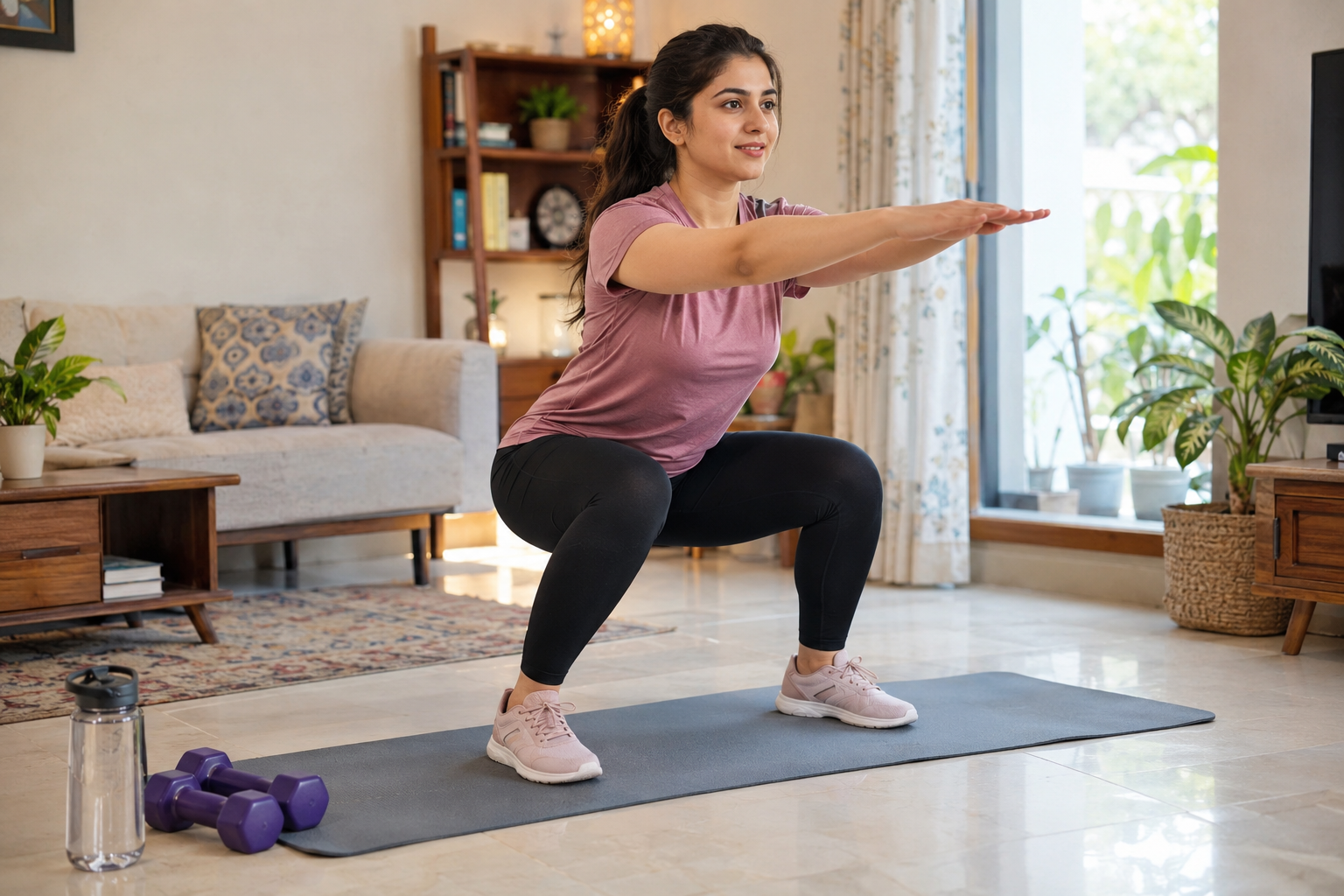
Starting an exercise routine can feel difficult when you are a complete beginner. You may think you need a gym membership, expensive equipment, a personal trainer, or a large amount of free time. In reality, you can begin improving your fitness right inside your home.
Home exercise is one of the easiest ways to become more active because it removes many common barriers. You do not have to travel anywhere, buy special clothes, or worry about exercising in front of other people. You can move at your own pace and gradually build confidence.
When I first started learning more about fitness and everyday movement, one thing became very clear to me. A successful exercise routine does not need to be complicated. Simple movements performed regularly can help improve strength, mobility, balance, endurance, and overall wellbeing.
If you are new to fitness, the most important goal is not to exercise as hard as possible. The goal is to create a routine that feels manageable enough to continue.
This guide explains some of the best beginner friendly ways to exercise at home and how you can turn simple movement into a healthy daily habit.
Why Home Exercise Is Great for Beginners
Exercising at home offers several advantages, especially when you are just getting started.
The first advantage is convenience. You can exercise whenever it fits your schedule. Even ten or fifteen minutes of movement can be useful when done consistently.
Another benefit is privacy. Some beginners feel uncomfortable exercising around experienced people in a gym. At home, you can practice movements without worrying about how you look.
Home exercise can also save money. Many effective exercises require only your body weight. You can use a chair, wall, towel, or water bottle instead of buying expensive fitness equipment.
Most importantly, exercising at home makes it easier to focus on building a habit. Once regular movement becomes part of your routine, you can slowly increase your activity level.
Start with Walking Around the House
Walking is one of the most beginner friendly forms of exercise.
You do not need a treadmill to walk at home. You can simply walk around your living room, hallway, bedroom, courtyard, or any open space.
Try walking for five to ten minutes at a comfortable pace. Move your arms naturally and keep your posture relaxed.
As your fitness improves, increase the duration to fifteen, twenty, or thirty minutes.
You can also walk in place while watching television, listening to music, or talking on the phone.
Walking helps raise your heart rate gently without putting too much pressure on your joints. It is also an easy way to increase your daily movement.
For many beginners, walking is one of the best places to start.
Try Marching in Place
Marching in place is another simple home exercise that requires very little space.
Stand upright with your feet comfortable apart. Lift one knee, lower it, and then lift the other knee. Continue alternating your legs.
Let your arms move naturally as you march.
You can begin with thirty seconds or one minute. Rest briefly and repeat.
As you become more comfortable, try marching for several minutes at a time.
Marching can help warm up your body before other exercises. It also works your legs while gently increasing your heart rate.
If lifting your knees high feels difficult, simply lift them a small distance. You can increase the height later.
Practice Chair Squats
Squats are useful for strengthening the muscles you use during everyday activities such as sitting, standing, climbing stairs, and lifting objects.
For beginners, chair squats can make the movement safer and easier to learn.
Stand in front of a strong chair with your feet around shoulder width apart.
Slowly bend your knees and push your hips backward as if you are going to sit down. Lightly touch the chair and then stand back up.
Try to keep your chest upright and move slowly.
Begin with five repetitions. Rest and repeat if you feel comfortable.
Over time, you may work toward ten or fifteen repetitions.
If you have balance problems, place the chair near a wall or another stable surface.
The goal is not speed. Controlled movement is more important.
Use Wall Push Ups
Traditional floor push ups can be difficult for beginners. Wall push ups are a simpler alternative.
Stand facing a wall and place your hands against it around shoulder height. Step slightly backward while keeping your body straight.
Bend your elbows and slowly bring your chest toward the wall. Then push yourself back to the starting position.
Begin with five to ten repetitions.
If the exercise feels too easy, move your feet slightly farther from the wall.
Wall push ups can strengthen the chest, shoulders, and arms without requiring you to get down on the floor.
They are especially useful for people who are still building upper body strength.
Try Standing Leg Raises
Standing leg raises can help strengthen your hips and legs while improving balance.
Stand behind a chair and lightly hold the backrest for support.
Slowly lift one leg to the side without leaning your body. Lower it gently and repeat.
Perform five to ten repetitions on each side.
You can also lift your leg backward to strengthen different muscles.
Always move slowly and avoid swinging your leg.
If you are new to balance exercises, holding a chair can make the movement more comfortable and secure.
Do Gentle Calf Raises
Calf raises are simple but useful for strengthening the lower legs.
Stand upright with your feet comfortably apart. Hold a chair or wall if needed.
Slowly lift your heels from the floor and rise onto your toes. Pause briefly and then lower your heels again.
Try eight to twelve repetitions.
Calf raises may help improve ankle strength, balance, and stability during walking.
Because they require very little space, you can perform them almost anywhere in your home.
Add Step Ups Using a Safe Step
If you have a strong and stable low step in your home, step ups can be a useful beginner exercise.
Place one foot on the step and slowly bring the other foot up. Step back down carefully.
Alternate which leg goes first.
Move slowly and keep something stable nearby if you need support.
Start with five repetitions on each side.
Never use an unstable stool or slippery surface.
Step ups can help strengthen your legs and improve cardiovascular fitness when performed continuously.
Strengthen Your Core with Seated Knee Lifts
Core exercises do not always require lying on the floor.
Sit upright in a strong chair with your feet flat on the ground.
Lift one knee toward your chest and lower it again. Then lift the other knee.
Continue alternating your legs.
Try ten repetitions on each side.
Keep your back comfortable and avoid leaning too far backward.
Seated knee lifts can gently activate your abdominal muscles while also working your hips.
They are a good option for beginners who prefer seated exercises.
Try the Bird Dog Exercise
The bird dog exercise is useful for improving balance and core stability.
Begin on your hands and knees on a comfortable surface.
Slowly extend your right arm forward while extending your left leg backward.
Hold the position briefly and then return to the starting position.
Repeat using the opposite arm and leg.
If this feels too difficult, practice lifting only one arm or one leg at a time.
Start with five repetitions on each side.
Move slowly and focus on keeping your body stable.
Include Gentle Stretching
Stretching can help you maintain flexibility and move more comfortably.
You do not need complicated stretching routines.
Simple movements can include reaching your arms overhead, gently turning your upper body from side to side, stretching your calves, and moving your shoulders in slow circles.
Stretching should feel comfortable. You may notice mild tension, but it should not cause sharp pain.
It is usually better to stretch gently after your body has warmed up.
You can also include light mobility movements during the day if you spend long periods sitting.
Use Household Items as Light Weights
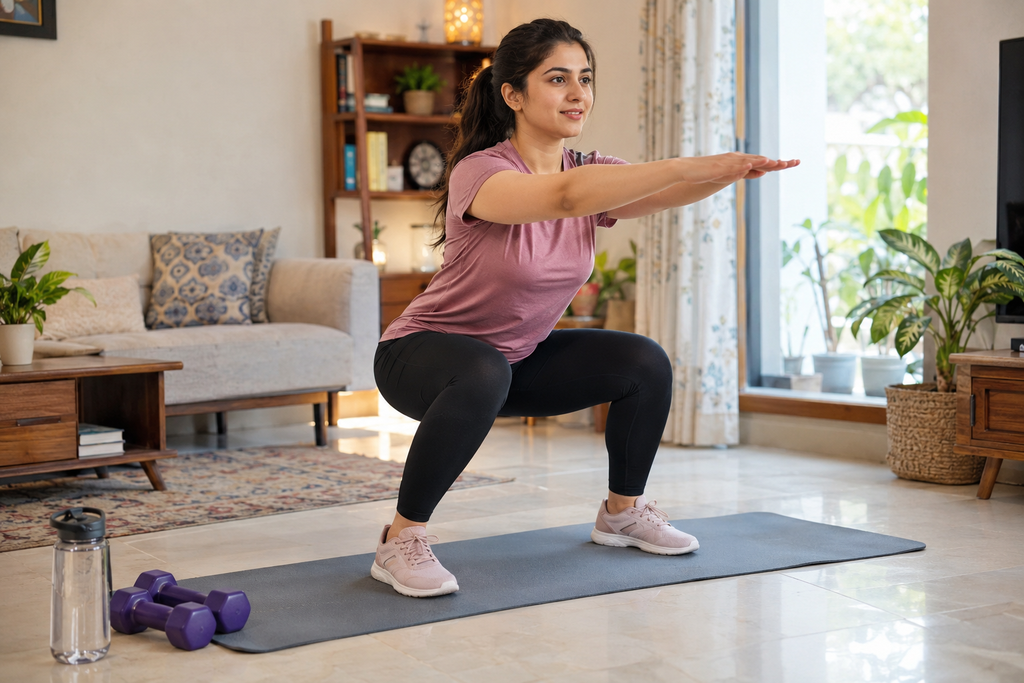
You do not need dumbbells to begin strength training at home.
Water bottles, small food containers, or other light household items can sometimes be used as simple weights.
You can hold one bottle in each hand and perform basic arm curls.
Stand or sit with your arms at your sides. Slowly bend your elbows and bring the bottles toward your shoulders. Lower them carefully.
Begin with a very light weight.
You should be able to control the movement easily.
Do not use heavy or difficult objects that are hard to grip.
For beginners, learning proper movement is more important than lifting heavy weight.
Dance for Exercise
Exercise does not always need to feel like a workout.
Dancing is one of the most enjoyable beginner friendly ways to exercise at home.
Play your favorite music and move around your room for five or ten minutes.
You can step from side to side, move your arms, march, or simply follow the rhythm.
There are no strict rules.
Dancing can increase your heart rate while making exercise feel entertaining.
People are often more likely to continue an activity when they actually enjoy doing it.
Try Beginner Exercise Videos
Beginner workout videos can provide structure if you are unsure what exercises to perform.
Look for routines designed specifically for beginners.
Short sessions of ten to twenty minutes may be easier to follow when you are just starting.
Choose instructors who explain movements clearly and encourage modifications.
Avoid routines that feel too fast or advanced.
Remember that you do not have to match everything shown in a video perfectly. You can pause, rest, reduce the number of repetitions, or skip movements that feel uncomfortable.
The video is only a guide.
Your body should determine your pace.
Create a Simple Home Workout Routine
A beginner workout does not need many exercises.
You can combine a few simple movements into a basic routine.
For example, you might start with five minutes of walking in place.
Then perform ten chair squats, ten wall push ups, ten seated knee lifts, and ten calf raises.
Finish with several minutes of gentle stretching.
The entire session may take around fifteen to twenty minutes.
You can repeat the routine two or three times per week.
On other days, you might simply walk, dance, or perform light stretching.
A simple routine is often easier to maintain than an overly complicated fitness plan.
Start Slowly and Build Gradually
One of the biggest mistakes beginners make is doing too much exercise too quickly.
Motivation can make you want to complete a long workout on your first day. However, pushing your body too hard may leave you sore, tired, or discouraged.
Start with an amount of exercise that feels manageable.
If ten minutes is enough, begin with ten minutes.
Once that feels easy, increase the time gradually.
You can also increase the number of repetitions little by little.
Progress does not need to happen every day.
Your body needs time to adapt.
Make Exercise Part of Your Daily Routine
Consistency becomes easier when exercise is connected to something you already do.
For example, you might exercise after your morning tea, before taking a shower, after returning from work, or before dinner.
Choosing a regular time reduces the need to constantly decide when to exercise.
You can also place reminders around your home.
Keep your walking shoes somewhere visible or leave your exercise mat in a convenient location.
Small environmental reminders can make healthy habits easier to remember.
Focus on Consistency Instead of Perfection
Many people stop exercising because they believe they must follow their routine perfectly.
That is not necessary.
Some days you may have enough energy for a twenty minute workout. On another day, you may only manage five minutes of stretching.
Both still count as movement.
Missing one day does not destroy your progress.
Instead of worrying about perfection, focus on returning to your routine.
Long term fitness comes from repeated effort over time.
Track Your Progress
Keeping a simple record of your activity can help you notice improvement.
You can write down how many minutes you exercise, which movements you perform, and how many repetitions you complete.
For example, you may notice that five chair squats felt difficult during your first week but ten squats feel comfortable after several weeks.
These small improvements can be encouraging.
Progress is not only about weight or appearance.
Better balance, easier movement, improved stamina, and increased confidence are also meaningful signs of progress.
Listen to Your Body
Exercise can sometimes cause mild muscle tiredness, especially when you are trying new movements.
However, sharp pain, dizziness, severe shortness of breath, or unusual discomfort should not be ignored.
Stop the activity if something does not feel right.
People with existing health conditions, serious injuries, recent surgery, or significant mobility problems may need advice from a qualified healthcare professional before beginning a new exercise program.
Exercise should challenge you gradually without making you feel unsafe.
Rest Is Part of Fitness
Beginners sometimes forget that rest is important.
Your muscles need time to recover after exercise.
You do not need to perform intense strength exercises every day.
You can alternate between stronger workout days and lighter activity days.
For example, one day may include chair squats and wall push ups, while the next day may simply involve walking and stretching.
Getting enough sleep and eating balanced meals can also support your exercise routine.
Fitness is not only about workouts. Recovery matters too.
How Much Exercise Should a Beginner Do at Home?
There is no perfect amount that works for everyone.
A beginner might start with ten to fifteen minutes of activity several times per week.
As the body becomes stronger, the duration can gradually increase.
The key is to choose an amount that you can realistically repeat.
Doing a small workout regularly is often more useful than completing one exhausting workout and then stopping for several weeks.
Your routine should fit your lifestyle.
Common Beginner Exercise Mistakes to Avoid
Starting too fast is one common mistake.
Another mistake is comparing yourself with people who have exercised for years.
Your starting point is your own.
Using poor form can also make exercises uncomfortable. Always perform movements slowly and carefully.
Skipping warm up movements may make your body feel stiff at the beginning of a workout.
Ignoring rest is another mistake. Your body needs recovery time.
Finally, do not believe that home workouts are useless unless they are extremely difficult.
Simple exercises can still be valuable when performed consistently.
Frequently Asked Questions
Can beginners really get fit by exercising at home?
Yes. Beginners can improve strength, endurance, flexibility, and overall fitness using simple home exercises. Consistency and gradual progression are more important than having expensive equipment.
Do I need equipment for home exercise?
No. Many beginner exercises use only your body weight. Chairs, walls, stairs, and light household items can also be useful.
Is ten minutes of exercise enough?
Ten minutes is a good starting point for beginners. You can gradually add more time as your fitness improves.
Should I exercise every day?
You can move your body every day, but harder workouts do not need to be performed daily. Include lighter activity and rest when needed.
What is the easiest exercise for beginners?
Walking, marching in place, wall push ups, chair squats, and gentle stretching are some of the easiest beginner friendly exercises.
How can I stay motivated?
Choose activities you enjoy, set realistic goals, track your progress, and keep your routine simple. Motivation often becomes easier once exercise turns into a regular habit.
Final Thoughts
You do not need a gym, expensive equipment, or advanced fitness knowledge to become more active.
Some of the most beginner friendly ways to exercise at home are also the simplest. Walking, marching, chair squats, wall push ups, calf raises, stretching, dancing, and light strength exercises can all help you build a strong foundation.
The most important thing is to begin at a comfortable level.
Do not worry about doing everything perfectly.
Start small, move regularly, and allow your body to become stronger gradually.
A few minutes of exercise today can become a longer routine in the future.
Home exercise becomes much easier when you stop thinking of it as something you must do perfectly and start viewing it as a normal part of everyday life.
Your first goal is simply to move.
Once that habit becomes natural, improvement can follow step by step.
SEO Focus Keyword: Beginner Friendly Ways to Exercise at Home
Related Keywords: home exercises for beginners, beginner workout at home, easy exercises at home, simple home workout, bodyweight exercises for beginners, home fitness routine, beginner friendly workout