

Sitting has become a normal part of modern life. Many of us sit while working, studying, driving, watching television, using a computer, or scrolling through our phones. At first, sitting may feel comfortable and harmless. The problem begins when we stay in the same position for several hours without giving our body a chance to move.
This is why taking movement breaks during long sitting is so important.
A movement break does not mean that you need to complete a full workout every hour. It simply means getting out of your chair, changing your position, stretching your muscles, walking for a few minutes, or doing some light activity. These small breaks can make a meaningful difference in how your body feels and functions throughout the day.
After reading about the effects of prolonged sitting, one thing becomes clear. Our bodies are designed to move regularly. Long periods of inactivity can affect circulation, muscles, joints, energy levels, posture, and even concentration. Adding movement breaks to your daily routine is one of the simplest ways to reduce these problems.
What Happens When We Sit for Too Long?
Sitting itself is not necessarily bad. Everyone needs time to rest. The main issue is sitting continuously for long periods without movement.
When we stay seated for a long time, many muscles remain inactive. The muscles in the legs, hips, back, and core are not being used as much as they are during standing or walking. Blood flow may also become slower in certain areas of the body.
You may notice stiffness in your neck, shoulders, lower back, or hips after sitting for several hours. Your legs may feel heavy, and your body may feel tired even though you have not done much physical activity.
Long sitting can also encourage poor posture. We often begin with a reasonable sitting position, but after some time, the shoulders may move forward, the neck may lean toward the screen, and the lower back may lose its natural position.
Movement breaks give the body an opportunity to reset.
Movement Breaks Improve Blood Circulation
One of the most important benefits of movement breaks is improved circulation.
When you walk, stretch, or stand, your muscles begin working again. Muscle movement helps support blood flow throughout the body. This is especially important for the legs, which remain relatively inactive while sitting.
Even a short walk around your room or office can help your body feel more awake.
If you sit at a desk for most of the day, try standing up regularly. Walk to get a glass of water, visit another room, or simply walk around your desk for a minute or two.
These activities may seem small, but they interrupt long periods of inactivity.
Regular movement throughout the day is often easier to maintain than trying to compensate for many hours of sitting with one difficult workout.
Movement Breaks Help Reduce Muscle Stiffness
Muscle stiffness is one of the most common complaints associated with long sitting.
Think about what happens when you keep your arm in the same position for a long time. Eventually, it becomes uncomfortable and you naturally want to move it. The same thing happens to your back, hips, shoulders, and legs while sitting.
The hip muscles can become tight when the hips remain bent for hours. The muscles around the shoulders and neck may become tense when looking at a computer screen.
Taking regular movement breaks allows these muscles to change position.
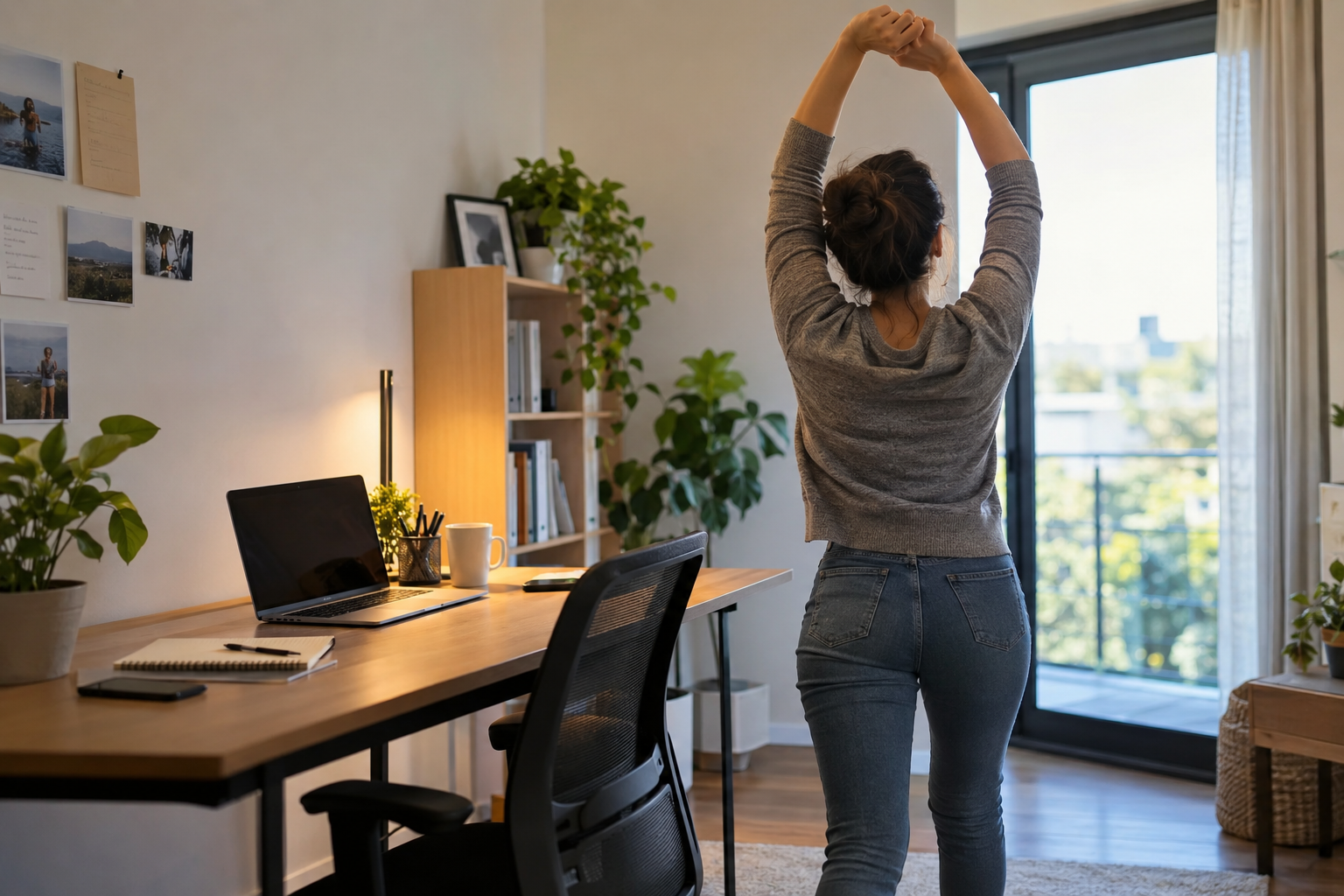
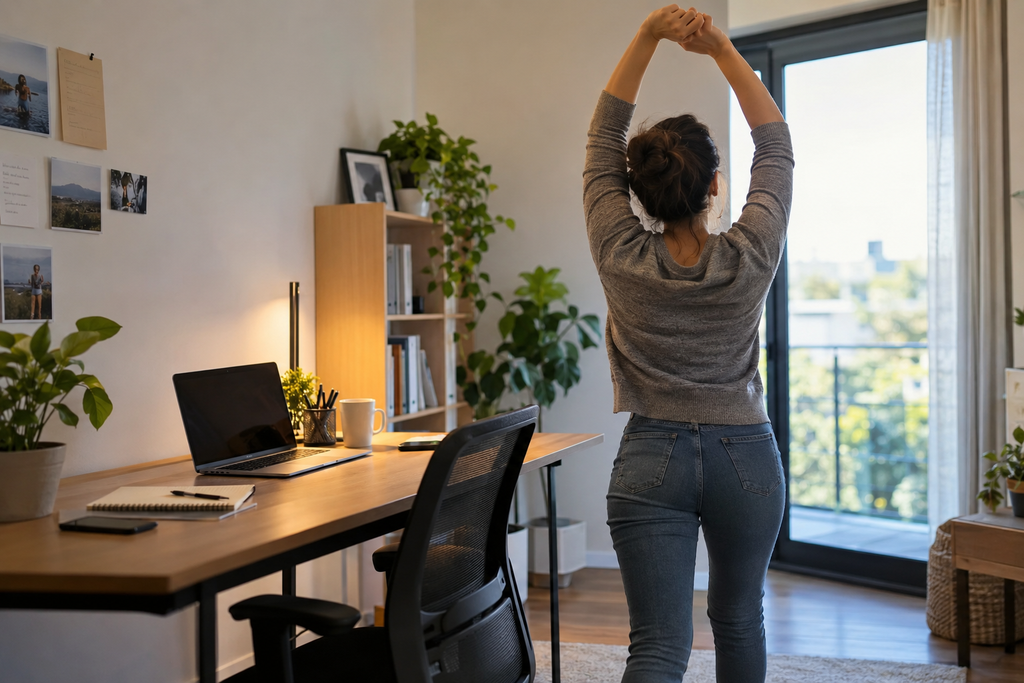
A simple stretch can help. You might stand up, reach your arms overhead, gently roll your shoulders, stretch your legs, or walk for a few minutes.
You do not need complicated exercises. The goal is simply to stop remaining completely still for too long.
Movement Breaks Can Support Better Posture
Good posture is difficult to maintain when sitting continuously.
Even if you begin your day sitting upright, you may gradually start leaning forward. Your head may move closer to the screen. Your shoulders may round, and your lower back may become uncomfortable.
Movement breaks help because they allow you to change positions regularly.
When you return to your chair after walking or stretching, you are also more likely to notice your sitting posture again.
You can use each movement break as a reminder to reset your position.
Place your feet comfortably on the floor. Keep the screen at a comfortable viewing height. Relax your shoulders and avoid leaning forward unnecessarily.
Perfect posture every second is unrealistic. Regular movement may be more practical than trying to remain perfectly still in one ideal position for hours.
Movement Breaks May Help Your Back Feel Better
Lower back discomfort is common among people who sit for long periods.
The spine is supported by muscles that work best when they are used regularly. Sitting for hours can place continuous pressure on certain areas while other muscles remain inactive.
Changing position can reduce this constant stress.
Walking is especially useful because it involves gentle movement of the hips, legs, and trunk.
If you work from home, consider standing whenever you finish a task. Walk around the room before starting the next one.
If you work in an office, you might walk to speak with a colleague rather than sending a message when appropriate.
These small choices can increase movement without requiring a major change to your schedule.
Movement Can Increase Energy Levels
It sounds strange, but sitting for too long can sometimes make you feel more tired.
You may have experienced this during a long work or study session. After several hours in a chair, you may feel sleepy, mentally slow, or unmotivated.
A short movement break can help you feel more alert.
Standing, walking, and stretching encourage the body to become active again. The change in physical activity can also help break the feeling of monotony that often develops during long periods of desk work.
Try walking for two or three minutes when you begin feeling tired.
You may notice that returning to your work feels easier afterward.
Movement does not always drain energy. Light movement can sometimes help restore it.
Movement Breaks Can Improve Concentration
Our minds also become tired when we focus on one task continuously.
Many people continue staring at their computer when concentration begins to decline. However, working longer does not always mean working better.
Taking a short movement break can give your mind a change of pace.
You might stand up, stretch, look away from the screen, and walk briefly. When you return, you may find it easier to focus again.
This can be especially useful when studying, writing, designing, coding, or doing other tasks that require long periods of attention.
Instead of seeing movement breaks as wasted time, it can be more helpful to think of them as part of productive work.
A few minutes of movement may support better concentration during the next period of work.
Movement Breaks Can Reduce Screen Fatigue
Long sitting is often connected with long screen time.
People working at computers may spend several hours looking at the same screen. This can contribute to tired eyes, headaches, neck tension, and mental fatigue.
A movement break gives you an opportunity to look away from the screen.
Walk toward a window. Look at something in the distance. Stretch your shoulders or move into another room.
This creates a natural break for both your body and your eyes.
It can also reduce the habit of switching from one screen to another during breaks. For example, standing up from your computer only to spend the entire break looking at your phone may not provide the same mental change as walking or stretching.
How Often Should You Take Movement Breaks?
There is no single schedule that works perfectly for everyone.
Your job, health, age, environment, and daily routine all matter. However, a useful approach is to avoid remaining completely still for very long periods.
Some people prefer getting up every thirty minutes. Others may take a short movement break every hour.
The exact timing is less important than building the habit of moving regularly.
If you frequently forget to move, use simple reminders.
You can set an alarm on your phone or computer. You can also connect movement with activities you already do.
For example, stand whenever you finish a meeting. Walk after completing a section of work. Stretch whenever you refill your water.
Over time, these actions can become automatic.
Simple Movement Break Ideas
Movement breaks do not need to be complicated.
One of the easiest options is walking.
Stand up and walk around your room, office, hallway, or garden for a few minutes.
You can also perform simple stretches.
Raise your arms above your head and gently reach upward.
Roll your shoulders forward and backward.
Turn your upper body gently from side to side.
Straighten one leg at a time while sitting or standing.
Move your ankles in circles.
Stand and gently stretch the front of your hips.
You can also use ordinary activities as movement opportunities.
Walk while talking on the phone.
Use the stairs when practical.
Stand while reading something short.
Walk to refill your water bottle.
Do a few household tasks between work sessions.
The best movement break is usually the one that is easy enough to repeat every day.
Movement Breaks Are Not a Replacement for Exercise
It is important to understand the difference between movement breaks and regular exercise.
Movement breaks reduce long periods of inactivity, but they do not replace a balanced exercise routine.
Activities such as walking, cycling, swimming, strength training, or other forms of physical exercise provide additional benefits.
Think of these habits as working together.
Regular exercise helps improve overall fitness, while movement breaks help prevent your day from becoming one long period of sitting.
A person can exercise in the morning and still spend most of the remaining day sitting.
That is why daily movement matters even for people who already exercise regularly.
How to Add More Movement to a Busy Workday
Many people say they cannot take movement breaks because they are too busy.
However, movement breaks can be extremely short.
You do not necessarily need fifteen or twenty minutes.
Standing for a minute, walking for two minutes, or stretching briefly can still break a long period of sitting.
You can also redesign small parts of your routine.
Keep your water bottle away from your desk so you need to walk to get it.
Stand while making phone calls.
Take a short walk during part of your lunch break.
Walk to another room when thinking about a difficult problem.
Use a printer, restroom, or water station that requires a slightly longer walk when practical.
These changes may seem insignificant individually, but they can add up throughout the day.
Movement Breaks While Working From Home
Working from home can sometimes involve even more sitting than working in an office.
At home, you may not need to walk to meeting rooms, public transportation, parking areas, or another department.
This makes intentional movement even more important.
Try creating movement points in your home routine.
Start your morning with a short walk.
Stand between online meetings.
Walk around your home while talking on the phone.
Do light stretches after completing an important task.
Take a few steps outside if you have access to a safe outdoor space.
You can also alternate between sitting and standing when possible.
The goal is not to create a complicated system. It is simply to avoid allowing several hours to pass without meaningful movement.
Movement Breaks for Students
Students also spend a large amount of time sitting.
School lessons, homework, online classes, exam preparation, and reading can all involve long sitting periods.
Movement breaks can be especially helpful during long study sessions.
Instead of studying continuously for several hours, students can divide their time into focused study periods with short movement breaks between them.
During the break, they might walk around the room, stretch, drink water, or look outside.
This gives both the body and mind a short change before returning to study.
Movement can also make long study sessions feel less exhausting.
Listen to Your Body
Your body often gives signals when you have been sitting too long.
You may notice stiffness, numbness, restlessness, back discomfort, shoulder tension, tired eyes, or difficulty concentrating.
Instead of ignoring these signals, consider them reminders to move.
Stand up.
Walk.
Stretch gently.
Change your position.
Sometimes the simplest solution is movement.
Of course, persistent or severe pain should not automatically be blamed on sitting. If you experience ongoing pain, numbness, weakness, swelling, or other concerning symptoms, it is sensible to discuss them with a qualified healthcare professional.
Create a Movement Friendly Environment
Your environment strongly influences your habits.
If everything you need is within arm’s reach, you may remain seated for hours without realizing it.
You can intentionally create reasons to move.
Keep water in another area.
Place commonly used items where you need to stand to reach them.
Use reminders on your computer.
Wear comfortable shoes if you plan to walk during breaks.
Keep enough space near your desk for simple stretches.
These small environmental changes can make regular movement easier.
Consistency Matters More Than Intensity
One of the biggest mistakes people make is believing that healthy movement must always feel difficult.
It does not.
When your goal is to break long periods of sitting, consistency is more important than intensity.
A two minute walk repeated several times throughout the day may be easier to maintain than one long activity that you frequently skip.
Small habits work because they fit naturally into daily life.
You do not need special equipment.
You do not need gym clothes.
You do not need a complicated plan.
You simply need to move more often.
Final Thoughts
Taking movement breaks during long sitting is a simple habit with meaningful benefits.
Our bodies are not designed to remain completely still for hours at a time. Regular movement can support circulation, reduce stiffness, improve posture awareness, increase energy, and help maintain concentration.
You do not need to completely change your lifestyle.
Start with something small.
Stand up more often.
Walk for a few minutes.
Stretch your shoulders and legs.
Move between tasks.
Take the longer route through your home or office when practical.
Most importantly, avoid thinking that only intense exercise counts as useful movement.
The ordinary movements you perform throughout the day matter too.
A healthy daily routine is not only about what happens during a workout. It is also about what happens during all the hours between workouts.
When movement becomes part of your normal day, sitting no longer needs to mean remaining completely inactive for hours.
Small movement breaks may take only a few minutes, but repeated consistently, they can help make long workdays, study sessions, and screen time feel much more comfortable and manageable.
Frequently Asked Questions
Why are movement breaks important during long sitting?
Movement breaks help interrupt long periods of inactivity. They allow muscles and joints to change position, encourage circulation, reduce stiffness, and may help you feel more alert during work or study.
How long should a movement break be?
A movement break can be very short. Even standing, stretching, or walking for a few minutes can interrupt a long sitting period. The main goal is to move regularly throughout the day.
What is the easiest movement break?
Walking is one of the simplest options. Stand up and walk around your room, office, hallway, or outdoor space for a few minutes.
Can movement breaks improve concentration?
Short movement breaks may help you return to work feeling more refreshed. Changing position and stepping away from the screen can also provide a useful mental break.
Do movement breaks replace exercise?
No. Movement breaks and exercise serve different purposes. Regular exercise supports physical fitness, while movement breaks help reduce continuous sitting throughout the day.
How can I remember to take movement breaks?
Use phone reminders, computer alerts, or connect movement with activities you already perform. For example, stand after every meeting, walk when making phone calls, or stretch whenever you refill your water.
What is the main keyword for this article?
The main SEO keyword is movement breaks during long sitting. Related keywords include benefits of movement breaks, prolonged sitting, sitting for long periods, desk movement breaks, how to reduce sitting time, and movement during the workday.